The Green Line
This video is so inspirational!
It is a prove that sometimes small things can make you think and motivate you to do something that needs to be done – for the better of your country, for the better of you….
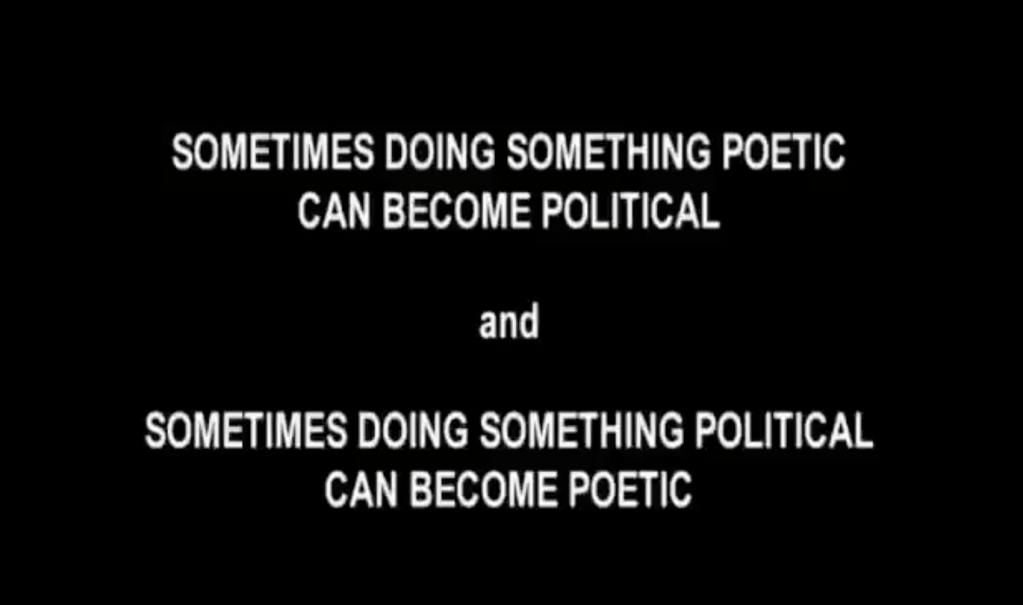
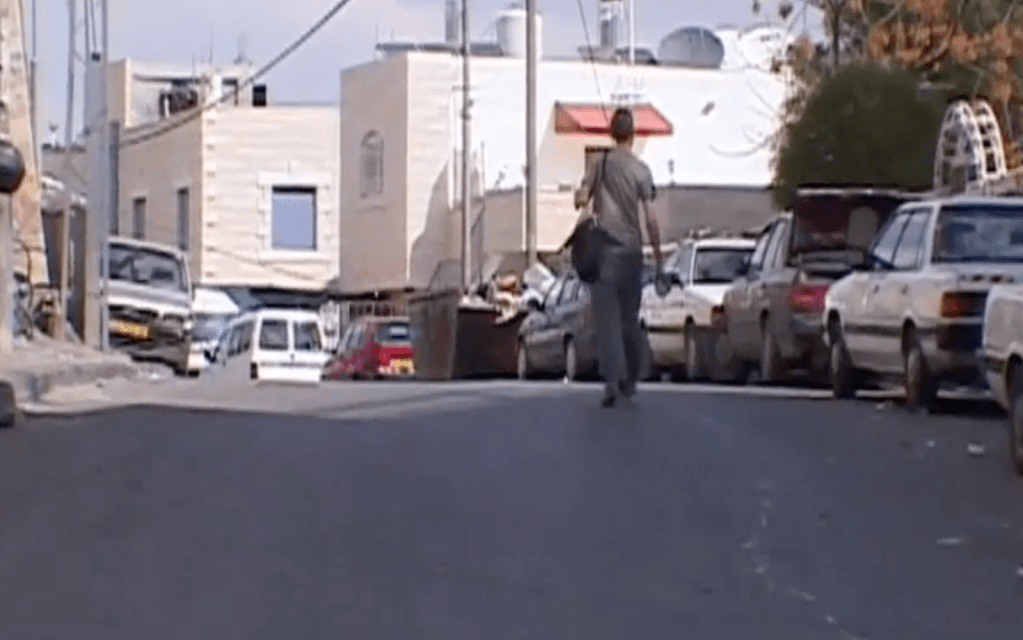

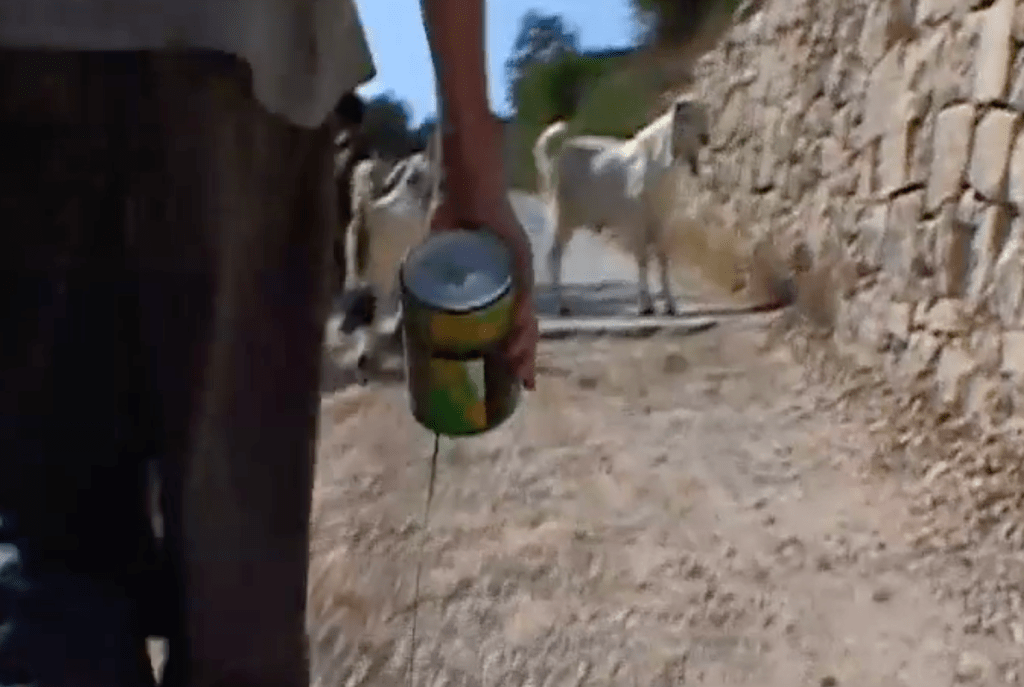
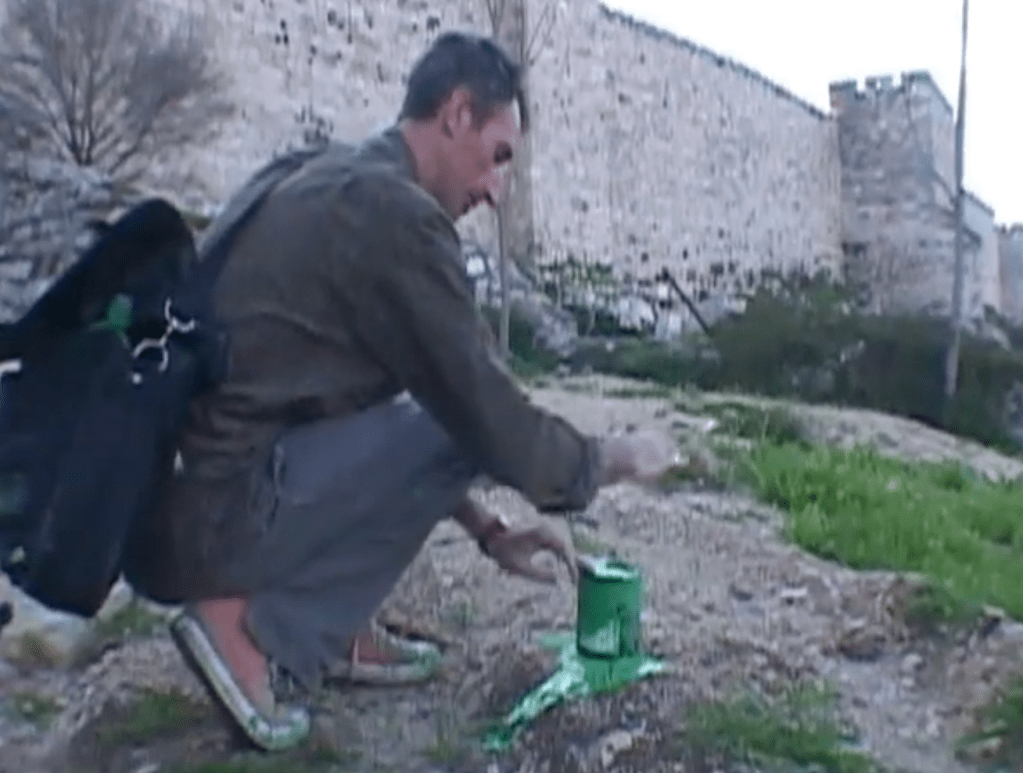
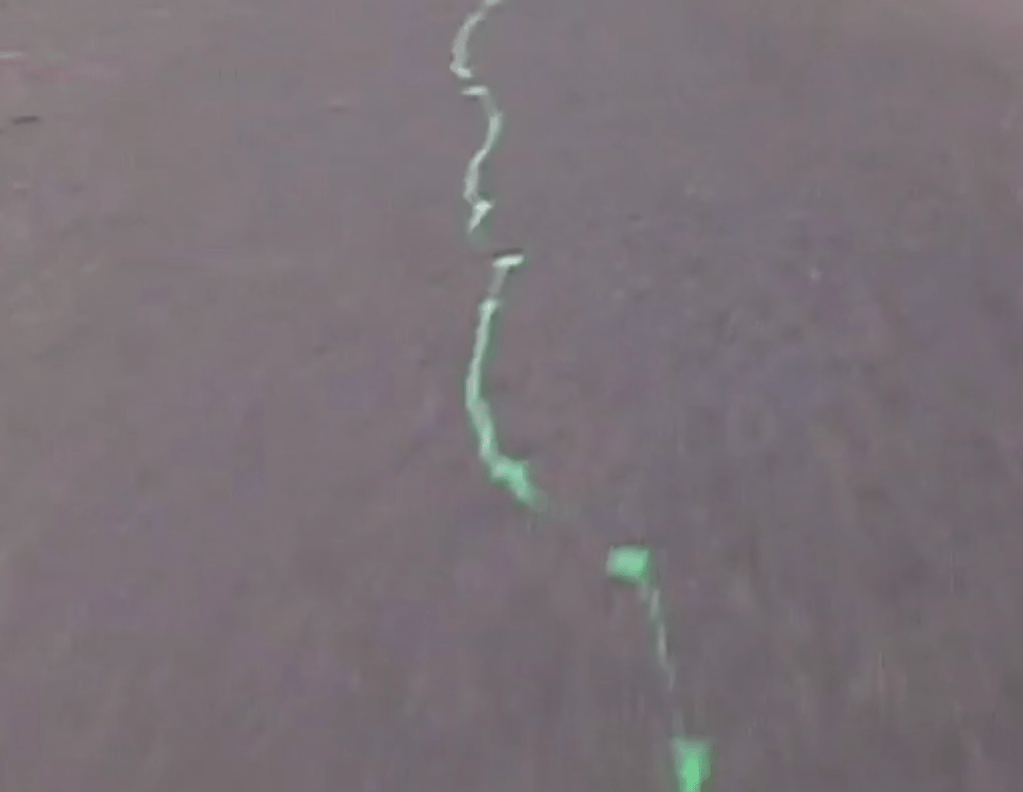

Shortly after, a filmed documentation of the walk was presented to a number of people whom I invited to react spontaneously to the action and the circumstances within which it was performed.
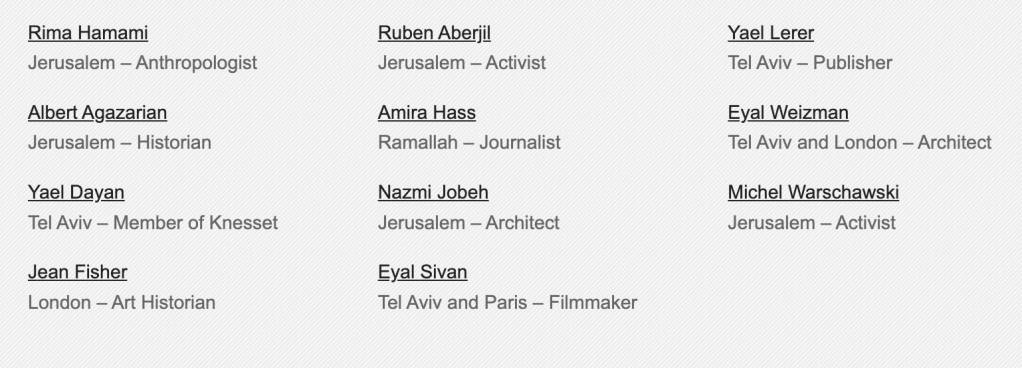
Rima Hamami said that the Palestinians are sick to be criminals with no future and she hopes that the new generation wakes up.
Yael Lerer said that “Palestine is small land and is divided on such a bad way…What kind of life we can have with such a borders…We want to be here – this is our place – we wont to be part of Europe on a way but we can’t be with these borders…One can not live with these borders…we should try to live together and understand each other…Some Israelis want peace and borders at the same time but we can not have peace if we have borders…There is an internal conflict to “Who are we?” because Israelis came from Arabic countries…This is an expression saying “Leave us alone! Take the occupation way! Take the borders way!”
Nazmi Jobeh said that the green line evokes many contradictory feelings…we need peace solution …the only bridge between Palestinians and Israelis now is rejecting the occupation
I have to admit that I have never heard before about the green line (and I like reading about politics…),so I did some more research on that;
“The Green Line refers to the demarcation lines, rather than permanent borders, between Israeli forces and those of its neighbors. All movement across the demarcation lines was banned and monitored by the United Nations Truce Supervision Organization. Most commonly, the term was applied to the boundary between Jordan-controlled Jerusalem and the West Bank and Israel. The drawing of the Green Line superseded entirely the partition lines proposed and voted on by the United Nations in the Partition Plan of 1947 and which Israel had accepted in the Israeli Declaration of Independence. The Palestinian and Arab leaders had repeatedly rejected any permanent partition of Mandatory Palestine.
In 1967, after Israel seized all the territories, other than the Emirate of Transjordan, of the former Mandatory Palestine, as well as other territories, the demarcation lines became militarily irrelevant, and the status of the Green Line became uncertain.
Although Israel has always formally argued that the Green Line has no legal significance, the Green Line continued to have political, legal and administrative significance. Israel regarded the territories beyond the Green Line, unlike those within the Green Line, as occupied territories, and they were not incorporated into Israeli political and civilian administrative systems. The territories beyond the Green Line were administered by the Israeli military or later also by the Palestinian Authority. Citizenship by residence, for example, was determined with reference to the Green Line, as well as a person’s refugee status.
The extension of the municipality boundary of Jerusalem in 1980 was an exception to this position. Although Jerusalem was a part of territory beyond the Green Line that was ruled by Jordan until 1967, Israel declared Jerusalem “complete and united” as the capital of Israel according to the 1980 Basic Jerusalem Law.This claim has not been recognised by any country or by the United Nations (UN) Security Council. A notional Green Line continues to divide Jerusalem at the boundary of East Jerusalem.
The Golan Heights are another exception, having been informally incorporated by Israel with the 1981 Golan Heights Law. The UN Security Council declared this to be null and without any international legal effect.”
Bruno Munari – “Design as Art”
“The designer of today re-establishes the long-lost contact between art and the public, between living people and art as a living thing.
There is a harmonic relationship between all the parts which go to make up a useless machine. Let us suppose that we start with a glass ball, marked A in the illustration. From this we obtain the disc A+1/3R by simply adding one third to the radius of the ball and marking the dimensions of the ball inside the cardboard disc. The diameter of this disc determines the other two geometric forms B and 2B (the one being just double the other). The backs of these forms are painted as the negatives of the fronts. The wooden rods to which the shapes are attached are also measured in relation to the diameter of the ball: 3A, 5A and 6A. The whole thing is then balanced up and hung on a piece of thread.
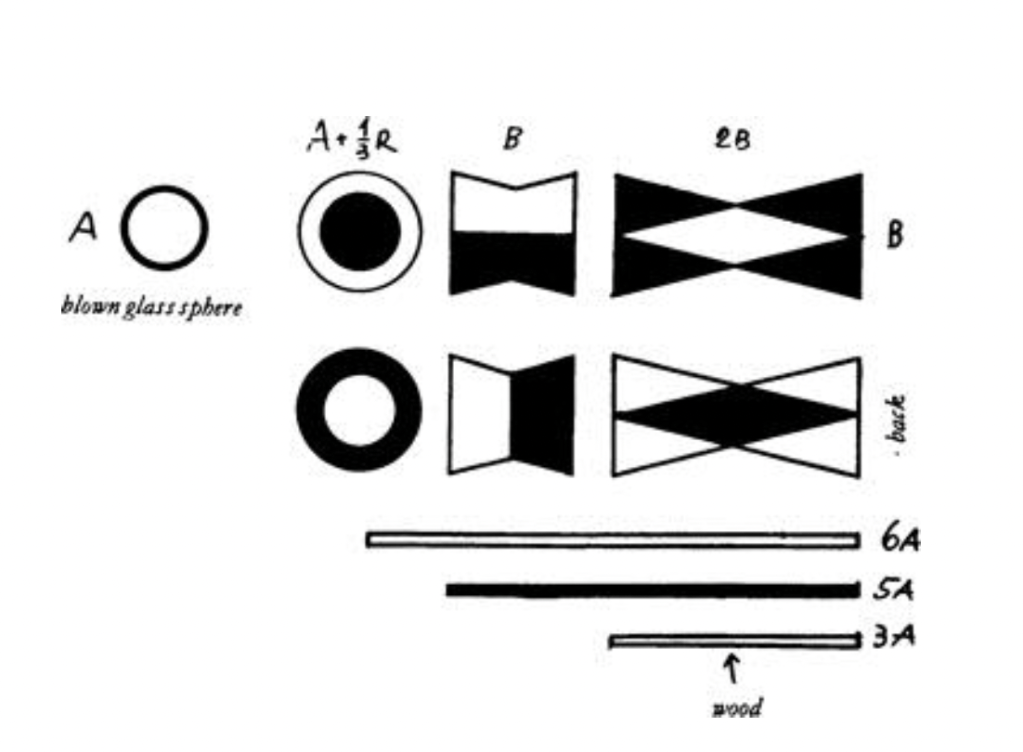
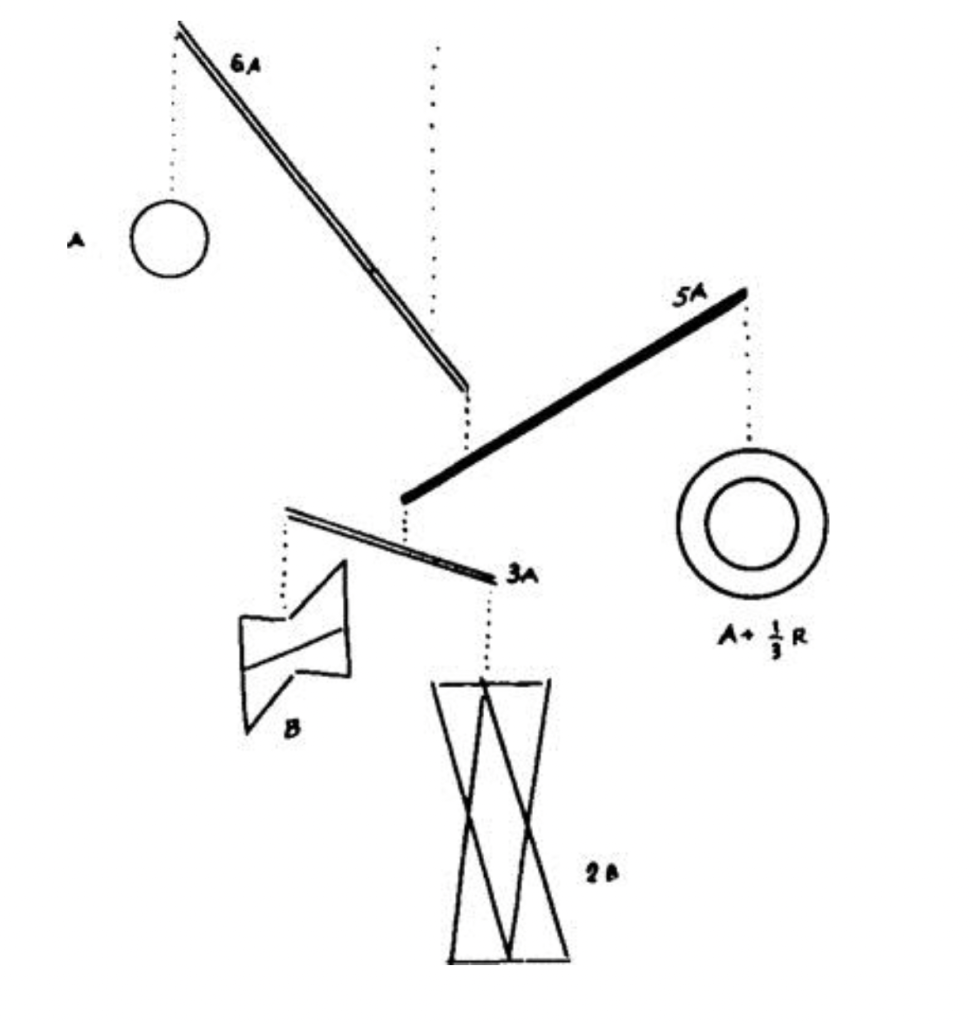
“Now I myself thought that instead of painting triangles and other geometrical forms within the atmosphere of an oblong picture (for this — look at Kandinsky — was still essentially realistic) it would perhaps be interesting to free these forms from the static nature of a picture and to hang them up in the air, attached to each other in such a way as to live with us in our own surroundings, sensitive to the atmosphere of real life, to the air we breathe. And so I did. I cut out the shapes, gave them harmonic relationships to one another, calculated the distances between them, and painted their backs (the part one never sees in a picture) in a different way so that as they turned they would form a variety of combinations. I made them very light and used thread so as to keep them moving as much as possible. “
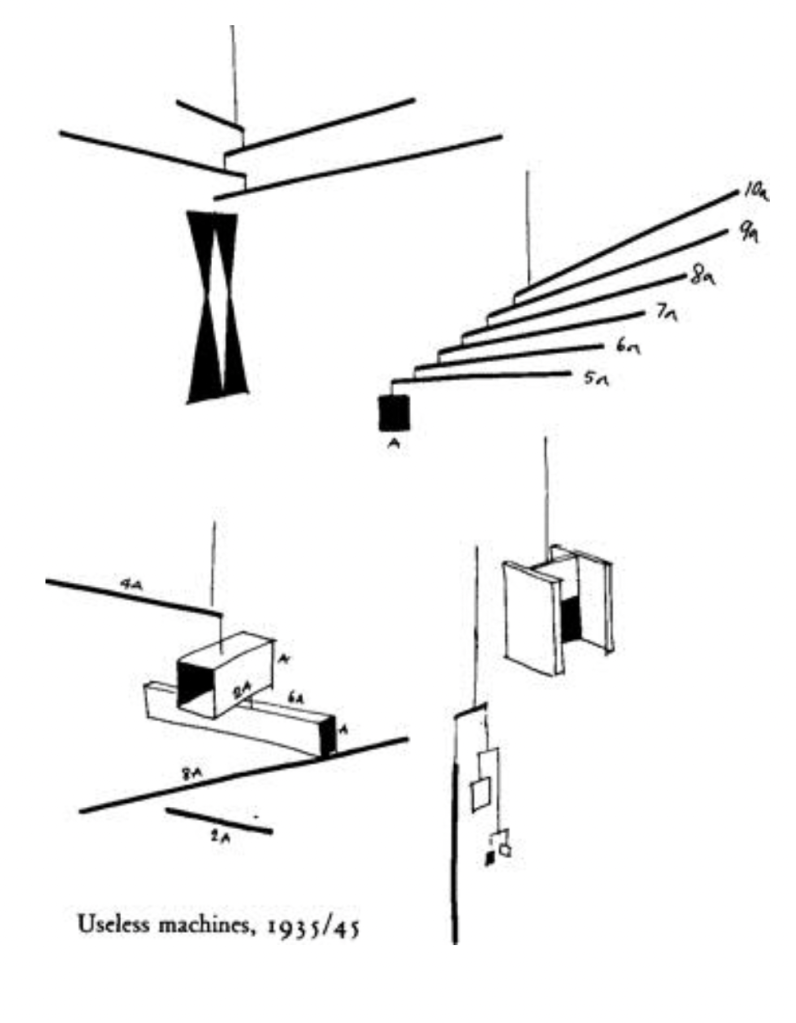
The name ‘useless machine’ lends itself to many interpretations. I intended these objects to be thought of as machines because they were made of a number of movable parts fixed together.
Bruno Munari said that a leaf is beautiful not because it is stylish but because it is natural, created in its exact form by its exact function. A designer tries to make an object as naturally as a tree puts forth a leaf. He does not smother his object with his own personal taste but tries to be objective. The designer is therefore the artist of today, not because he is a genius but because he works in such a way as to re-establish contact between art and the public, because he has the humility and ability to respond to whatever demand is made of him by the society in which he lives, because he knows his job, and the ways and means of solving each problem of design.
The designer works in a vast sector of human activity: there is visual design, industrial design, graphic design and research design.
Visual design is concerned with images whose function is to communicate and inform visually: signs, symbols, the meaning of forms and colours and the relations between these.
Industrial design is concerned with functional objects, designed according to economic facts and the study of techniques and materials.
Graphic design works in the world of the Press, of books, of printed advertisements, and everywhere the printed word appears, whether on a sheet of paper or a bottle.
Research design is concerned with experiments of both plastic and visual structures in two or more dimensions. It tries out the possibilities of combining two or more dimensions, attempts to clarify images and methods in the technological field, and carries out research into images on film.
If you want to know something else about beauty, what precisely it is, look at a history of art. You will see that every age has had its ideal Venus (or Apollo), and that all these Venuses or Apollos put together and compared out of the context of their periods are nothing less than a family of monsters.
A thing is not beautiful because it is beautiful, as the he-frog said to the she-frog, it is beautiful because one likes it. “
I like what he said that visual language changes according to the needs of the day. And he gives the example with the old sign
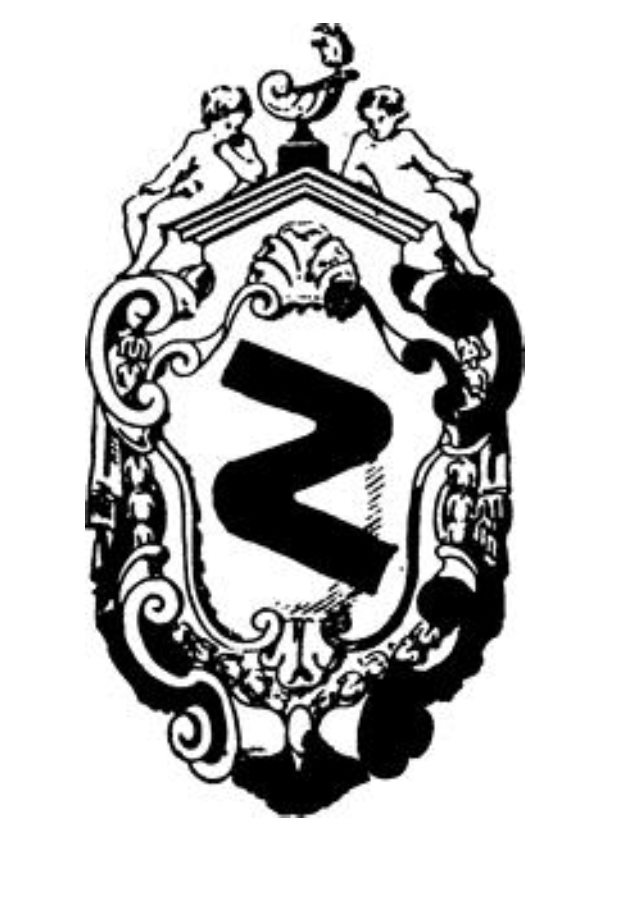
As the speed and volume of traffic increases, decoration is proportionally reduced, until it reaches the bare essentials of our present-day signals. The growing use of symbols such as roadsigns and trademarks on a worldwide scale demands absolute clarity of expression. If a visual message is going to get across to people of different languages and backgrounds it is essential that the message does not lend itself to wrong interpretations.
And each ‘world’, each limited group of consumers, has its images, ranging from those of comics for children to those of the classics for the average adult. There are thousands of ways of photographing or drawing the human face.
A graphic symbol for a cosmetic cannot be the same as one for coal. The graphic designer usually makes hundreds of small drawings and then picks one of them.
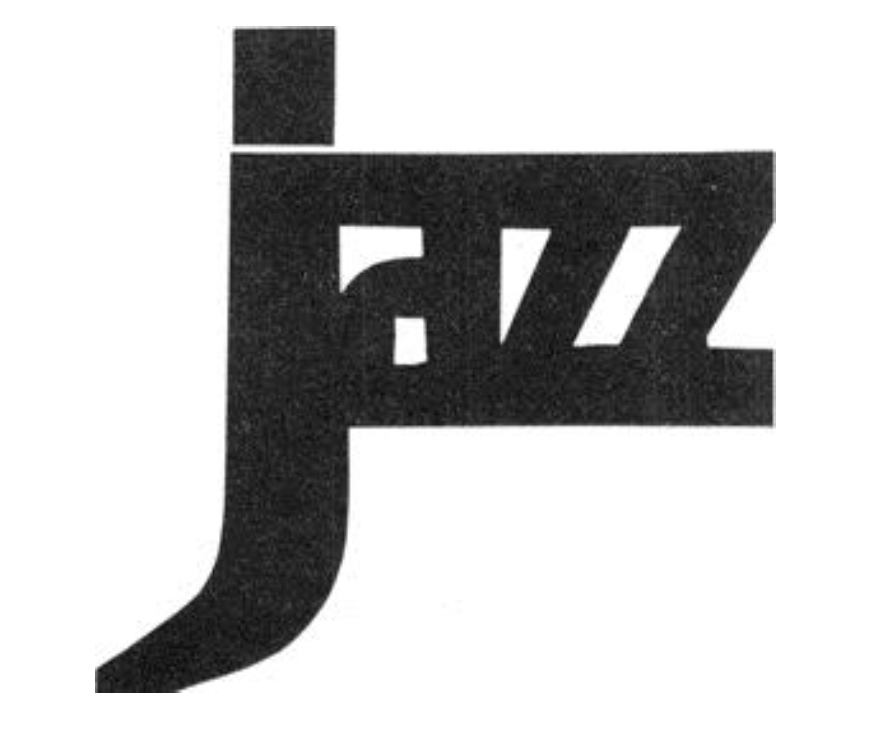
Knowledge of the shape of words and the possibilities these offer for communication can be very useful to the graphic designer when he comes to make warning signs that have to be taken in quickly, like the ones on motorways, that one cannot stop to decipher
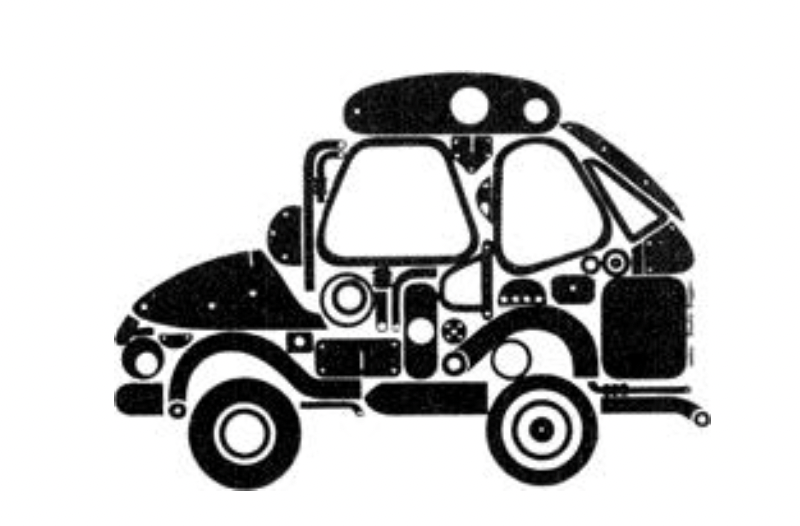
Two images in one, or rather an image made up of a lot of other images: such is this illustration advertising rubber spare parts for motor vehicles. The detailed outlines of the individual parts are so arranged as to make up a picture of a car, and taken all together they provide that direct visual information that is the purpose of the advertisement. Not a word of explanation is needed.
It depends on the person looking, because each of us sees only what he knows. If you do not know what a Bunstable is you will never see one anywhere. If, as often happens, a person is exclusively interested in food, then in the clouds at sunset he will see enormous dishes of spaghetti and tomato sauce (if he can raise his eyes from the table to look at the sunset), the clouds will be heaps of mashed potato and in the grains of certain woods he is bound to find pork chops concealed.
The old idea in advertising was that a poster should hit you in the eye, and even today many people would agree.
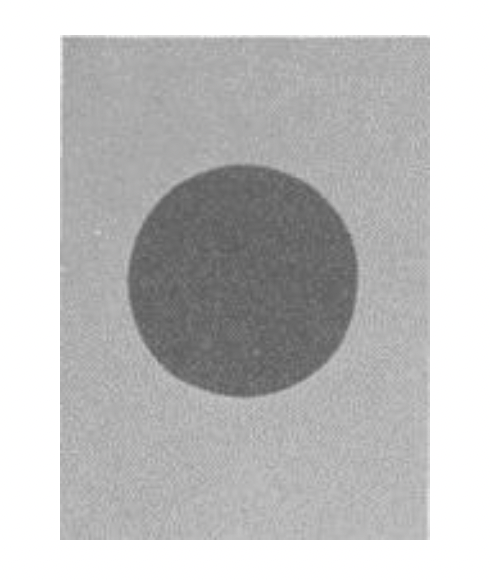
On the other hand it is a mistake to divide the surface of a poster into different blocks of colour or print. Such a poster fades too easily into its surroundings, and each part of the composition flows off into the poster next door, confusing the public and absolutely nullifying the effect of the message.
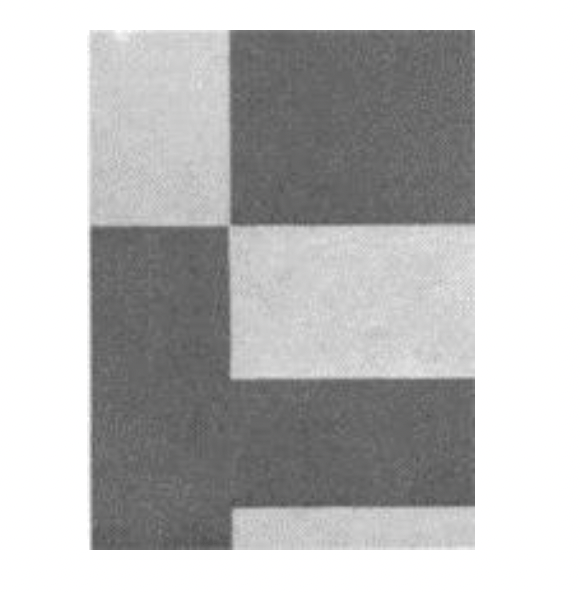
Basic pattern of a poster cut up into separate sections. The eye wanders over the surface and is continually forced to follow the dividing lines between the light and dark sections. These lead it out and away from the poster.
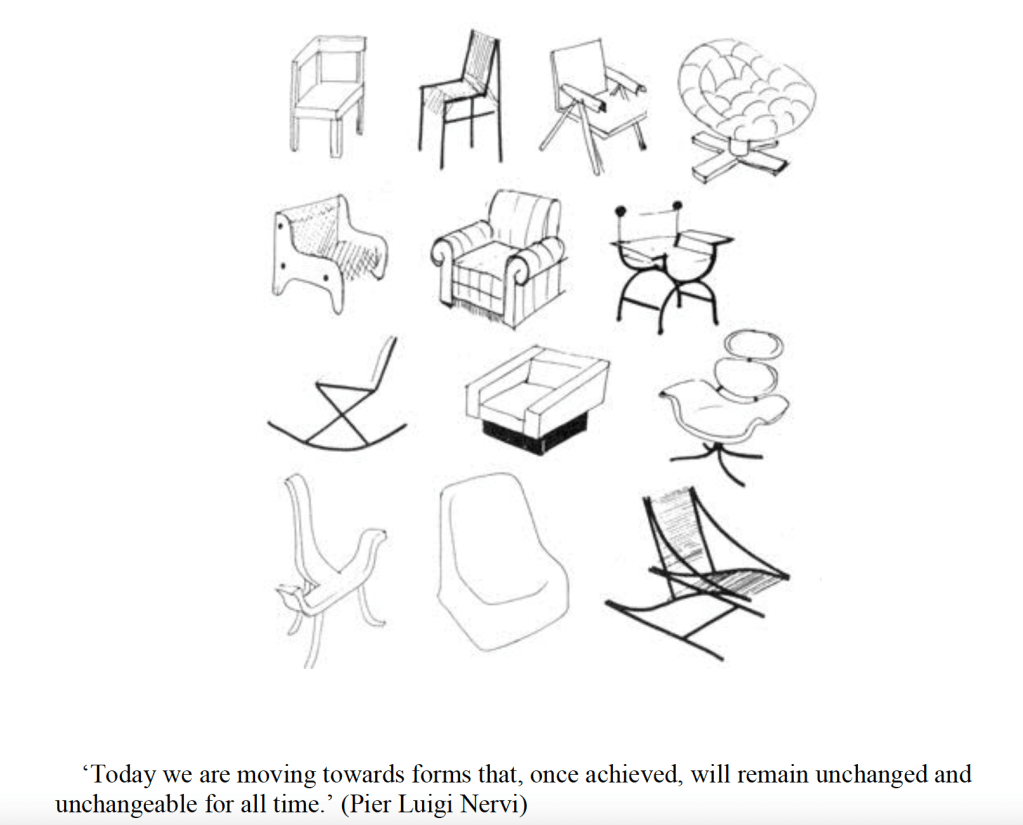
A very thorough market research campaign on people’s taste in chairs has established that they must answer the following requirements: they must be comfortable, luxurious, rustic, fanciful, strictly technical and functional, broad, narrow, high, low, hard, soft, flexible, elegant, rigid, compact, large and impressive, cheap, good value, obviously expensive and socially impressive, made of one single material, made of a variety of materials; while the favoured materials are rare and rough, as well as refined and crude.
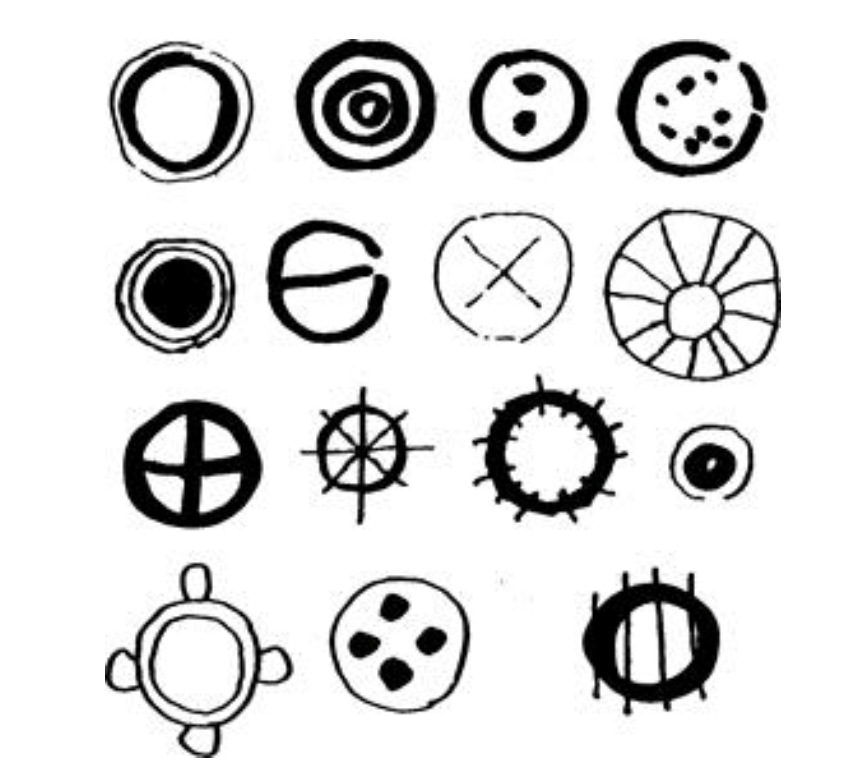
This Yang-Yin symbol is of Chinese origin, and is more than three thousand years old. It represents the unity created by a balance between two opposing forces that are equal and contrary.
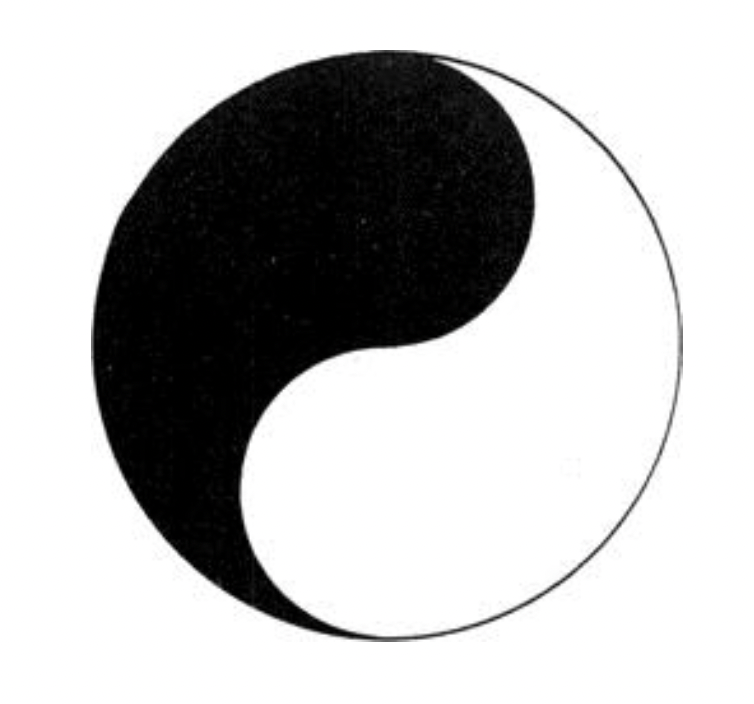
This unity is visibly represented by a disc made up of two equal parts, one black and one white. These parts seem to be in constant movement in a clockwise direction.
The two opposing forces are interpreted as natural forces, and from their balance comes life itself. Yang is the positive, active, masculine force, and subsists in dryness, heat, hardness, the sky, light, the sun, fire. It is firmness and brightness. Yin is the negative feminine principle present in everything passive, such as cold, damp, softness, mystery. It is in all mysterious, secret, evanescent, cloudy things, and in everything inactive. The shadow on the north side of a hill, the estuary of a river, earth and water: these are Yin.
The circle has always represented and still represents eternity, with no beginning and no end. The circle is an essentially unstable, dynamic figure. From it arise all rotating things, and all vain efforts to produce perpetual motion.
Karel Martens
I like what he said that Curiosity is the answer – I think that this is one of the most important characteristic of a designer.
“As a designer you are always working for the future, what i do now is for tomorrow not for today.”
The Divided Brain and the Making
of the Western World
Iain McGilchrist: The division of the brain is something neuroscientists don’t like to talk about anymore. It enjoyed a sort of popularity in the ’60s and ’70s after the first split brain operations, and it led to a sort of popularization which has seen been proved to be entirely false. It’s not true that one part of the brain does reason and the other does emotion; both are profoundly involved in both. It’s not true and language resides only in the left hemisphere, it doesn’t, important aspects are in the right. It’s not true that visual imagery is only in the right hemisphere, lots of it is in the left.
Nowadays we live in a world which is paradoxical. We pursue happiness and it leads to resentment and it leads to unhappiness and it leads, in fact, to an explosion of mental illness.
In our modern world we’ve developed something that looks awfully like the left hemisphere’s world. We prioritize the virtual over the real. And the need for control leads to a paranoia in society that we need to govern and control everything. It turned out that Einstein’s thinking somehow presaged this thing about the structure of the brain. He said, “The intuitive mind is a sacred gift and the rationale mind is a faithful servant. We have created a society that honours the servant but has forgotten the gift.”
THINKING TOO MUCH; AND THINKING TOO LITTLE
https://www.theschooloflife.com/article/thinking-too-much-and-thinking-too-little/
Thinking about ourselves – our feelings, our past, our desires and our hopes – is a hugely tricky task that most of us spend a good deal of effort trying very hard to avoid. We keep away from ourselves because so much of what we could discover threatens to be painful.
When we think too much, in essence, we are filling our minds with impressive ideas, which blatantly announce our intelligence to the world but subtly ensure we won’t have much room left to rediscover long-distant feelings of ignorance or confusion – upon which the development of our personalities nevertheless rests.
A defence of emotional honesty has nothing to do with high minded morality. It is ultimately cautionary and egoistic. We need to tell ourselves a little more of the truth because we pay too high a price for our lies. Through our deceptions, we cut ourselves off from possibilities of growth. We shut off large portions of our minds and end up uncreative, tetchy and defensive, while others around us have to suffer our irritability, gloom, manufactured cheerfulness or defensive rationalisations. Our neglect of the awkward sides of ourselves buckles our very being, emerging as insomnia or impotence, stuttering or depression; revenge for all the thoughts we have been so careful not to have. Self-knowledge isn’t a luxury so much as a precondition for a measure of sanity and inner comfort.
Critical thinking: a concise guide
Kemp, By Tracy Bowell & Gary
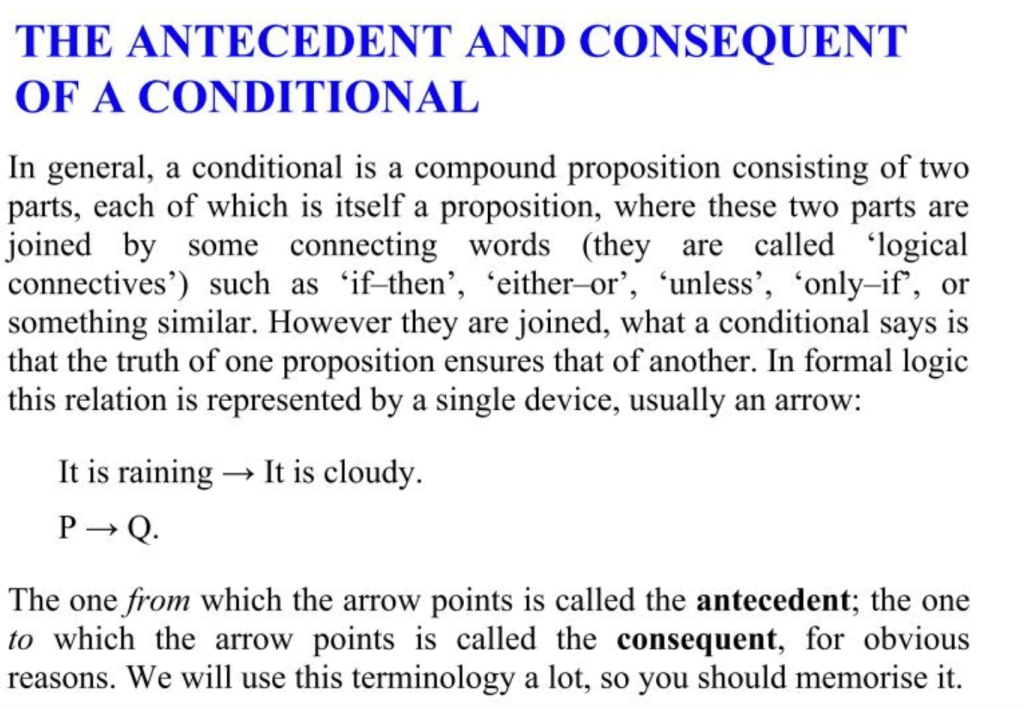
Ambiguity – a sentence is ambiguous in a given context when there is more than one possible way of interpreting it in that context.
Vagueness – is a property of words and phrases.
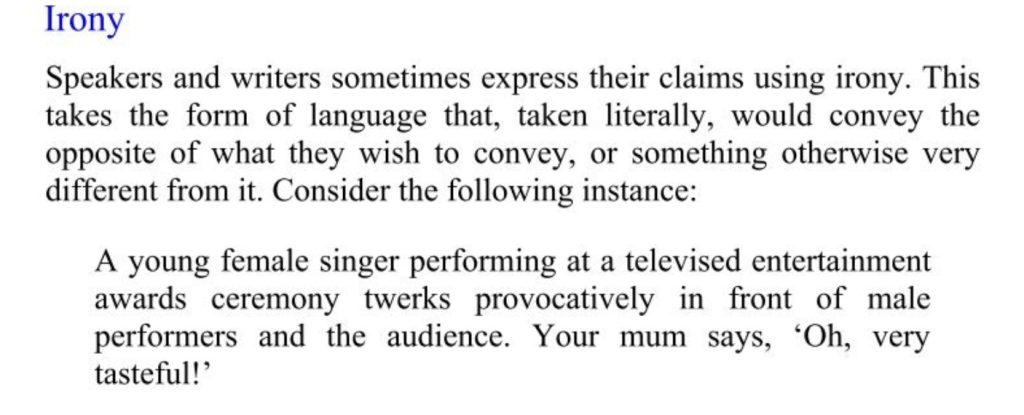
Rhetorical questions – take the form of a question but indirectly assert a proposition. Speakers and writers often use rhetorical questions to make a point:
Should my right to freedom of speech be limited just because you disagree with me?
They expect that the reader response will be “No”
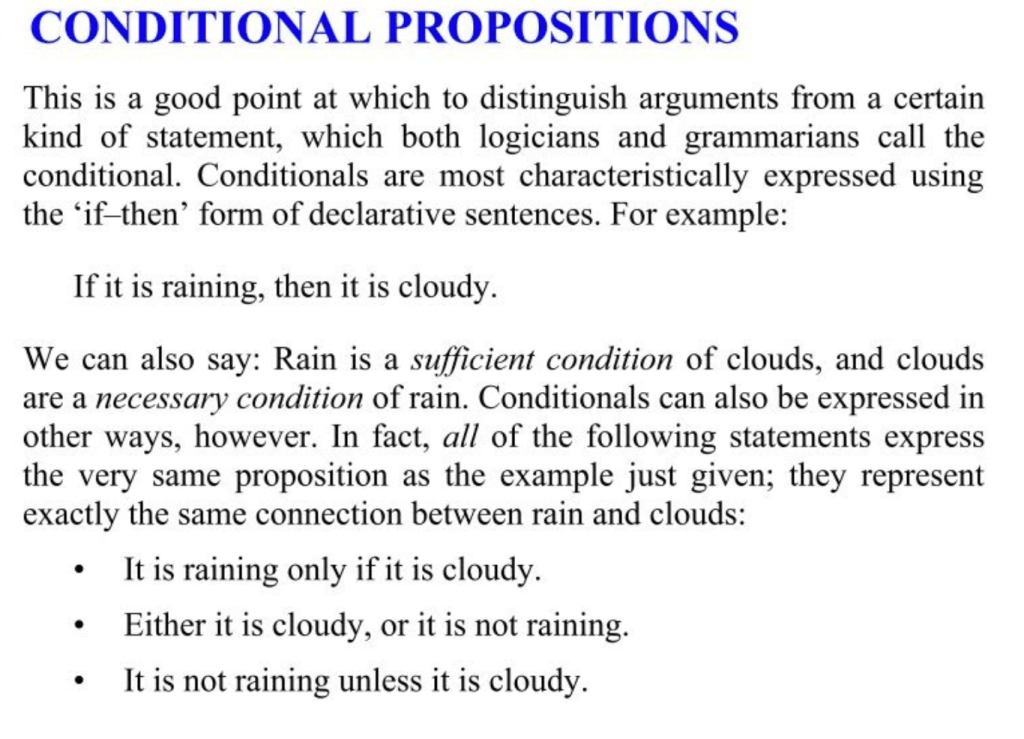
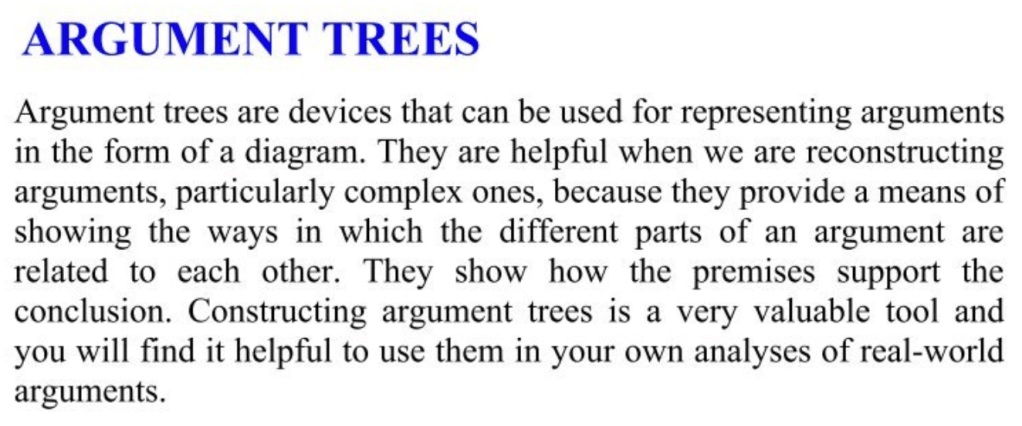
Truth – the fundamental concept of logic is the concept of truth.
In Thinking, fast and slow- by Daniel Kahneman
This book is about the understanding of judgments and decision making.
“When you are asked what you are thinking about, you can normally answer. You believe you know what goes on in your mind, which often consists of one conscious thought leading in an orderly way to another. But that is not the only way the mind works, nor indeed is that the typical way. Most impressions and thoughts arise in your conscious experience without your knowing how they got there. You cannot trace how you came to the belief that there is a lamp on the desk in front of you, or how you detected a hint of irritation in your spouse’s voice on the telephone, or how you managed to avoid a threat on the road before you became consciously aware of it. The mental work that produces impressions, intuitions, and many decisions goes on in silence in our mind.
Social scientists in the 1970s broadly accepted two ideas about human nature. First, people are generally rational, and their thinking is normally sound. Second, emotions such as fear, affection, and hatred explain most of the occasions on which people depart from rationality.
My main aim here is to present a view of how the mind works that draws on recent developments in cognitive and social psychology.
Intuitions do not all arise from true expertise. Many years ago I visited the chief investment officer of a large financial firm, who told me that he had just invested some tens of millions of dollars in the stock of Ford Motor Company. When I asked how he had made that decision, he replied that he had recently attended an automobile show and had been impressed. “Boy, do they know how to make a car!” was his explanation. He made it very clear that he trusted his gut feeling and was satisfied with himself and with his decision. I found it remarkable that he had apparently not considered the one question that an economist would call relevant: Is Ford stock currently underpriced? Instead, he had listened to his intuition; he liked the cars, he liked the company, and he liked the idea of owning its stock. From what we know about the accuracy of stock picking, it is reasonable to believe that he did not know what he was doing.
Fast thinking includes both variants of intuitive thought-the expert and the heuristicas well as the entirely automatic mental activities of perception and memory, the operations that enable you to know there is a lamp on your desk or retrieve the name of the capital of Russia.
The distinction between fast and slow thinking has been explored by many psychologists over the last twenty-five years.”
Workshop Challenge – How do we think?
Thomas Heatherwick talks about this idea of thinking through making. It’s quite common for people in architecture or product design or that kind of field to make models when they are working, but he talks about the act of making abstract models or forms, as a means to break out of creative ruts.
Bruno Munari is an Italian artist and designer and he made these things that he referred to as useless machines, which were basically these weird, different material objects that were suspended, like mobiles that children have over beds, but they were suspended and would hang and spin around each other. In his work he talks a lot about questioning the ideas of function and essentially, based on his definition of what is functional, these objects serve no purpose, they’re completely useless, other than the fact that they are perfectly in harmony with each other. Their sole purpose is to be their own micro-climate and to rotate around each other.
I agree that is good to make relationships between things not only in a geographical location way but maybe also in terms of feelings or situations or colours.
More research
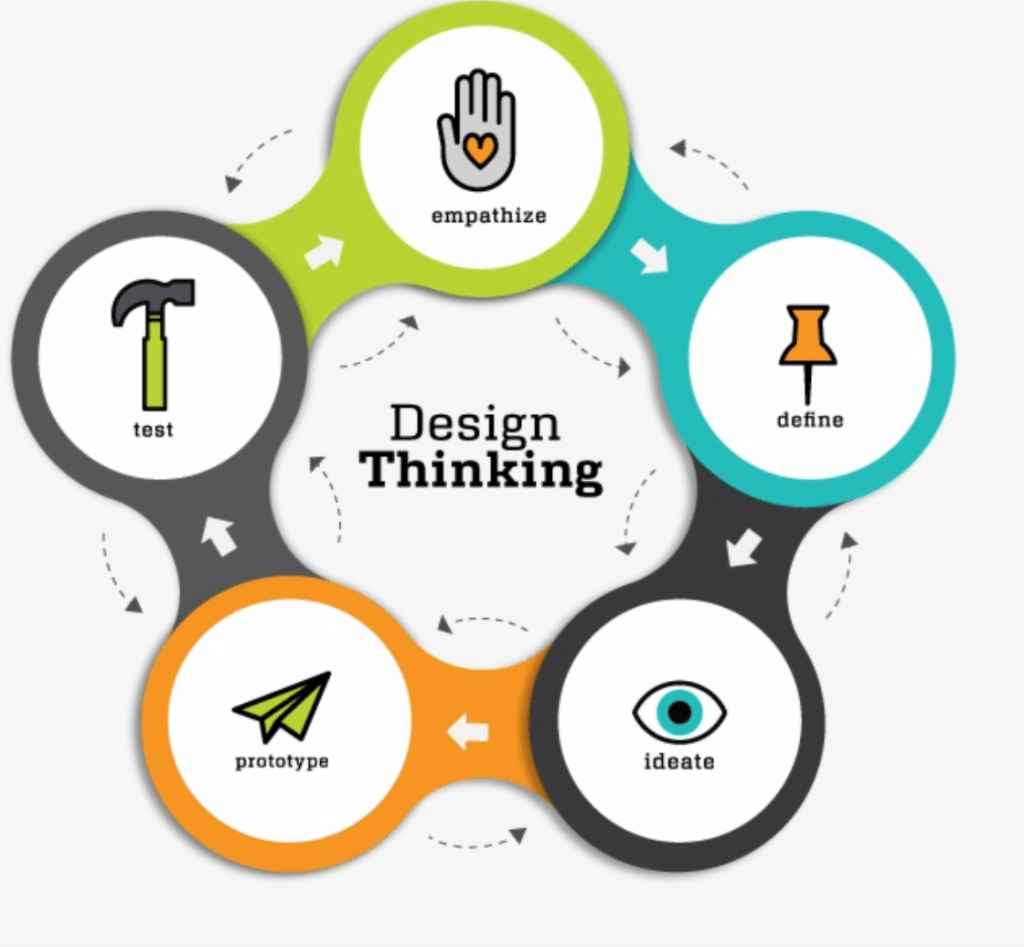
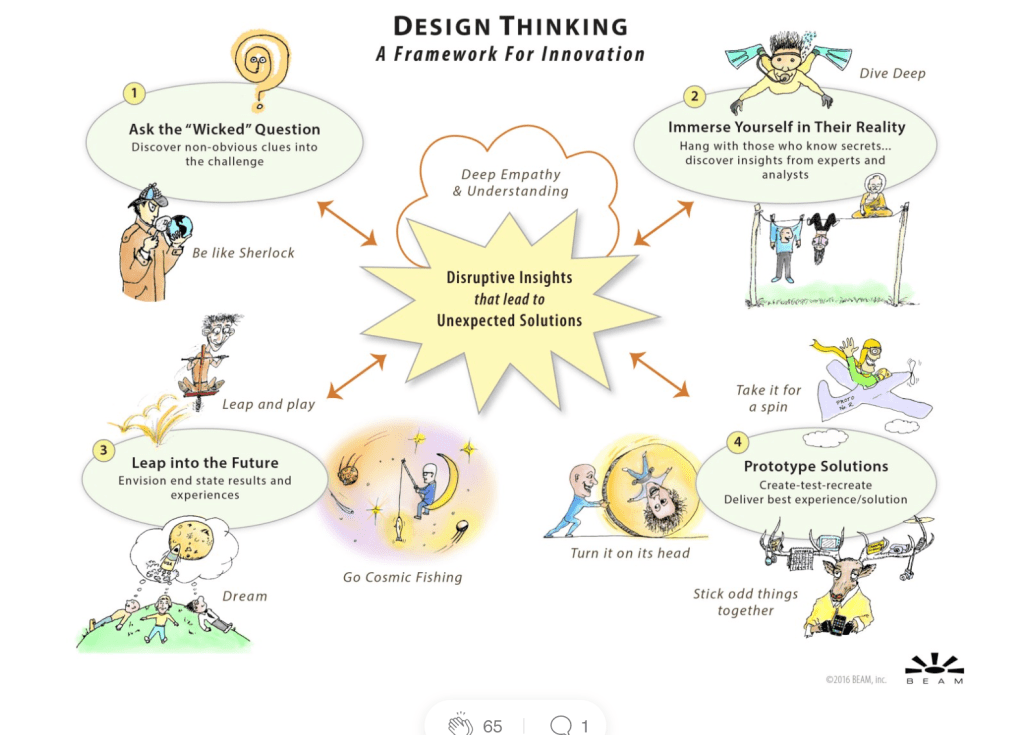
“If I had only one hour to solve a problem, I would spend up to two-thirds of that hour in attempting to define what the problem is.” — The Head of the Industrial Engineering Department of Yale University
In defining the right problem, you want to look at…
a) The Past…look back to the past that led to the challenge…there are a lot of non-obvious and valuable insights in the history of the company or problem.
b) The Current Experience…remember you are building empathy and insights into the customers’ experiences, so you want to observe them first hand as much as possible, not just study second hand research data.
c) The Future…look at the future context for the customer experience, including the Zeitgeist trends and shifts in the greater world, changes in the economy or social dynamics, new generation’s values shifts (like Millennials), technology disruptions, etc.
https://beamincconsult.medium.com/design-thinking-design-doing-83fd539624d7

The webinar
Joe Gilmore – https://qubik.com/zr/
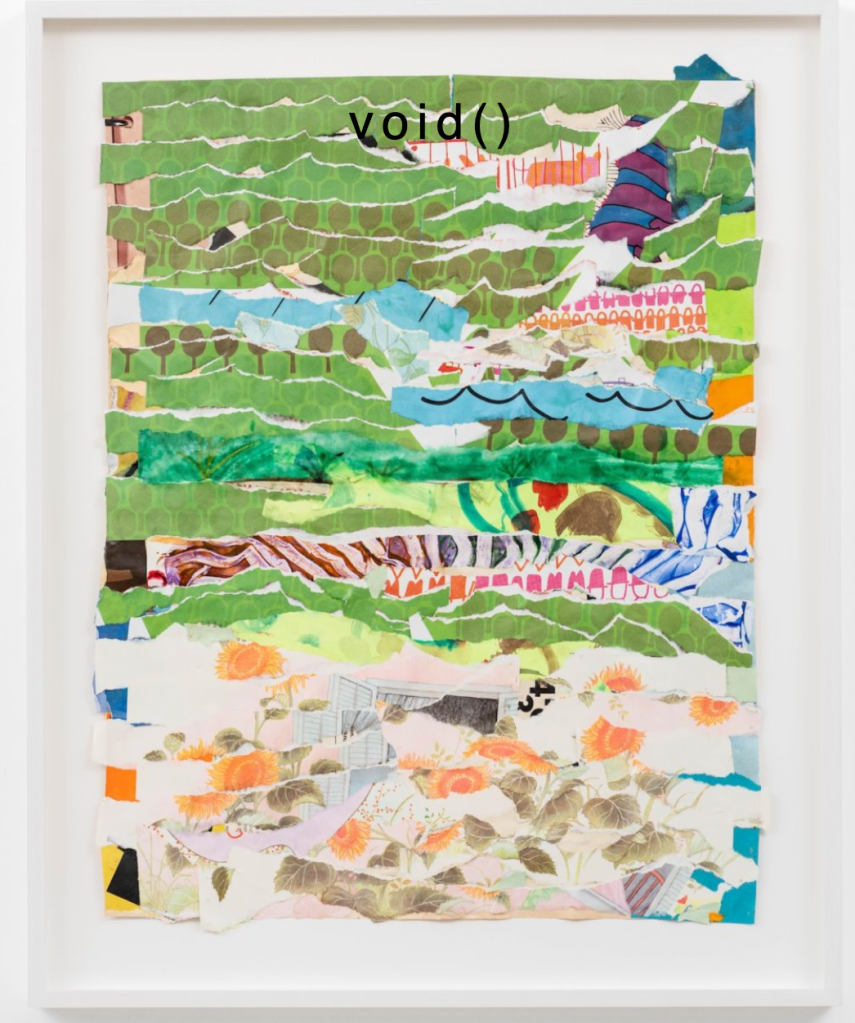
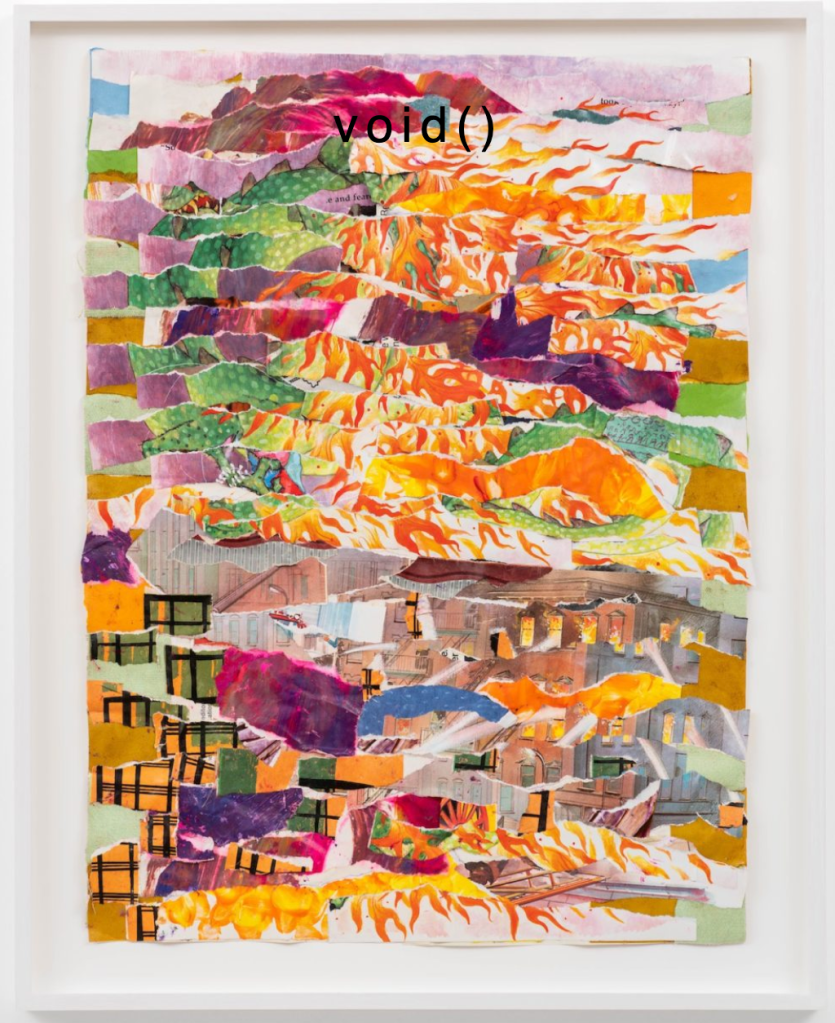
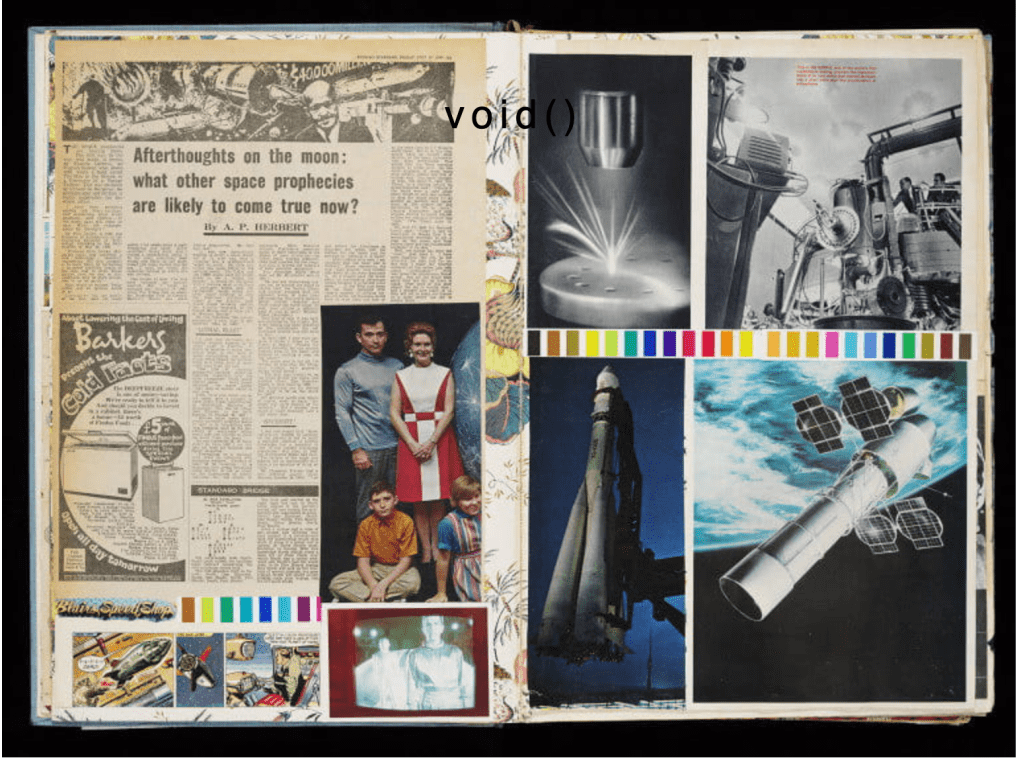
I like his work and the idea of making scrapbook for generating ideas is veery good
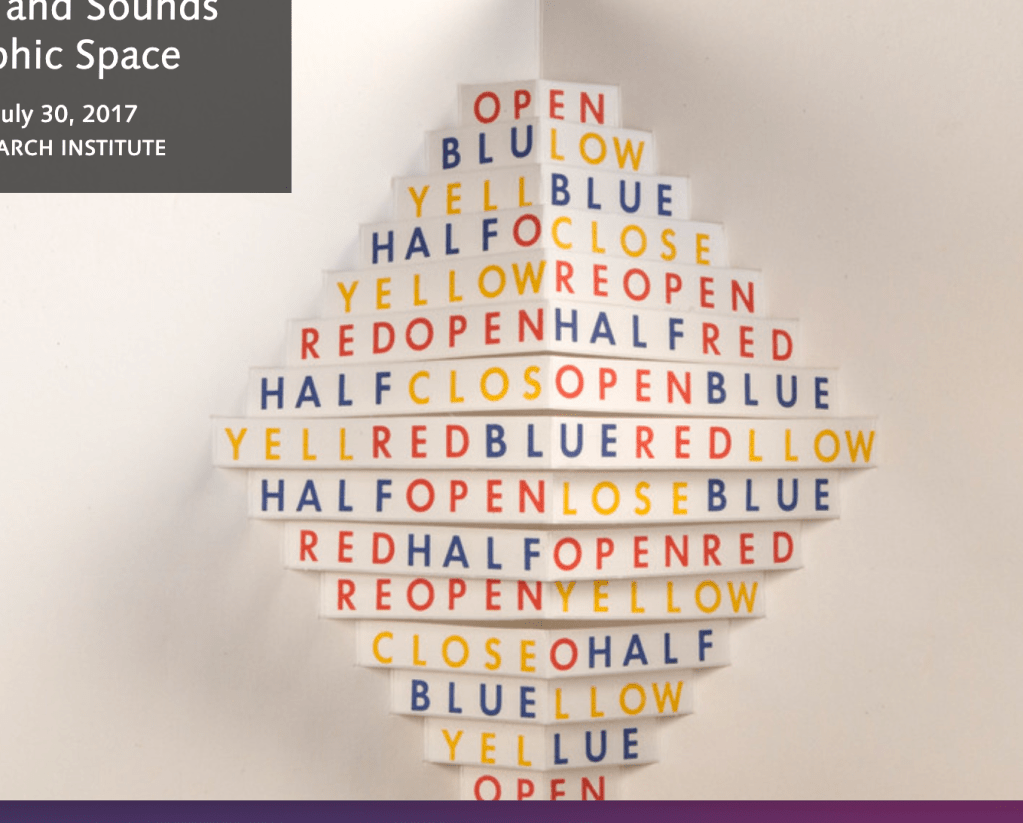
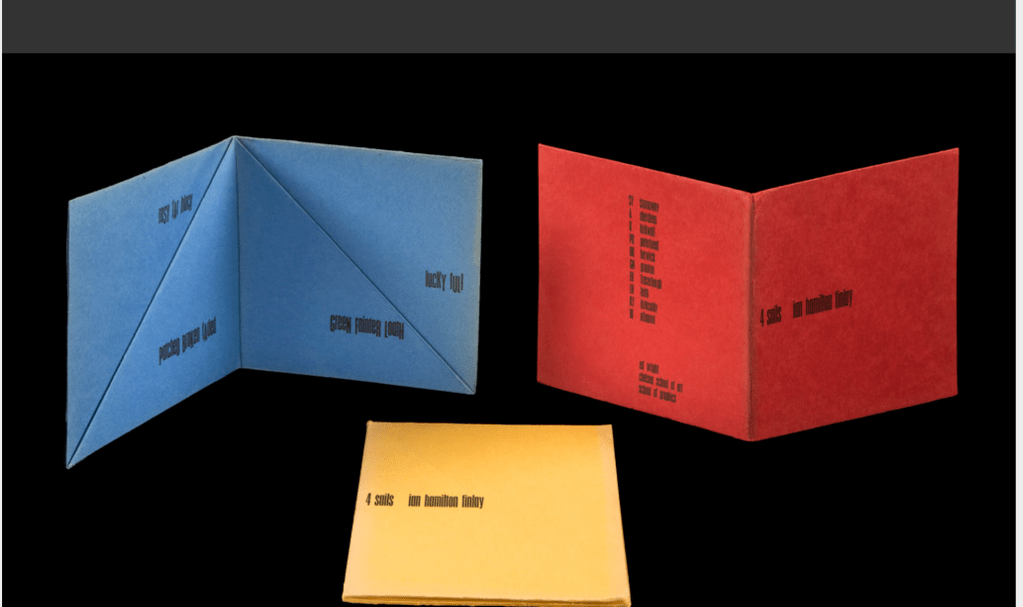
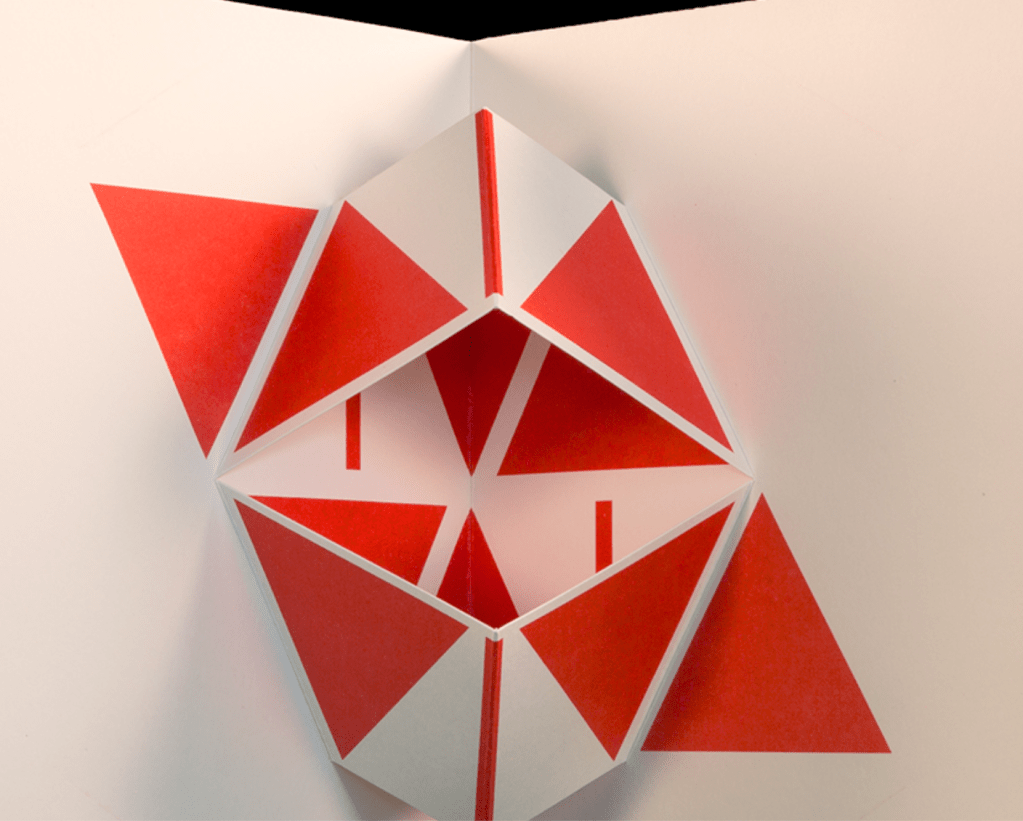
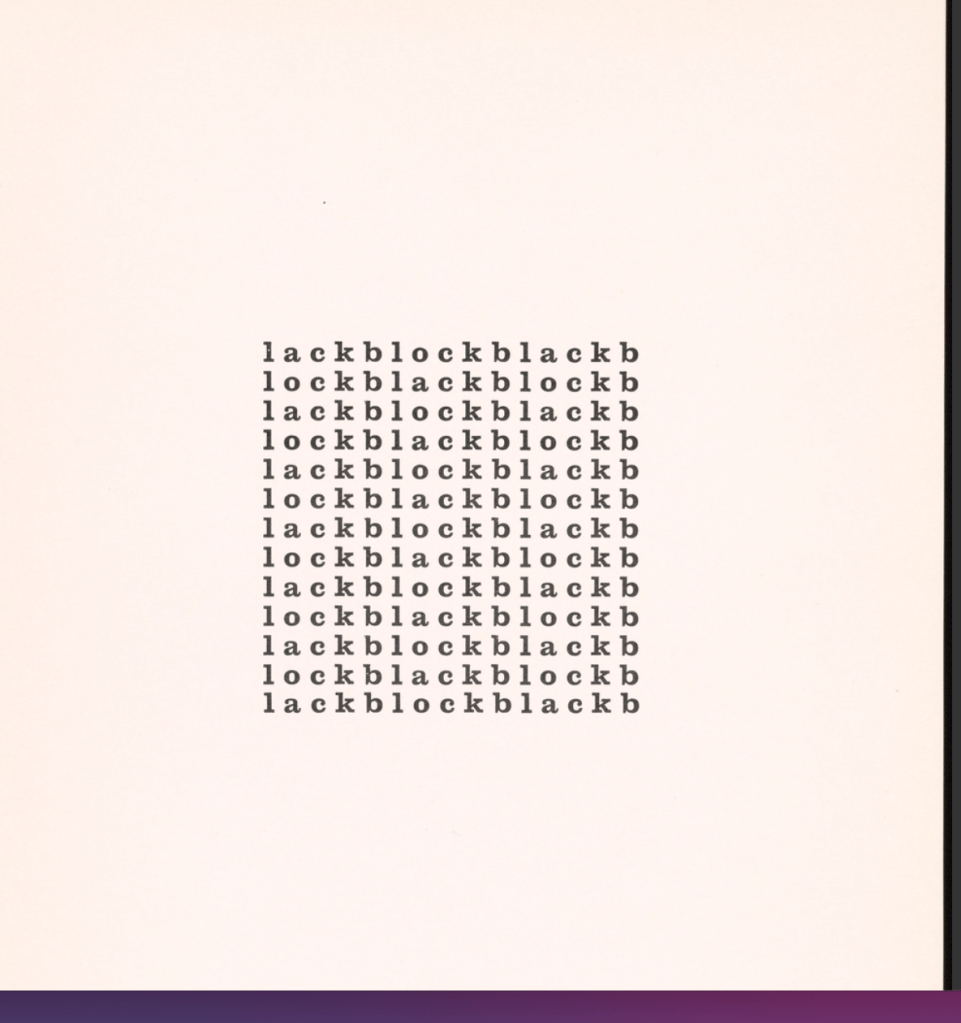
https://www.getty.edu/research/exhibitions_events/exhibitions/concrete_poetry/
 Vicky Kafkaki - Graphic Design MA Falmouth University
Leave a comment