Why and how?
The role of research in graphic design: Semiotics, Analysis, Communication, Theory, Systematic, Approaches, Semantics, and Discourse theory
by Noble, Ian & Bestley, Russell
In this book thee authors talk about why we do what we do and how, through testing, feedback, and some other approaches.
Method – is a way of proceeding or doing something, especially in a systematic or regular manner, an action or system of actions toward a goal.
Methodology – a body or collection of methods employed in a particular activity.
Pure Research – the investigation of graphic and visual languages in a propositional sense, rather than those that have a predetermined commercial application.
Applied Research – the investigation of a practical problem, usually with thee underlying intention of creating potential practical solutions.
Research provides the foundations of the design process of problem solving and visual communication. In the process we can discover new information about the subject.
Deductive Research – starts from the position of a general conclusion and then searches for data to support it.
Empirical Research – investigation into a field of study that is based on a direct observation of phenomena.
“Theories such as gestalt, for example, have been drawn from the discipline of psychology and employed by designers in their working methods and practices. These ideas have influenced the everyday discussion of graphic design practice and the language used by designers to explain their working methods.”
What made impression to me is that the authors are talking about the danger of of loosing sight of the value of traditional design thinking and methodology while chasing the next potential operating system or form of new media that will seize the public’s imagination. So, trying to create something to impresses the viewers kind of put on the side the main goal of the design.
The Design Cycle
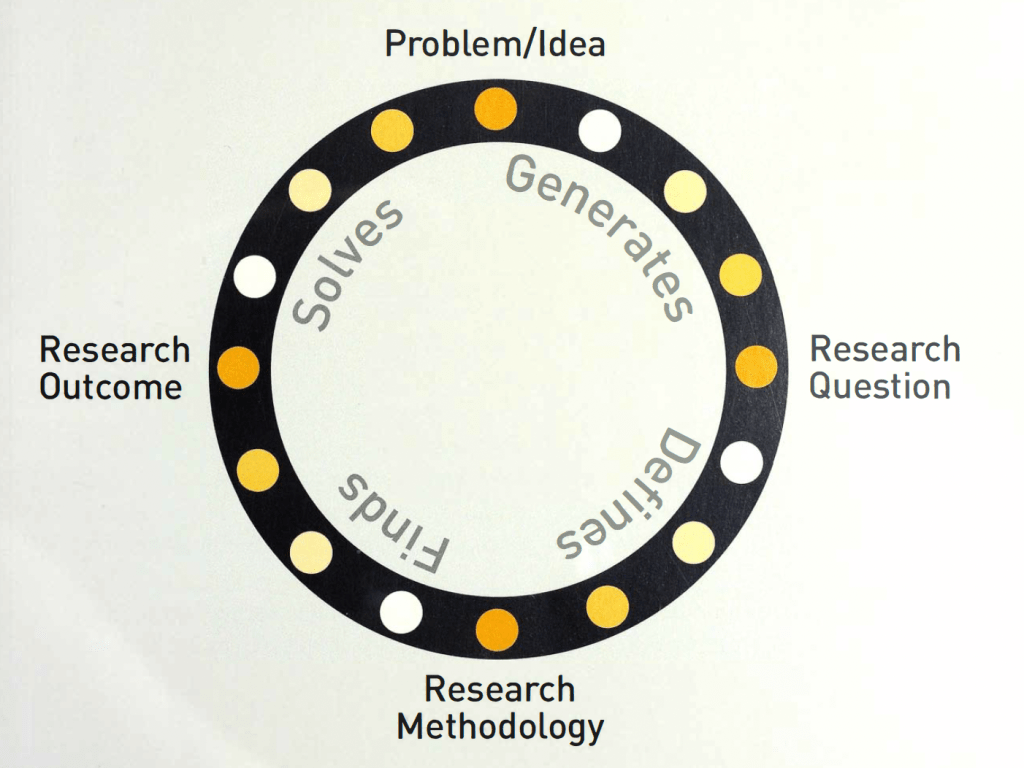
I love the manifesto for Higher Learning by Andrew Howard
- No amount of ingenuity or creativity can create strong, clear, memorable design solutions from thought which is confused. This is why design is first and foremost a means of organizing ideas. Design is thinking made visible.
- Opinion is welcomed but it is not enough. Your ideas must be substantiated through facts and testing, through research and evaluation. Build the confidence and the expertise to substitute “I think” for “I know”.
- Solutions will always vary according to context, interpretation, and vision. There are no absolute answers. Learn instead to ask the right questions and allow the nature of the journey to determine the best destination.
- Regardless of any specific design interest or preference that you may have, in today’s world all designers need to develop a multi-form understanding that is able to respond to multiple communication needs and multimedia is not a component of contemporary design, it is its destination.
- Beware of fashion – it encourages the idea that nothing is lasting and that you always have to be on the move. If you are never still you will encounter profundity. Learn to stay in the same place and dig deeper.
- Take nothing for granted. Learn to question what you think you know. Remember that the extraordinary is as likely to reside in the ground beneath our feet as in the stars above our heads. The capacity to create meaningful work is not simply measured by your willingness to explore new ideas and new territory but also through the ways that you are able to apply new ideas to old territory.
- Design is a process of discovery through thinking and making, and our ability to discover is generally greater than our ability to invent. Think of your work process as a form of travel. Look for things you don’t know, the things that are revealed or inadvertently uncovered. It is easier to find a world than to make one.
- We can make as a result of thinking and we can think as a result of making because thinking and making are not alternatives to each other. Both can be starting points as they are both ways of exploring ideas, testing methods, and generating knowledge. Both are forces of reciprocal power within the design process. One cannot take place without the other.
- Every medium has its own voice, every form its own possibilities, every technique its own expressiveness, every visual language its own history and significance. These are your tools and every choice you make becomes a particular way of saying something. Learn your craft and make your choices knowingly.
- Design does not exist solely in the realm of the intellect. The power to enlighten, to celebrate, to inform, and to disturb expectations also lies in the capacity to make emotional connections. Always use your head but never forget your heart.
- The unique capacity of a designer is the ability to dismantle existing communication codes and to recombine some of their elements into structures which can be used to generate new narratives of the world. This tell us that method is at the heart of our practice and that design is not a piece of the puzzle, it is a way of putting the puzzle together.
- You cannot succeed without commitment. You cannot thrive without passion. You cannot survive without pleasure. All these things, or their absence will be reflected in your work. The resonance of design as a collective social project is in your hands.
I think we read this every morning before to start working. It is very inspirational.
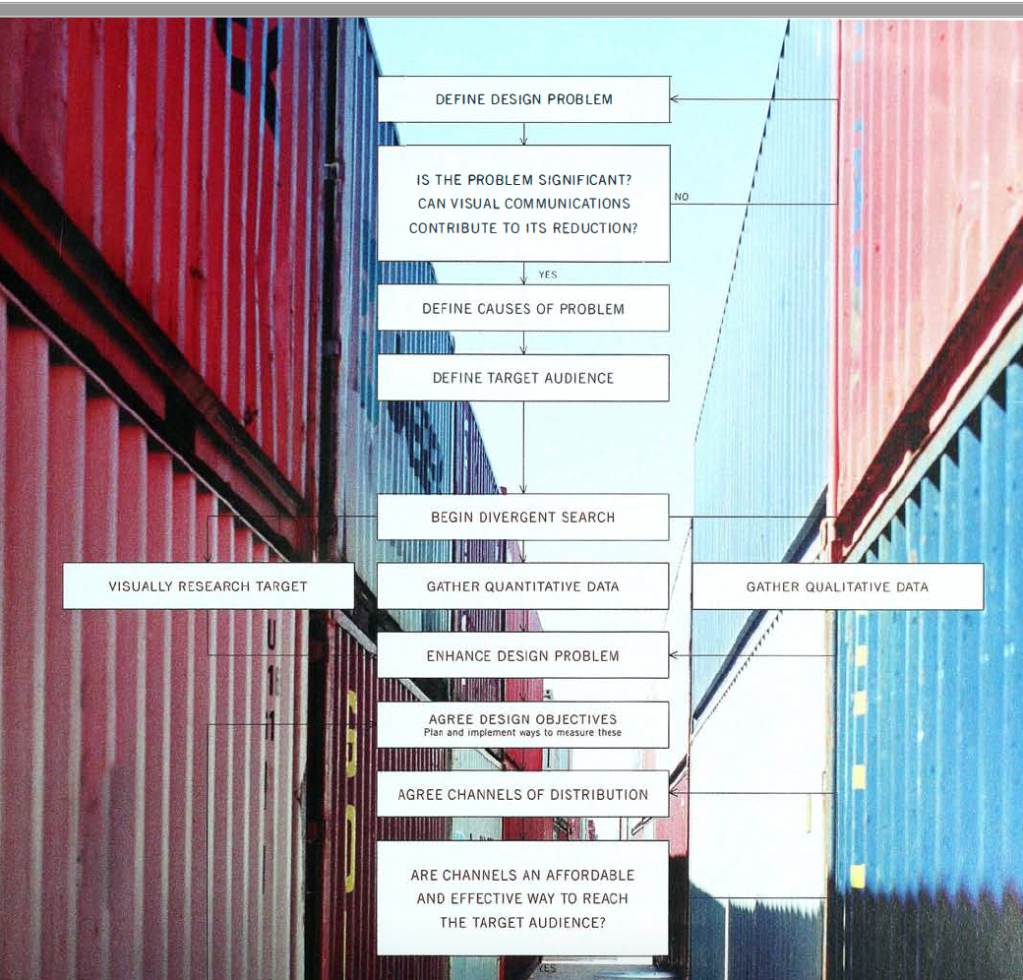
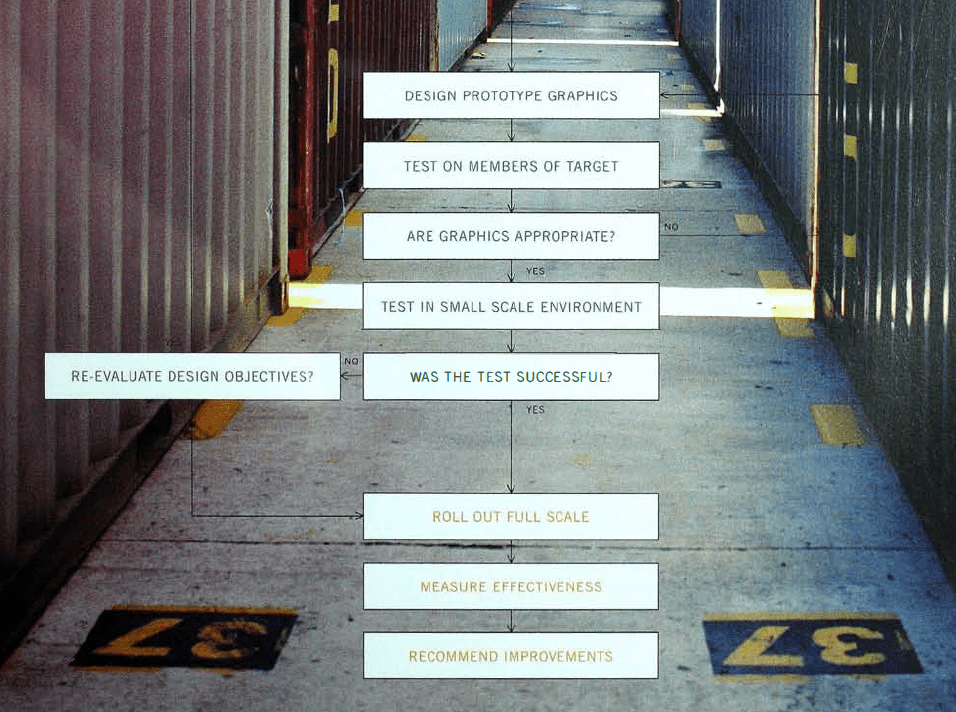
- Definition – through the analysis of thee problem and the identification of a target audience, the designer can refine the brief and develop a clear set of objectives for the project.
- Divergence
- Transformation – describes the development and testing of a range of potential visual solutions.
- Convergence – it has details about the production of the final design at full size, its implementation in the public arena, and the measurements if its effectiveness within this target environment.
Design research; methods and perspectives Brenda Laurel
Brenda share with us that one of her favor parts of product management and marketing, involved learning about the people who would eventually use the product – listening to them, watching them or experiencing their lives first hand.
Focus groups – they hav evolved into an extensive family of related methods: – traditional focus group,
– mini focus group,
-1-on-1 interviews,
-dyads,
– super groups,
– triads,
-party groups,
– online discussion groups
Ethnography – research approach that produces a detailed, in-depth observation of people behavior, beliefs and preferences by observing and interacting with them in a natural environment.
- Field ethnography – A person or group of people are observed by a researcher while they go about their normal lives.
- Digital ethnography – It typically follows a similar approach, observing people as they go about their lives, but uses digital cameras, PDAs, laptops, virtual collaboration sites or other technology to record, transmit, edit and present the information.
- Photo ethnography – A person is given a camera (still or video, film or digital) and asked to capture images of hi or her life and describe them with accompanying notes .
- Ethnofuturism – This is a very young but rapidly growing variation that marries digital ethnography focused on daily activities and small details of cultural significance with a futures perspective that looks at major trends influencing and changing culture as a whole.
- “Real world” ethnographic enactments – First popularized by MTV in theirReal World series, this approach builds an environment for a person or people and then monitors them within it .
From Malinowks i’s early excursions to the field, to the University of Chicago’s “urban ethnography” of the 1930s and 1960s, to the present field of cultural studies, social scientists have typically used the ethnographic method for studying and learning about a person or relatively small group of people in order to theorize about culture at a more general level .
Participatory Methods – involve consumers in the development of the products, services or brands they hopefully will eventually buy
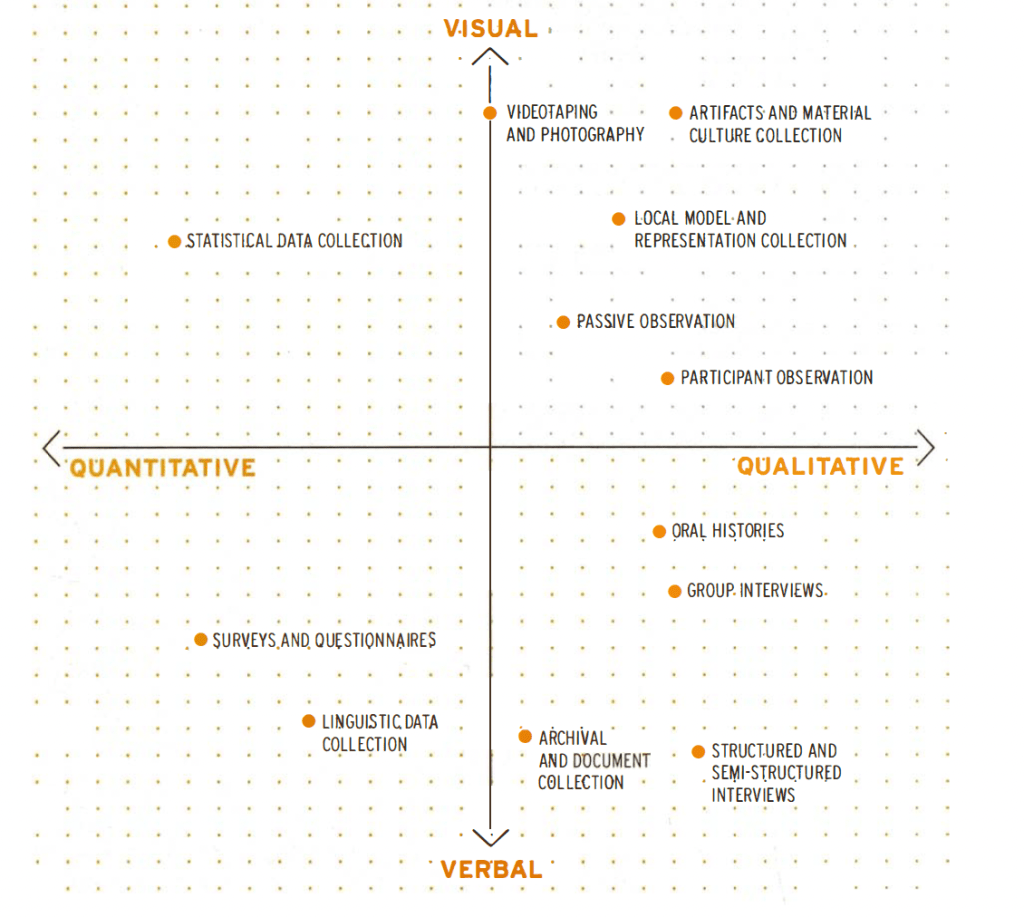
Quantitative research never deserved to be thought of as boring, and it becomes more brilliant every day as new strategies and techniques emerge from the innovative efforts of the design research community.
In 1955, Henry Dreyfuss published Designing for People. In it he argued that conducting field research was critical to successful Industrial design . This position was based on the insight that industrial design should both help and delight people .
Design isn’t merely about the object but the extensions of the object through its communications with the end user.
Qualitative research is typically used for casting a wide net on a topic, the exacting nature of quantitative research is used to pin down the details of the research. Quantitative study is to reduce rather than to add complexity. The interaction of qualitative and quantitative studies within an entire research process is a dance of expansion and contraction of possibilities, but always moving toward an optimized design.
I think bottom line, using statistics to create a product and improve design is crucial.
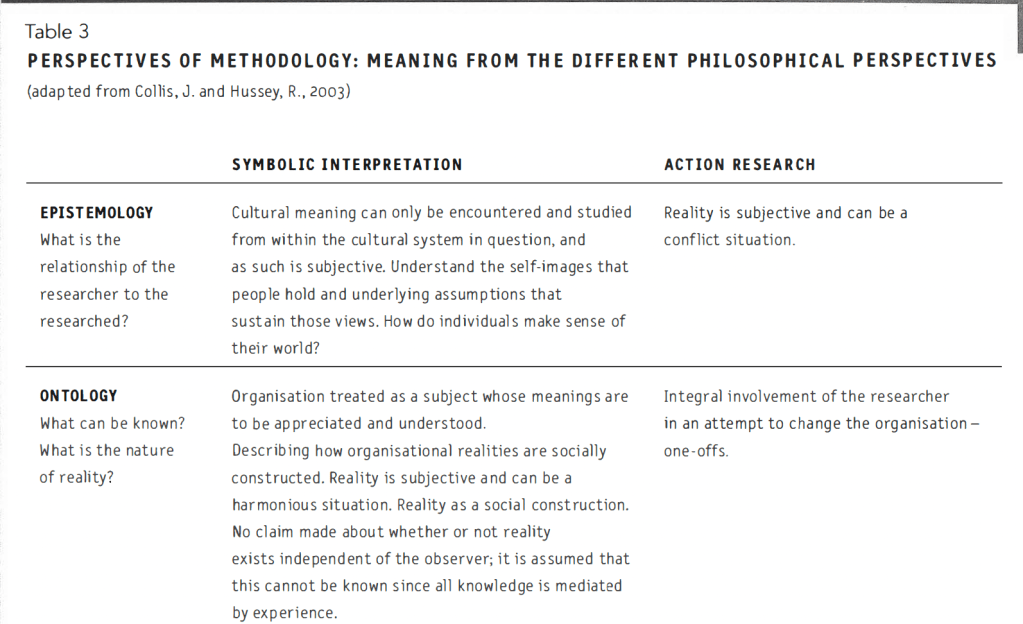
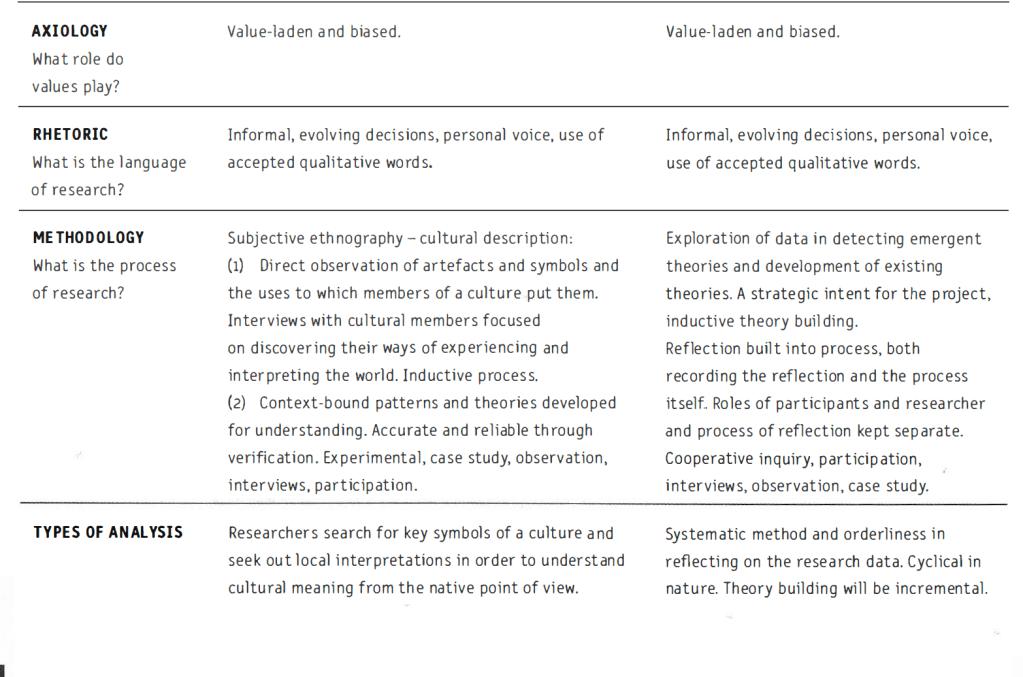
Understanding research philosophies – by Hilary Collins
Hilary Collins is explaining the 3 ways of research – epistemology, ontology and axiology
Epistemology is the study of the theory of knowledge, including the nature, scope a limitations of it. Epistemology addresses cognitive sciences, cultural studies, and the history of science. It is the construction of concepts, the nature of conditions, and the validity of the senses. It is useful method of evaluating the world around us. Epistemology – the word comes from the ancient Greek episteme meaning ‘to know’ Philosophically speaking, epistemology is the study of how we go about knowing things, how we know whether things are true or false, and what steps we need to take to gain knowledge of the world. Epistemology is the knowligy of any debate in your field of what is need to be known. Two aspects of ontology exist:objectivism and subjectivism.
Ontology is the philosophical study of the nature of being or existence. In metaphysics, ontology is the philosophical study of being, as well as related concepts such as existence, becoming, and reality. Ontology addresses questions of how entities are grouped into categories and which of these entities exist on the most fundamental level. Ontology comes from the ancient Greek Ontos, which means ‘being’ or ‘to be’ Ontology questions include ‘What is existence’, ‘What is the nature of existence’
For social scientists, some fundamental oncologic questions might be
- Are people essentially selfish?
- Do people calculate costs and benefits for all their actions?
- Are there universal features of social organization?
- Do people always know the consequences of their actions?
Axiology is the study of quality or value, and is often concerned with ethics and values.
Deduction – Involves developing a theory that is tested and presents more of a scientific approach to research.
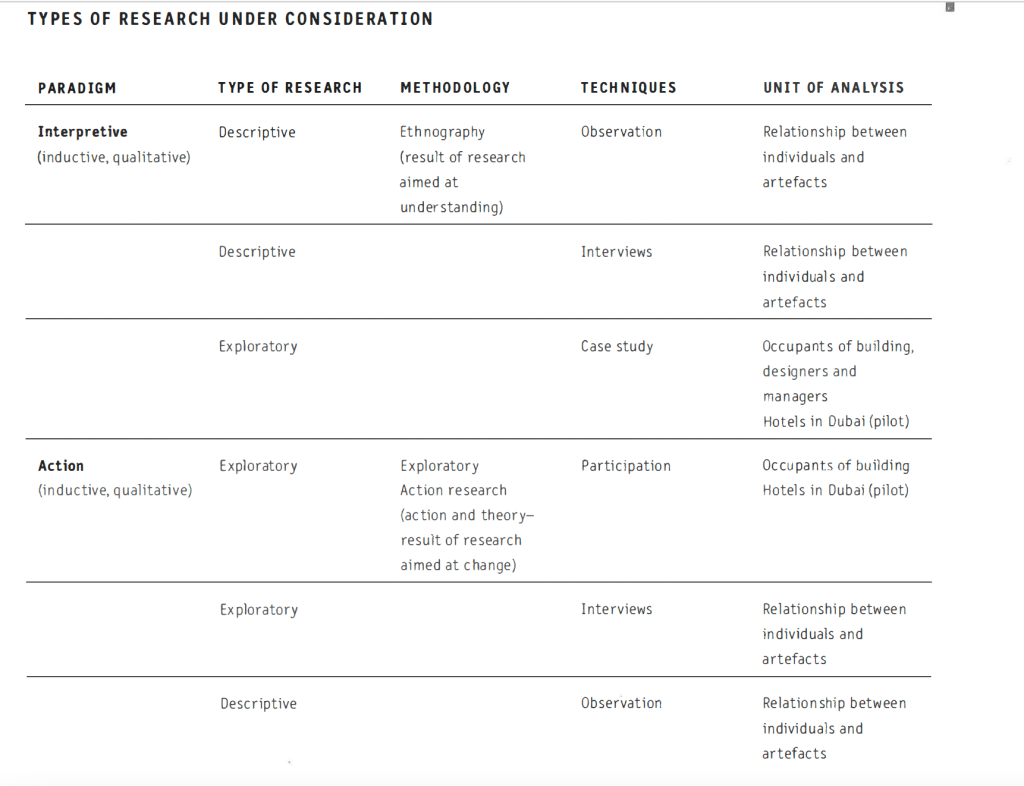
In exploratory sequential research, you would gather qualitative data to explore the problem and then quantItative data to try to explaIn the relationships found in the qualitative data, Exploratory research provides an initial understanding of an issue or a situation and is usually conducted because a research problem has not yet been defined.
 Vicky Kafkaki - Graphic Design MA Falmouth University
Leave a comment