I was thinking to write about Ukraine but since this topic is already taken I decide to go back in history – year 1999 – the conflict between Serbia and Kosovo.
I just had arrived in the States and I then was the time when I saw how powerful is the media – it can easy brainwash most of the people and put labels on people or actions. I love the States, it is a beautiful country, full with opportunities but big percentage of the people have no clue about geography or history, so they can be very easy controlled by the media. I don’t mean to offend anybody, I have good friends here and the people here will go to do the extra mile if you need help, they have big hearth .
I have been always working couple jobs (in restaurants, in the real estate and now we have our own business) and when people ask me where I am from (I still can’t get read of my accent), I tell them Bulgaria and most of the time, they don’t know where it is.
I have been many times to Serbia and I have friends there – they are all amazing people and when I was hearing here in the TV journalists saying how bad the Serbian people are, I couldn’t believe its (and is different people everywhere – some bad, some good – we can’t put labels). My opinion is just from my experience – so, I am sure many people will disagree with me and that is okay – we are all different, we come from different backgrounds and is normal to have not the same opinions. Anyway, after couple years when I went to college here I did a paper on this war and I did some more research. Kosovo was actually Serbian land. After the second war, the muslims there were about 10 – 15% but with time, they multiplied quickly (their families usually had more than 4-5 kids). So, on couple decades, the percentage was much bigger. But that doesn’t change the fact, that this was Serbian land – they had there many buildings with big historical significants. It is the same let say if the Turkish people in Germany want to create in one part their own country only because they are many, or the Spanish in California, or the Albanians in Greece…. My point is that just because certain populations grows, doesn’t give them the right to demand their own country. Milosevic was defending his land and since when this is a crime?
Anyway, it was little more complicated than that but I have to write short paper, so, I will not go much deeper. And I don’t agree with the violence -I believe that always can be found a peaceful solution for any problem. There is no need of bombing or killing innocent people (that goes not only for both sides in this conflict but for any other conflict in the world).
After eleven weeks of bombing in the spring of 1999, the United States and NATO ultimately won the war in Kosovo. Serbian troops were forced to withdraw, enabling an international military and political presence to take charge in the region.
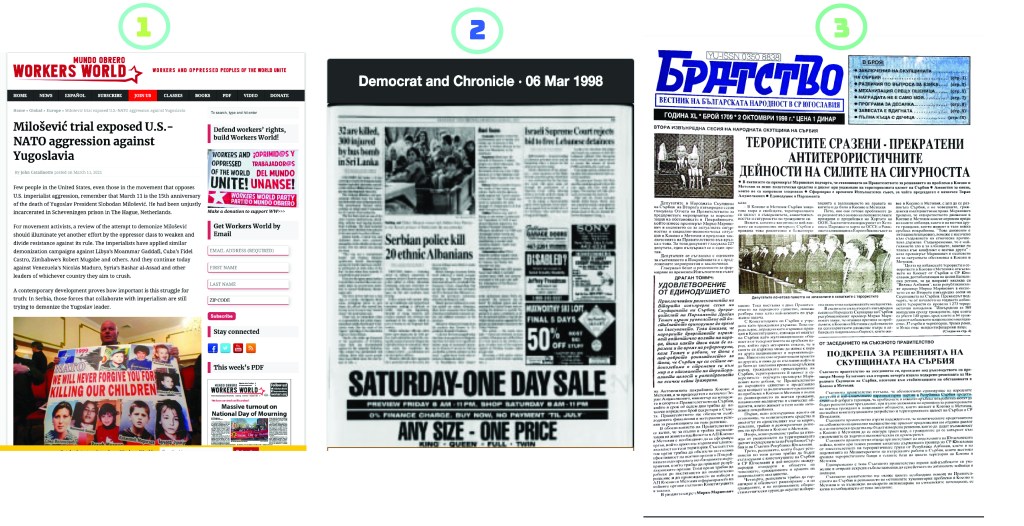
The first one is from the newspapers “Workers World” – they use capital condensed letters for the name of the newspaper, aligned to the left with screaming for attention red color. Next to it is the slogan ” Workers and oppressed people of the world unite”. The title is “Milosevic trial exposed US/NATO aggression against Yugoslavia. They have used very bold, sans serif typeface that grabs your attention immediately (also aligned left). Image of kids’s pictures killed in the war are the main focus of the story
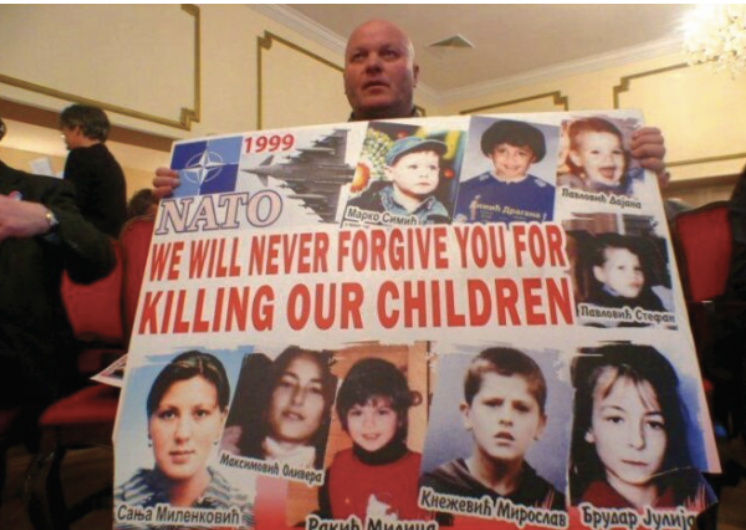
2. The second is from the American papers “Democrat and Chronicle” from 1998 – this is a year before the bombing – the title is not so big, medium sans serif typeface and again the image is taking a lead of the attention
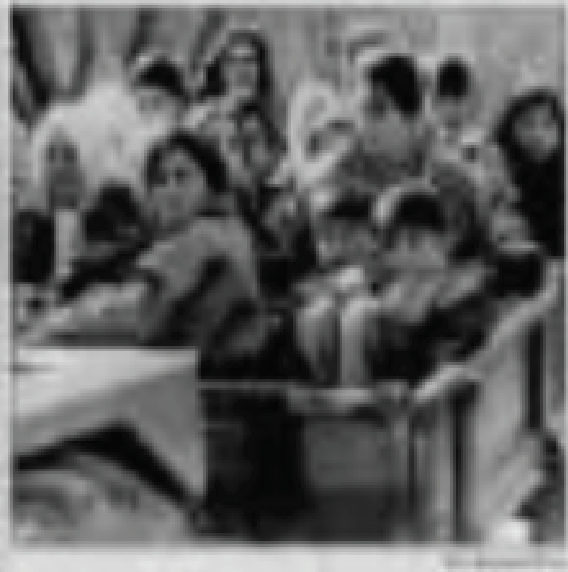
The media is going along with the political party in power and they had to go against Serbia and make the other side look as victims.
3. This page is from the paper “Братство” – this is from October 1998 – before the war – I read big part of it (Serbian and Bulgarian are similar languages and could understand most of it). So, they were trying to resolve the problem peacefully but II don’t think that was in the agenda of the big powers. I like the typeface that is used for the name of the paper – the letters are blue and look like people holding on to each other.

It was very interesting the opinion of professor Noam Chomsky about the war:
“If we hope to understand anything about the world, we should ask why decisions on forceful intervention are made one way or another by the states with the power to exercise their judgment and will. At the 1993 American Academy Conference on Emerging Norms, one of the most distinguished figures in the academic discipline of international relations, Ernest Haas, raised a simple and cogent question, which has since received a clear and instructive answer. He observed that NATO was then intervening in Iraq and Bosnia to protect Kurds and Muslims, and asked: “Will NATO take the same interventionist view if and when Turkey begins to lean more heavily on its Kurdish insurgents ?” The question poses a clear test of the New Humanism: Is it guided by power interests, or by humanitarian concern? Is the resort to force undertaken “in the name of principles and values,” as professed? Or are we witnessing something more crass and familiar?
The test was a good one, and the answer was not long in coming. As Haas raised the question, Turkey was leaning much more heavily on the Kurdish population of the Southeast while rejecting offers of peaceful settlement that would permit cultural and linguistic rights. Very shortly the operation escalated to extremes of ethnic cleansing and state terror. NATO took a very definite “interventionist view,” in particular NATO’s leader, which intervened decisively to escalate the atrocities.
The implications concerning the larger issues seem rather clear, particularly when we compare this “interventionist view” to the one adopted for the Kosovo crisis, a lesser one on moral grounds, not only for reasons of scale (crucially and dramatically, prior to the decision to bomb the FRY) but also because it is outside the bounds and jurisdiction of the NATO powers and their institutions, unlike Turkey, which is squarely within. The two cases differ sharply in a different dimension, however: Serbia is one of those disorderly miscreants that impede the institution of the U.S.-dominated global system, while Turkey is a loyal client state that contributes substantially to this project. Again, the factors that drive policy do not seem hard to discern, and the North-South divisions over the larger issues and their interpretation seem to fall into place as well.”
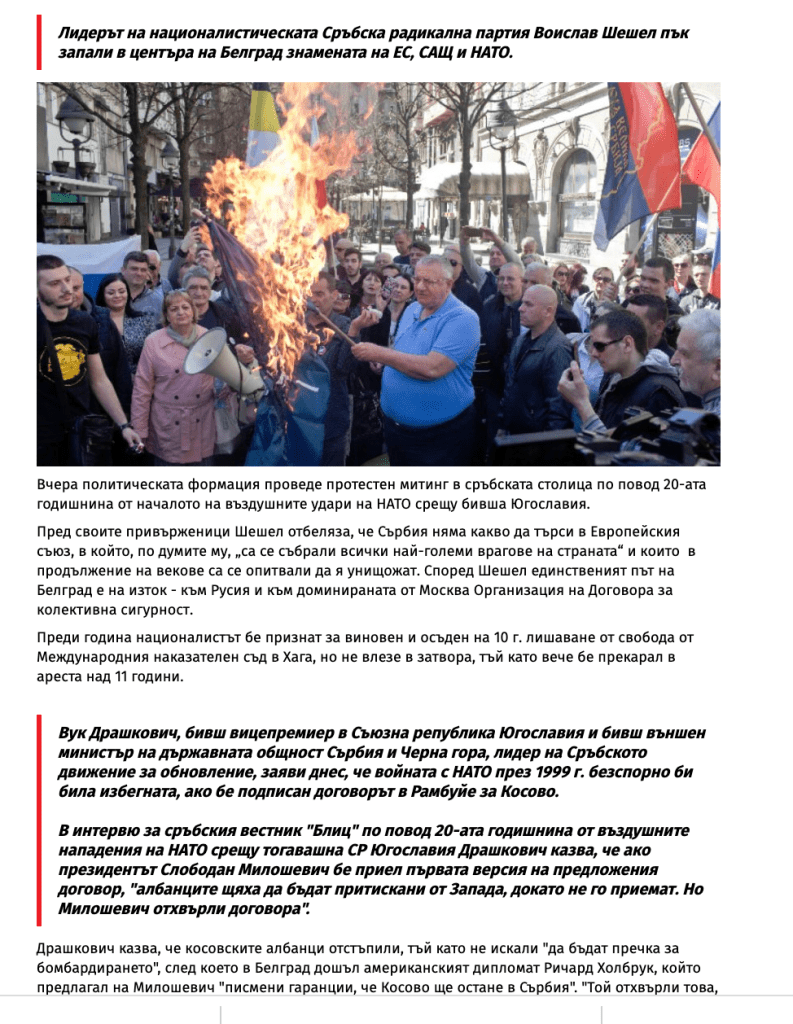
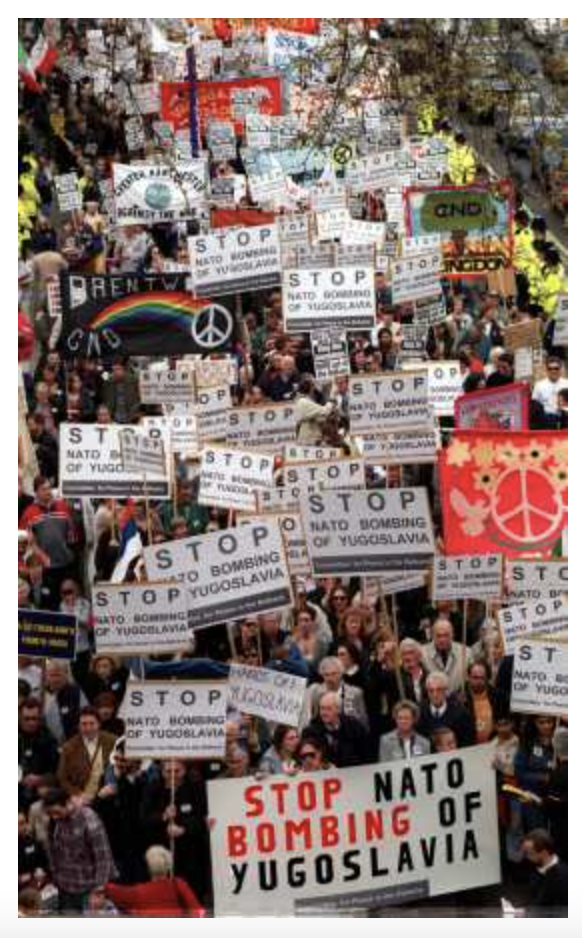
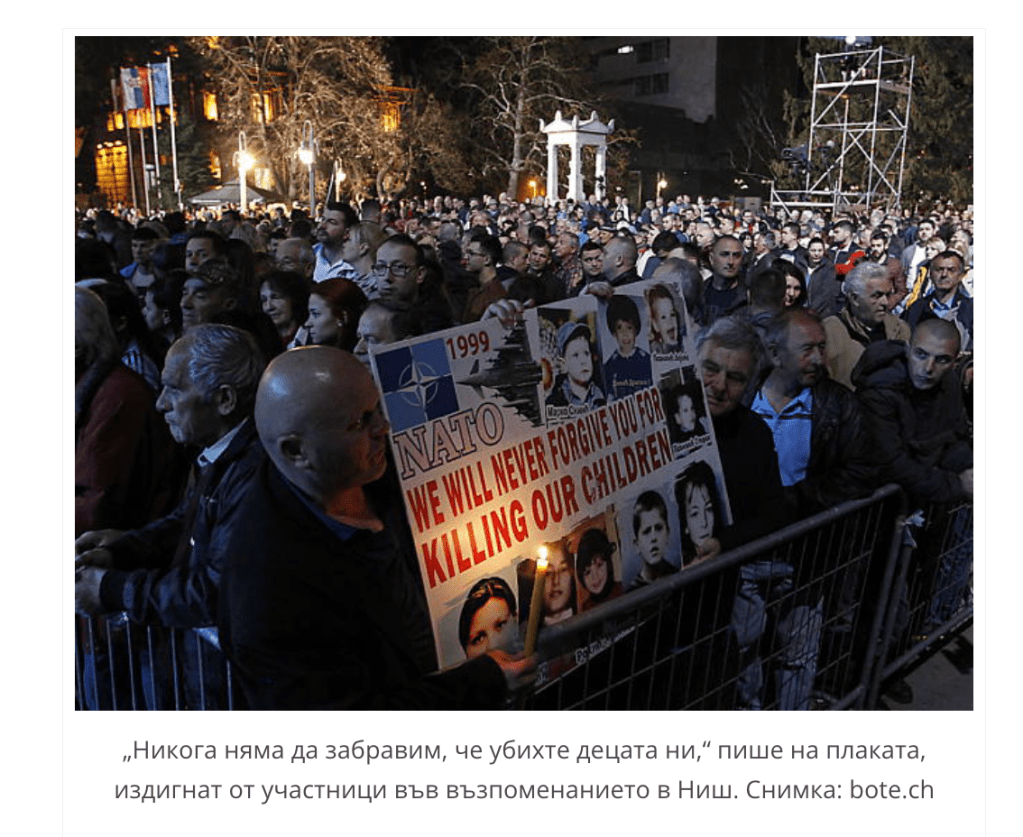
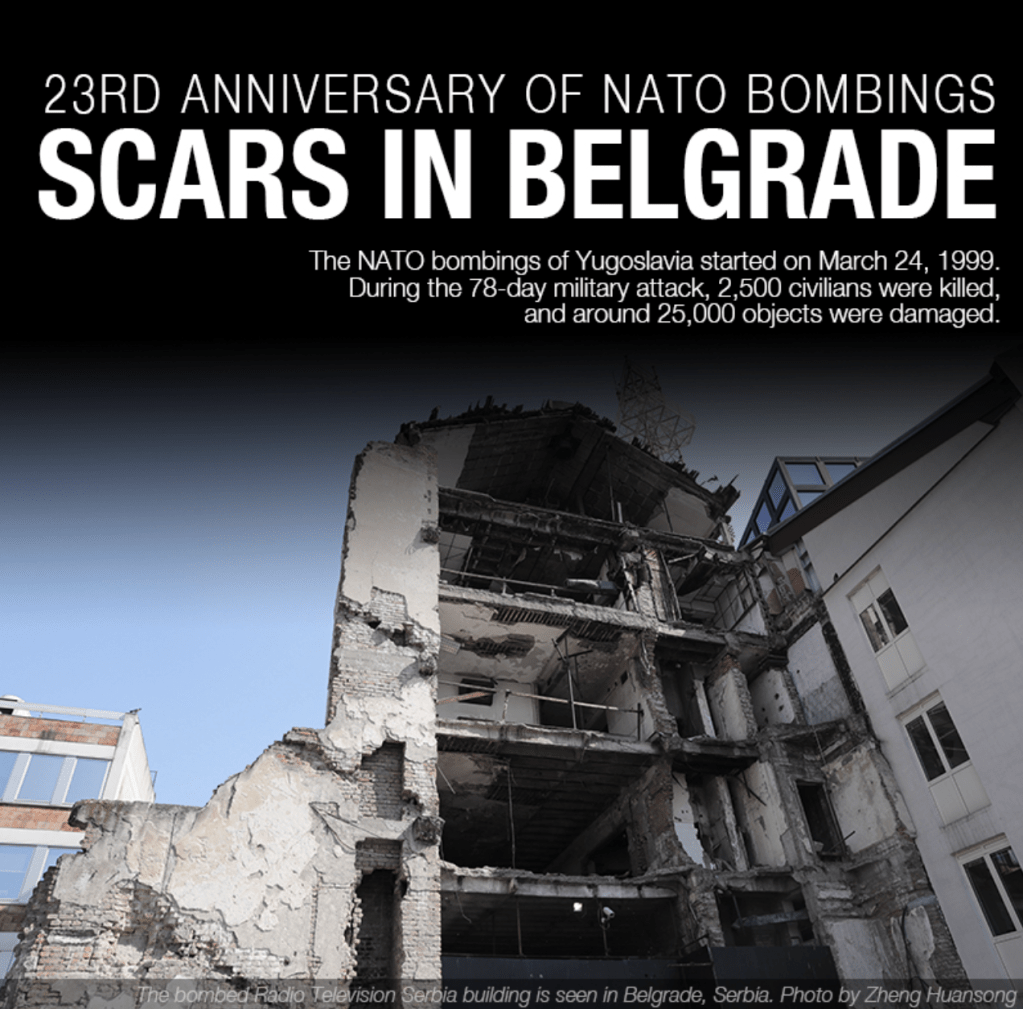
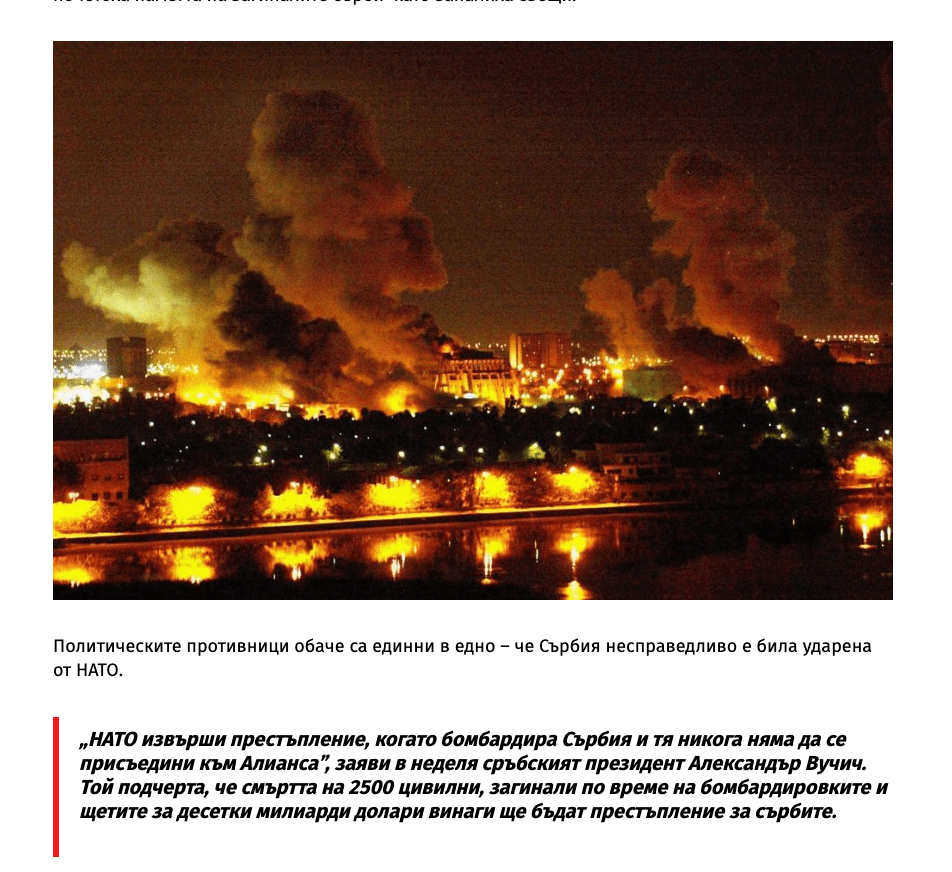
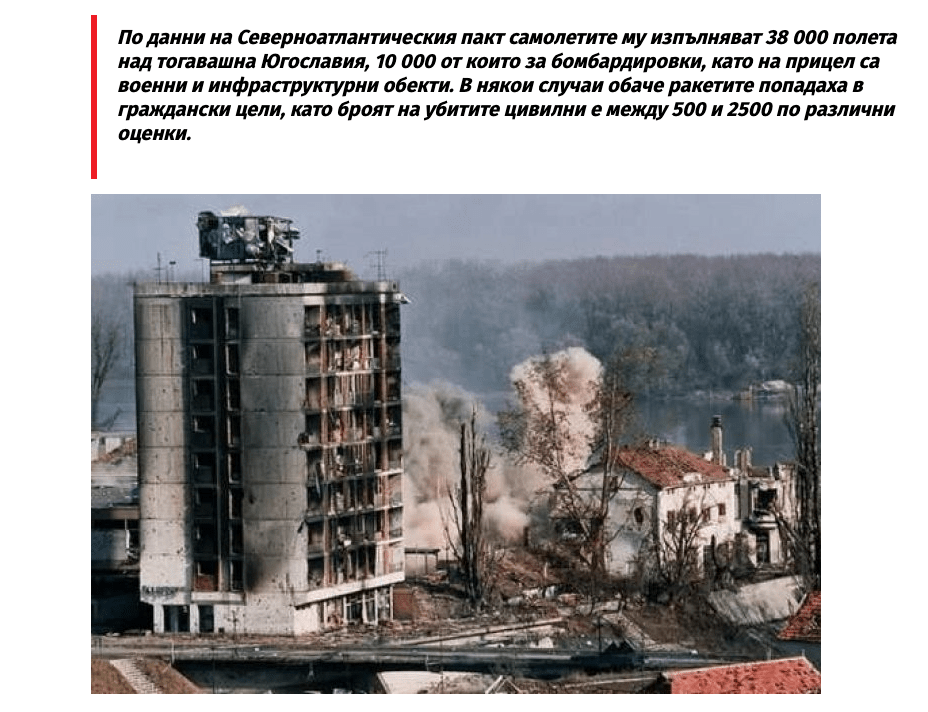
One Serbian man said “I understand why the bombings occurred, but I don’t support them because of how they were executed. As the photographs in the collage clearly show that NATO targeted civilian targets, not military installations, which is what they said they were gonna go for. Regardless of what we did during that time, bombing civilians was never the answer. NATO went for hospitals, the state television broadcaster’s headquarters, and such, despite the fact that it was supposed to go after military installations. The people who ordered the bombing need to be held accountable just like us.”
So, bottom line, the decisions of the powerful countries are not based on humanitarian interest as much as on interest for control and power. I wish people from everywhere wake up and do something about it. We don’t need wars to solve problems. Is 21st century – we should know by now that war is never a solutions. There is no war without victims, so , therefore is never actually a real winner. we should learn to live together peacefully, minimize the use of the different planet resources, controlling the grow of the population on earth (https://ourworldindata.org/world-population-growth), and do something about the climate change. We need to focus our efforts in the real problems around us.
My resources:

2. https://www.history.com/this-day-in-history/nato-bombs-yugoslavia
NATO bombs Yugoslavia
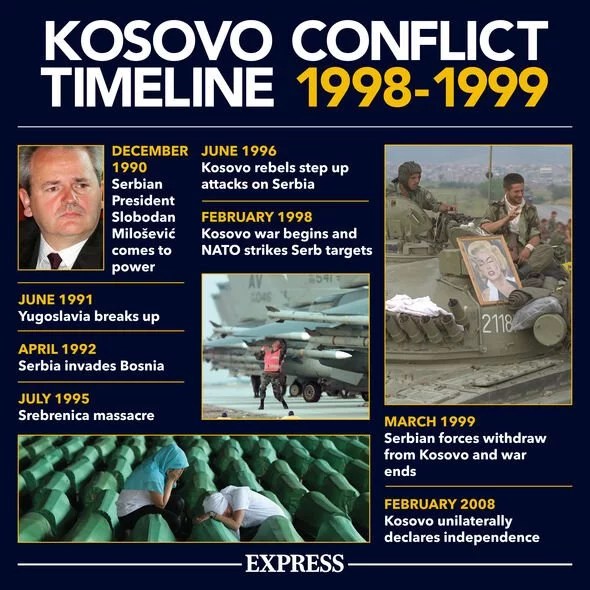
On March 24, 1999, the North Atlantic Treaty Organization (NATO) commences air strikes against Yugoslavia with the bombing of Serbian military positions in the Yugoslav province of Kosovo. The NATO offensive came in response to a new wave of ethnic cleansing launched by Serbian forces against the Kosovar Albanians on March 20.
The Kosovo region lay at the heart of the Serbian empire in the late Middle Ages but was lost to the Ottoman Turks in 1389 following Serbia’s defeat in the Battle of Kosovo. By the time Serbia regained control of Kosovo from Turkey in 1913, there were few Serbs left in a region that had come to be dominated by ethnic Albanians. In 1918, Kosovo formally became a province of Serbia, and it continued as such after communist leader Josip Broz Tito established the Federal People’s Republic of Yugoslavia in 1945, comprising the Balkan states of Serbia, Croatia, Bosnia-Herzegovina, Montenegro, Slovenia and Macedonia. However, Tito eventually gave in to Kosovar demands for greater autonomy, and after 1974 Kosovo existed as independent state in all but name.
Serbs came to resent Kosovo’s autonomy, which allowed it to act against Serbian interests, and in 1987 Slobodan Milosevic was elected leader of Serbia’s Communist Party with a promise of restoring Serbian rule to Kosovo. In 1989, Milosevic became president of Serbia and moved quickly to suppress Kosovo, stripping its autonomy and in 1990 sending troops to suppress Kosovo, stripping its autonomy and in 1990 sending troops to disband its government. Meanwhile, Serbian nationalism led to the dissolution of the Yugoslav federation in 1991, and in 1992 the Balkan crisis deteriorated into civil war. A new Yugoslav state, consisting only of Serbia and the small state of Montenegro, was created, and Kosovo began four years of nonviolent resistance to Serbian rule.
The militant Kosovo Liberation Army (KLA) emerged in 1996 and began attacking Serbian police in Kosovo. With arms obtained in Albania, the KLA stepped up its attacks in 1997, prompting a major offensive by Serbian troops against the rebel-held Drenica region in February-March 1998. Dozens of civilians were killed, and enlistment in the KLA increased dramatically. In July, the KLA launched an offensive across Kosovo, seizing control of nearly half the province before being routed in a Serbian counteroffensive later that summer. The Serbian troops drove thousands of ethnic Albanians from their homes and were accused of massacring Kosovo civilians.
In October, NATO threatened Serbia with air strikes, and Milosevic agreed to allow the return of tens of thousands of refugees. Fighting soon resumed, however, and talks between Kosovar Albanians and Serbs in Rambouillet, France, in February 1999 ended in failure. On March 18, further peace talks in Paris collapsed after the Serbian delegation refused to sign a deal calling
for Kosovo autonomy and the deployment of NATO troops to enforce the agreement. Two days later, the Serbian army launched a new offensive in Kosovo. On March 24, NATO air strikes began.
In addition to Serbian military positions, the NATO air campaign targeted Serbian government buildings and the country’s infrastructure in an effort to destabilize the Milosevic regime. The bombing and continued Serbian offensives drove hundreds of thousands of Kosovar Albanians into neighboring Albania, Macedonia, and Montenegro. Many of these refugees were airlifted to safety in the United States and other NATO nations. On June 10, the NATO bombardment ended when Serbia agreed to a peace agreement calling for the withdrawal of Serb forces from Kosovo and their replacement by NATO peacekeeping troops.
With the exception of two U.S. pilots killed in a training mission in Albania, no NATO personnel lost their lives in the 78-day operation. There were some mishaps, however, such as miscalculated bombings that led to the deaths of Kosovar Albanian refugees, KLA members, and Serbian civilians. The most controversial incident was the May 7 bombing of the Chinese embassy in Belgrade, which killed three Chinese journalists and caused a diplomatic crisis in U.S.-Chinese relations.
On June 12, NATO forces moved into Kosovo from Macedonia. The same day, Russian troops arrived in the Kosovo capital of Pristina and forced NATO into agreeing to a joint occupation. Despite the presence of peacekeeping troops, the returning Kosovar Albanians retaliated against Kosovo’s Serbian minority, forcing them to flee into Serbia. Under the NATO occupation, Kosovar autonomy was restored, but the province remained officially part of Serbia.
Slobodan Milosevic was ousted from power by a popular revolution in Belgrade in October 2000. He was replaced by the popularly elected Vojislav Kostunica, a moderate Serbian nationalist who promised to reintegrate Serbia into Europe and the world after a decade of isolation.
Slobodan Milosevic died in prison in the Netherlands on March 11, 2006, during his trial for crimes against humanity and genocide. Due to his death, the court returned no verdict.
3. https://chomsky.info/humanism01/
5. https://media.kultura.bosilegrad.rs/2018/12/1709.pdf
6. https://lupa.bg/news/prosti-li-sarbiya-na-nato-za-bombardirovkite-obzor_1682news.html
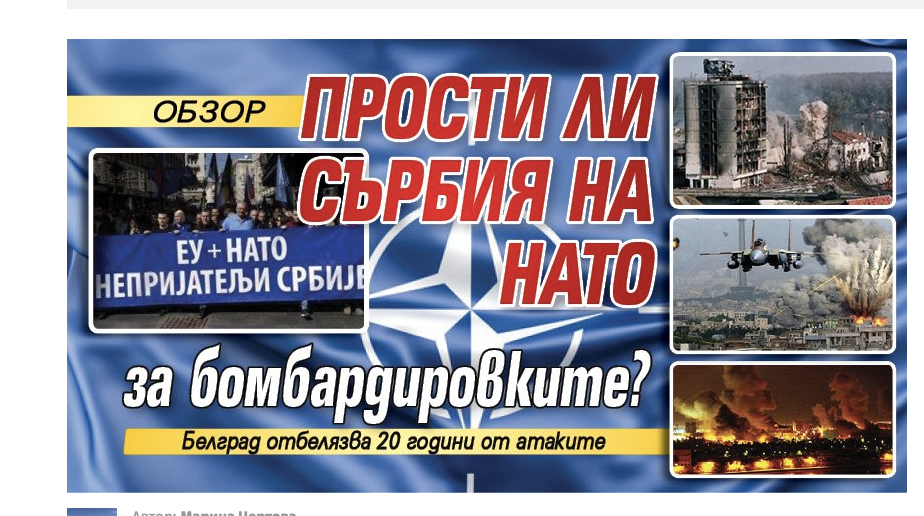
8.https://www.reddit.com/r/AskBalkans/comments/mc5up8/on_this_day_22_years_ago_nato_started_a_bombing/
9. https://kossev.info/photo-cover-pages-of-serbian-newspapers-on-the-situation-in-kosovo/
 Vicky Kafkaki - Graphic Design MA Falmouth University
Leave a comment