Task 1: Research User-Centred Design Processes or Tools
- Research three user-centred design processes or tools that can be used to discover a core need or problem, e.g., customer journey maps, service safaris, a day in the life, cultural probe, and double diamond.
- Select one process and write a short 100-word description to illustrate how it can be used to discover an insight or challenge.
Task 2: Research Existing Campaign or Service Design Project
- Research and select one existing campaign or service design project that tackles a social problem and analyse its effectiveness. Please remember to include information about any user-centred design processes that may have been used and the impact they brought about.
- Write a 300 – 400-word description with screen grabs to illustrate your research findings.
Service safari
In this option, people go out and explore different examples of good or bad service experiences. So, in this method you get to know service from a customer experience perspective.
“The method captures the real-world experience of a specific service, type of service, or a wider range of services, be that for booking train tickets, or a hotel or shopping mall experience, to a car hire or passport renewal service. ” (https://www.sutherlandlabs.com/blog/service-safari-use/)
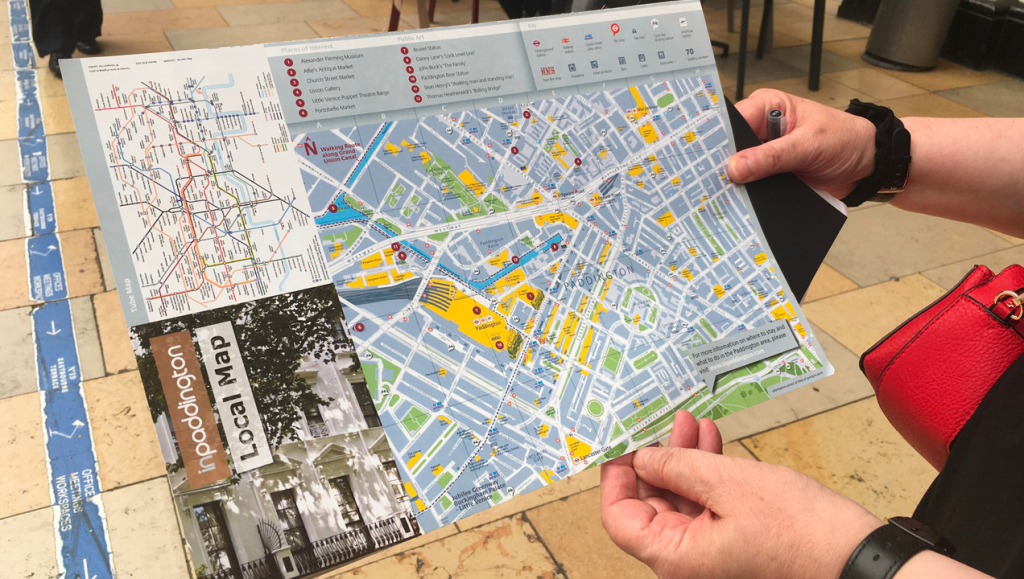
We can speak to customers, and employees, where possible, to get additional perspectives on the service. We can also collect receipts, tickets, brochures…
We can see the pain points in a shopping experience and begin to understand some of their causes.
Once we collect the data we will review everything.
Service Safari is a great tool to experience real-world examples – experience and analyze specific products, services, user paths and spaces in their natural context.
“People don’t need products or services, but the value they provide” — Design Safari motto (https://changepilots.medium.com/5-steps-of-design-safari-how-to-handle-qualitative-research-on-your-own-9a5fb50f7855)
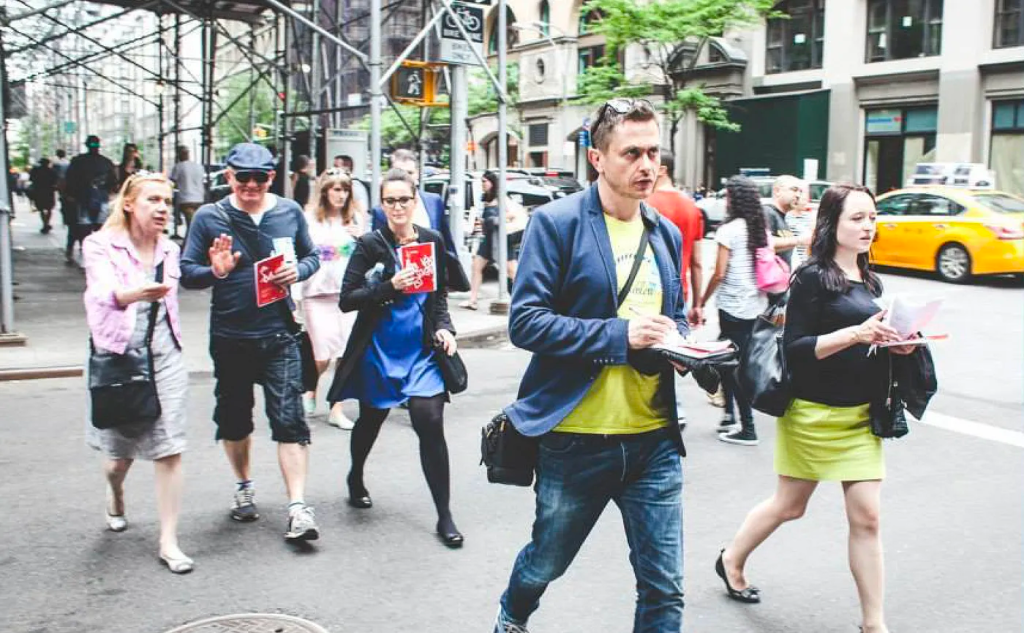
This method is one of the easiest ways to put people into the shoes of customers – understanding the common needs the customers have and the common problems that they encounter.
Shadowing
This method involves researches immersing themselves to the lives of customers and spot the moments at which problems occur.
Customer journey map
This method provides structured and vivid visualization of the service user’s experience.
Illustrates the customer’s journey as an engaging story and pointing to the factors influencing the user’s experience.
Helps to identify the problem areas and finds opportunities for innovation.
7 Simple Steps to Build a Customer Journey Map
- Set a clear objective for the map.
- Define your personas and highlight target customers.
- Define stages and identify goals for each.
- List out touchpoints.
- Gather data and customer feedback.
- Determine pain points and points of friction.
- Identify areas for improvement.

(https://careerfoundry.com/en/blog/ux-design/how-to-make-customer-journey-map-with-template/)
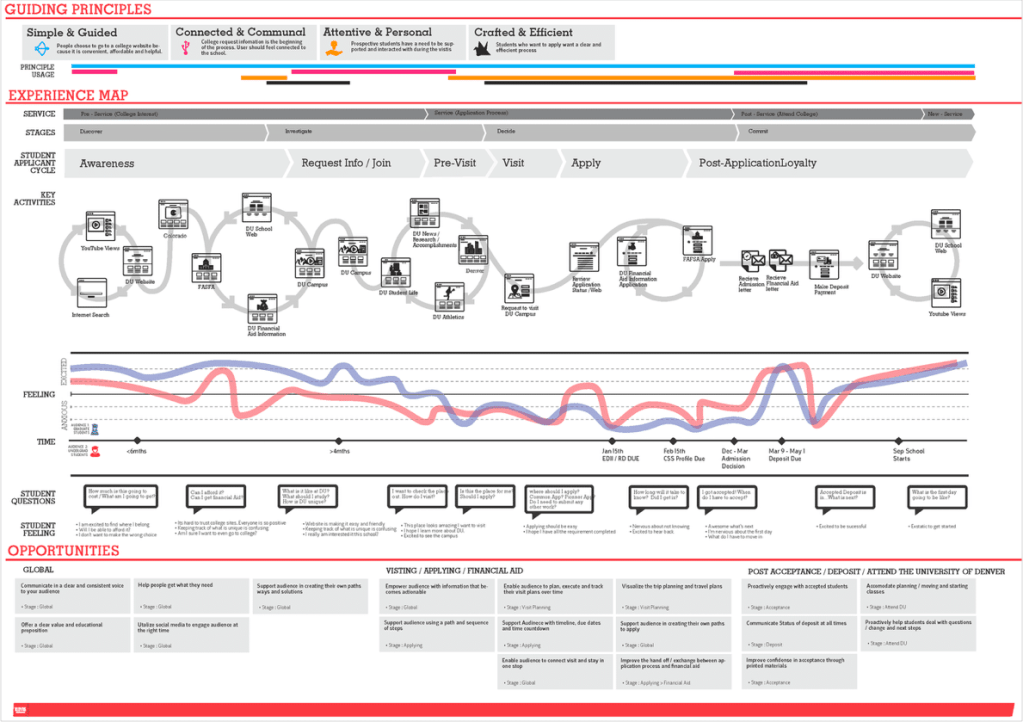
Journey Map Example: Student Application (https://www.choicehacking.com/2023/02/09/6-customer-journey-map-examples-what-we-can-learn-from-them/)
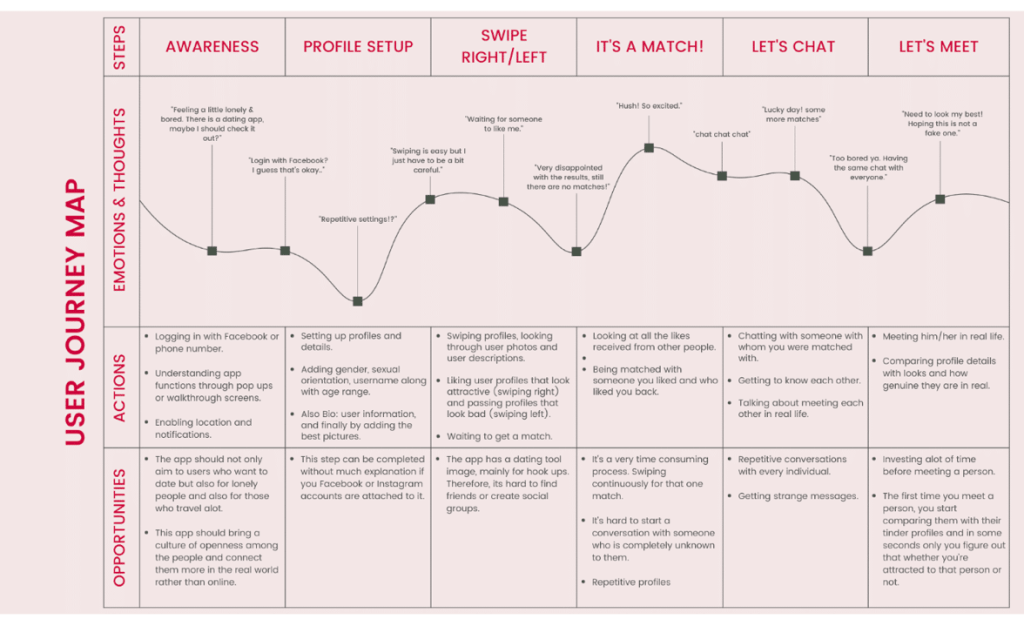
Journey Map Example: Dating App
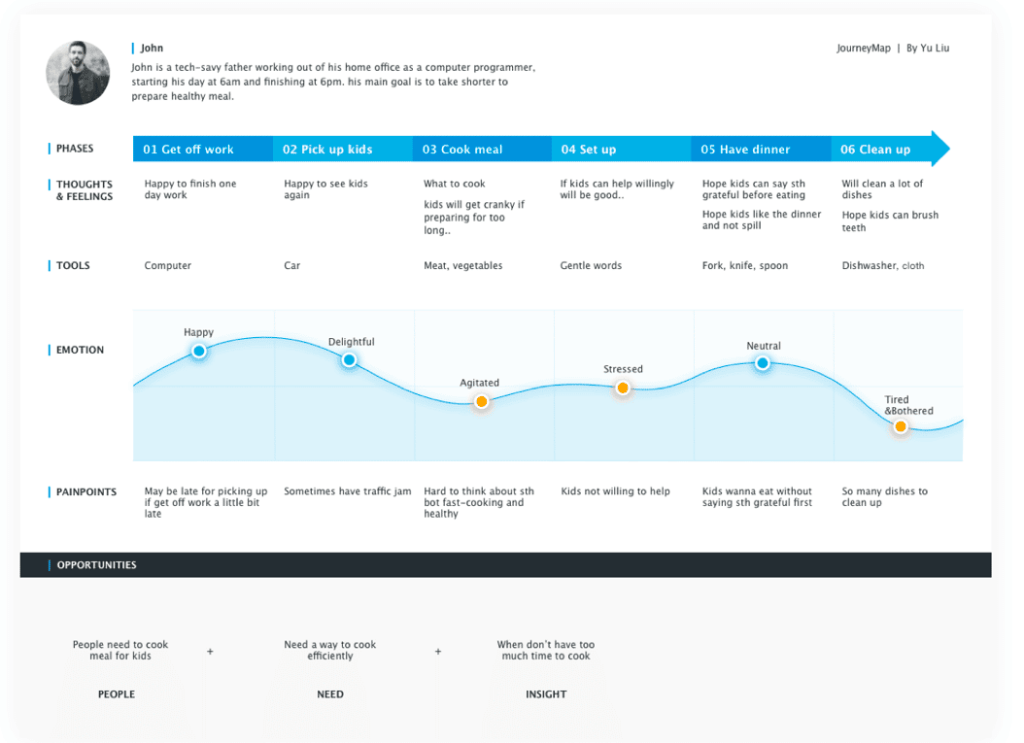
Journey Map Example : Healthy Eating
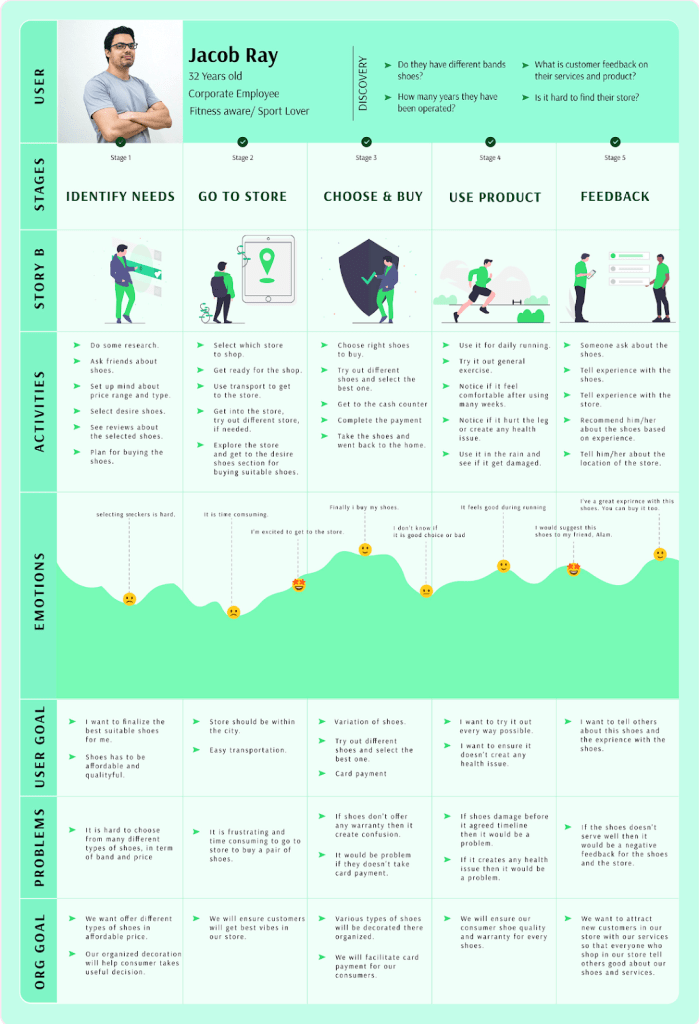
(https://www.eleken.co/blog-posts/customer-journey-map-examples-to-get-some-fresh-ideas)
“The customer journey map divides the process of buying into clear stages that include buyer’s activities, emotions, problems, user and organizational goals, etc. All the information is clear and easy to read, the graph shows top and down moments of the journey.”
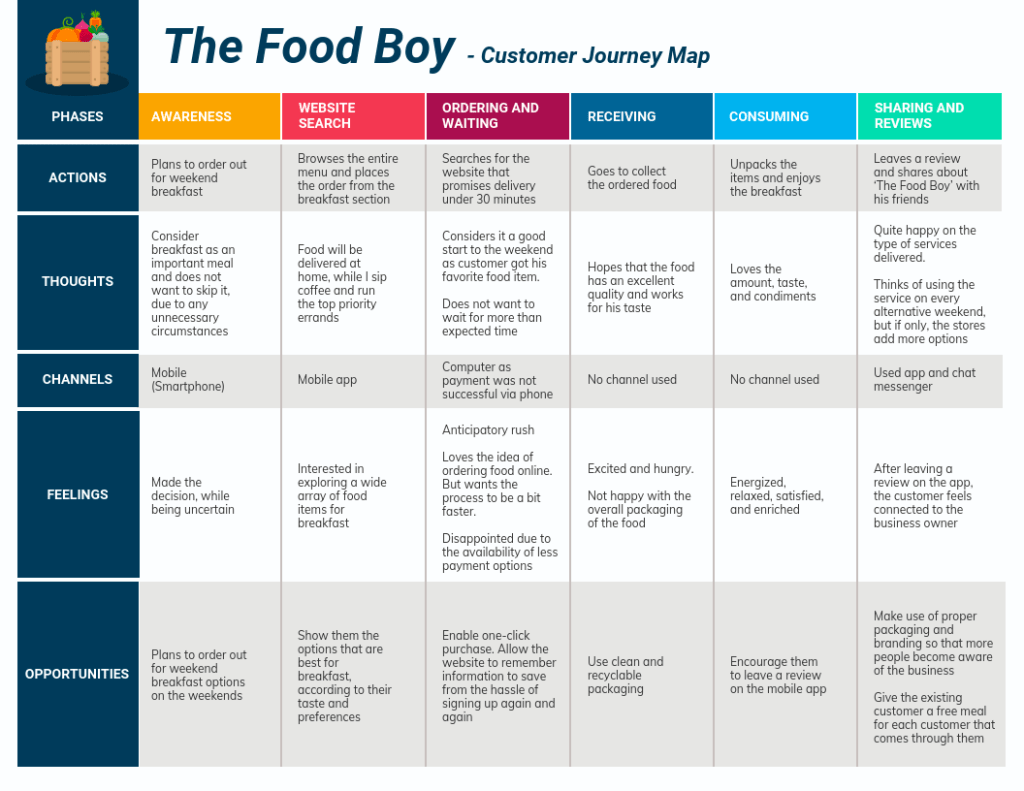
Customer journey map example for a restaurant
The restaurant customer journey map example shared below covers the journey of a consumer placing an order via a restaurant’s mobile app. It captures the customer’s thoughts, actions, and feelings before, during, and after ordering food.
Opportunities and insights are also identified at every step of the journey. Since restaurants thrive on user reviews, sharing customer feedback and reviews online is a major phase of the customer mapping process.
(https://www.freshworks.com/freshdesk/customer-journey/journey-mapping-examples-blog/)
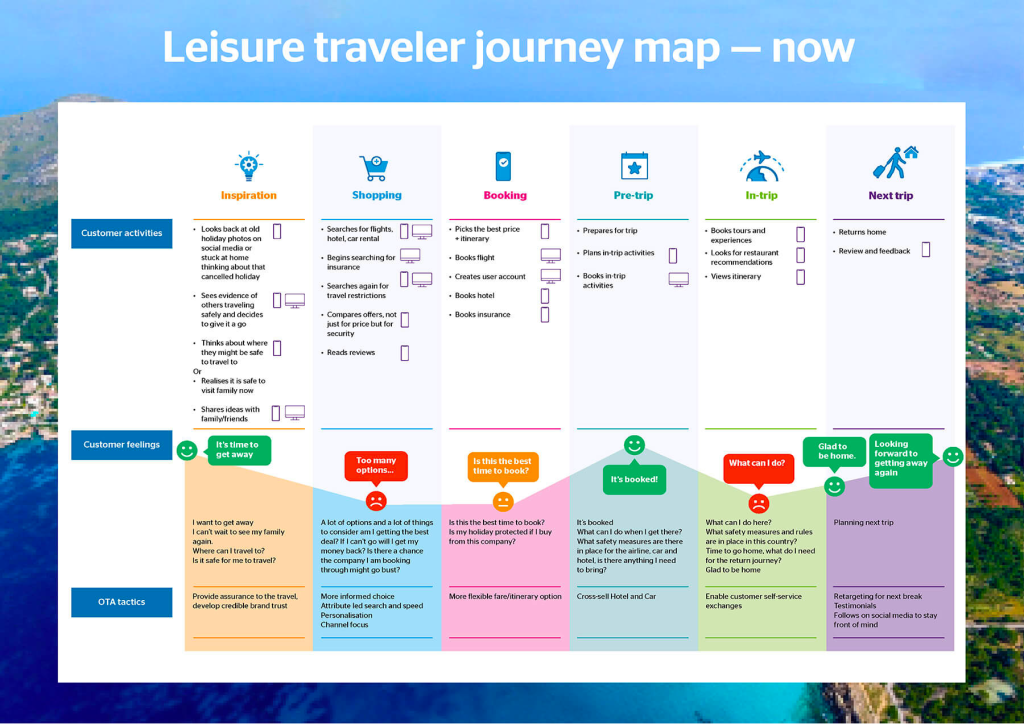
Journey maps can be multi channel and time consuming.
I created this charts about the different tools of Design Service:
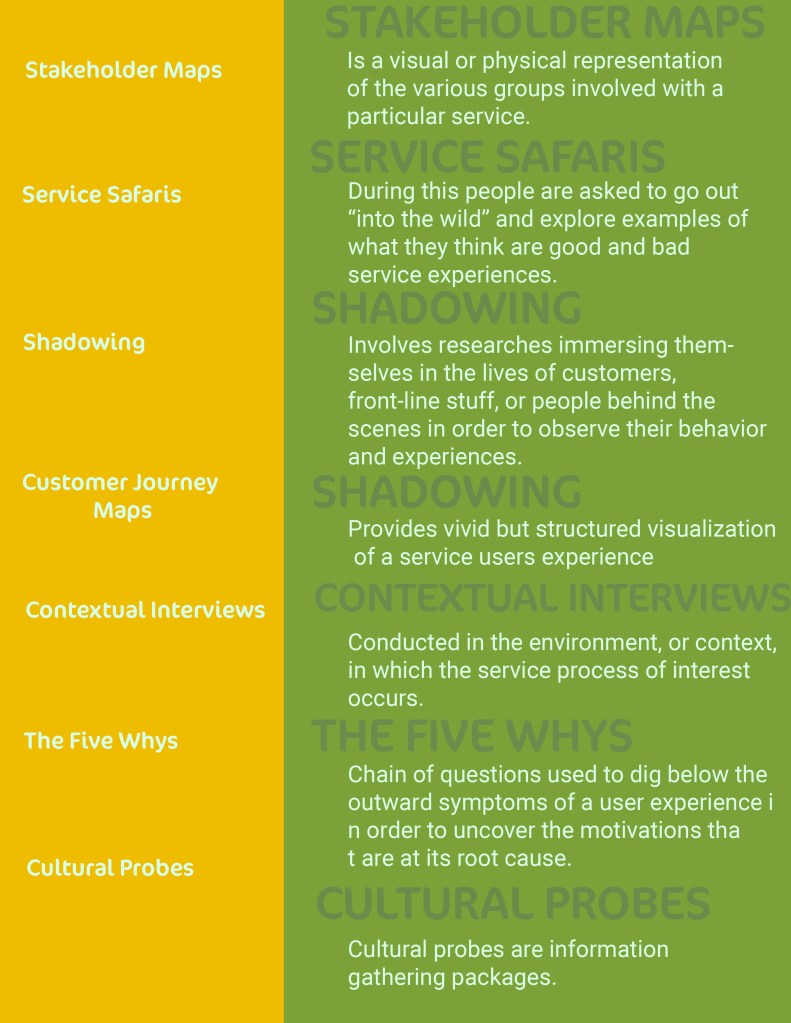
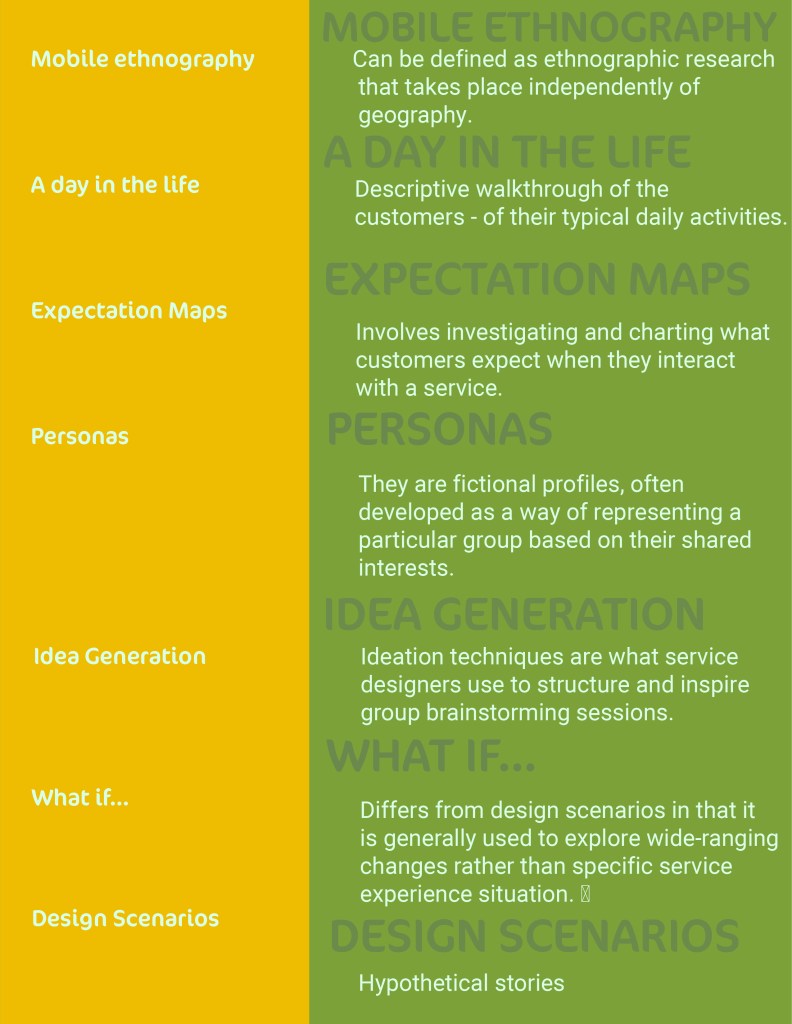
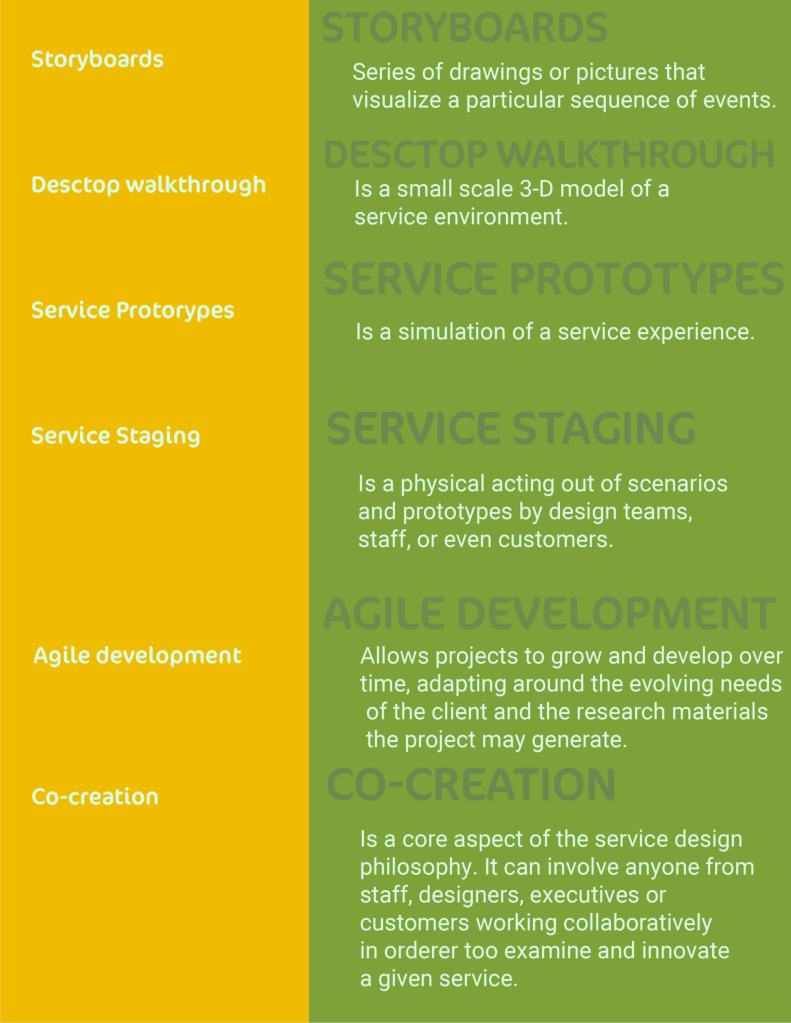
resource: “This is service design thinking” – Stickdorn/ Schneider
Storytelling
Storytelling is sharing insides of the service concepts and telling stories from a variety of prospectives. I think is very important to explore the different options that a potential client will pick, so you can be prepare to give clear understanding what is the current step and what the next step should be. It can be based on real time experience. Its takes the customer from the begging to the end and shows the possible difficulties on the way. Sometimes is paired with Personas to give light to deeper insights in the user experience and can help problems to be solved.
Task 2: Research Existing Campaign or Service Design Project
- Research and select one existing campaign or service design project that tackles a social problem and analyse its effectiveness. Please remember to include information about any user-centred design processes that may have been used and the impact they brought about.
- Write a 300 – 400-word description with screen grabs to illustrate your research findings.
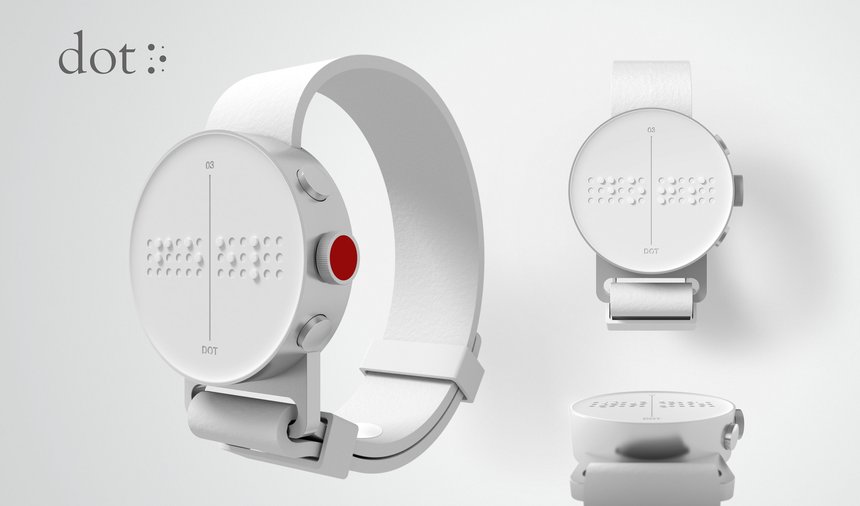
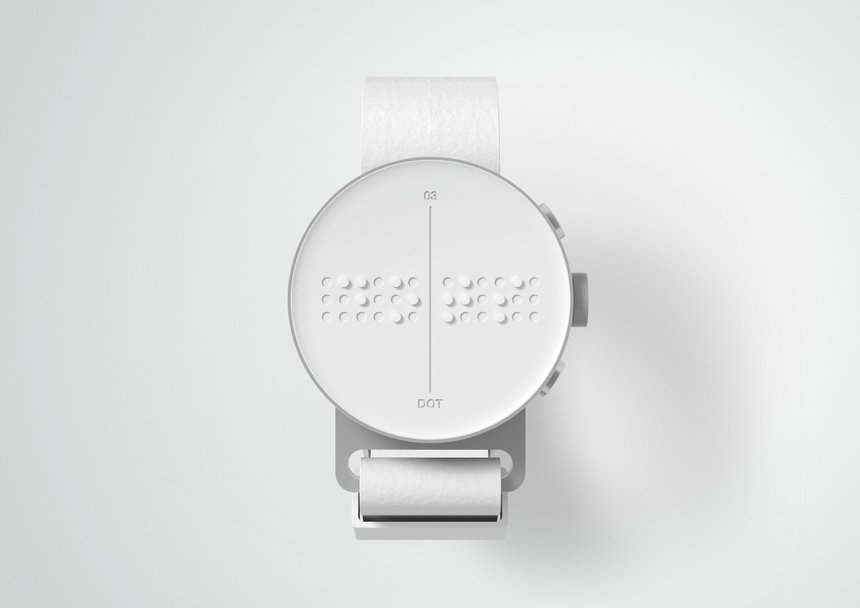
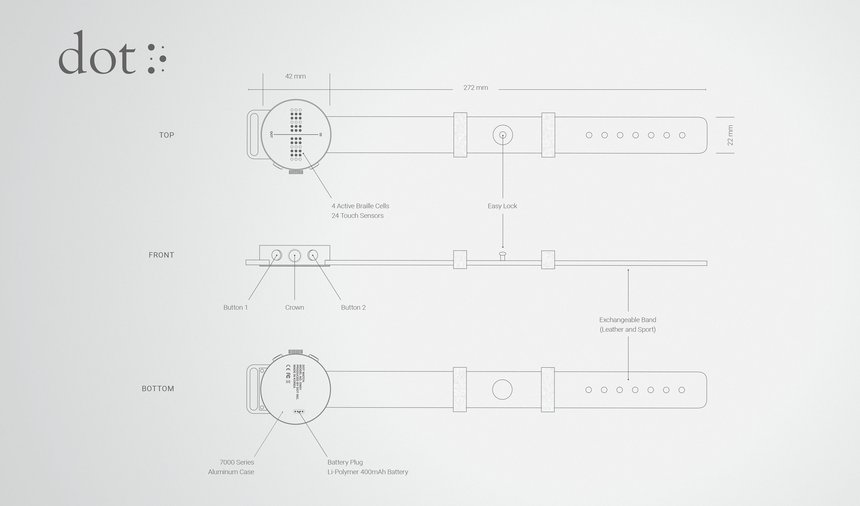
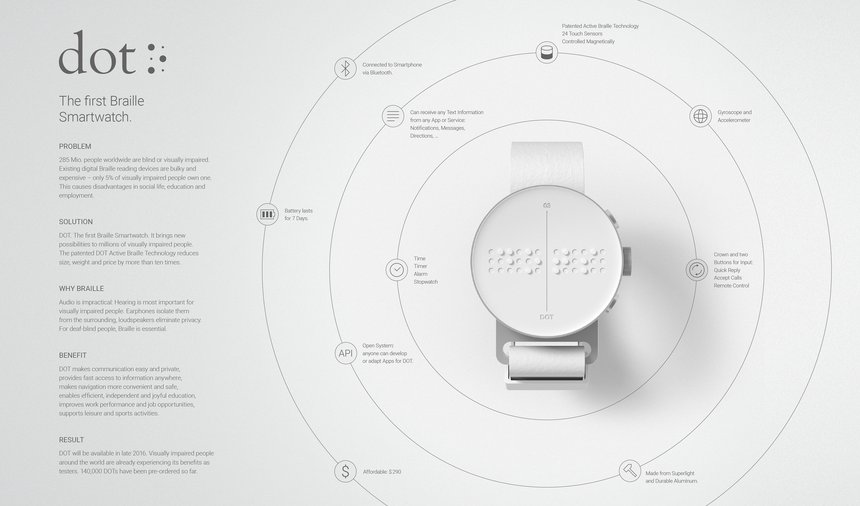
DOT. The first Braille Smartwatch
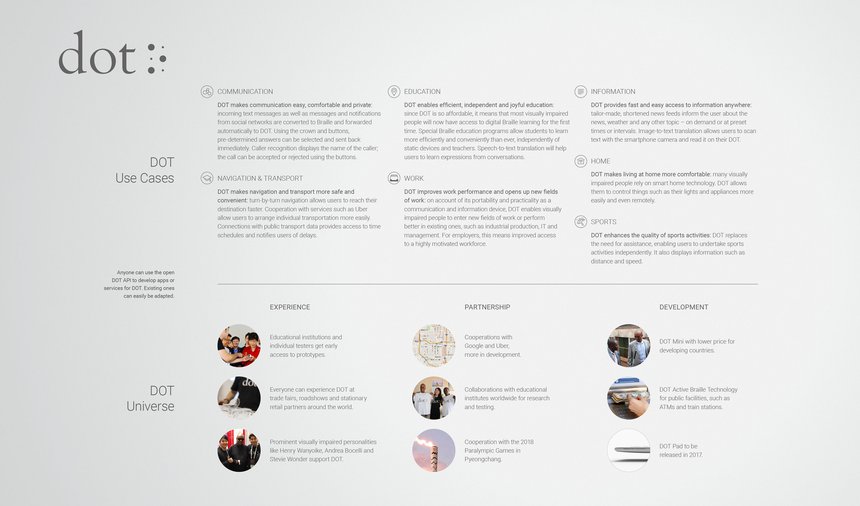
This is service design project that is product of the good research of the needs of all kind of people – even the ones that have a major problem and technology is hard to be used (285 Million people worldwide are blind or visually impaired and in the last 20 years, there were not many innovations in communications technology for them). I think the method that have been used by the designers (or the whole team) are Personas, A day in the life, Customer Journey map, Shadowing and Contextual interviews.
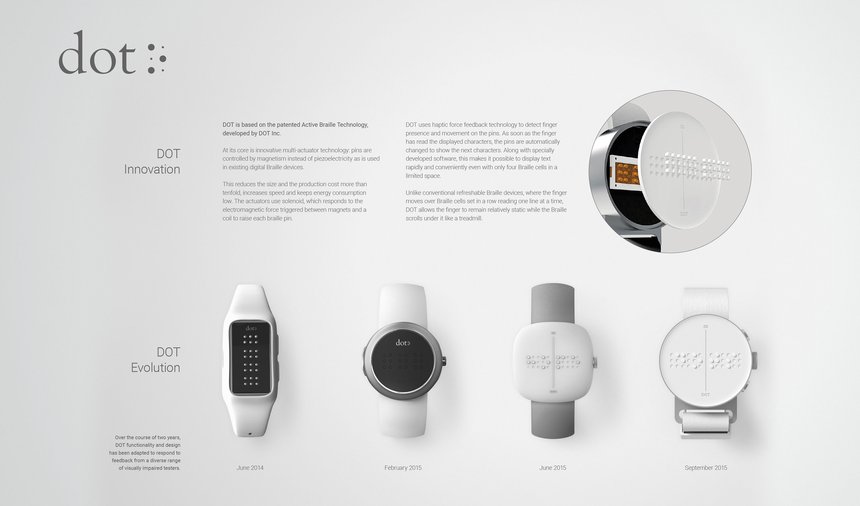
Dot Watch is a great example how we can use the features of technology to do more – to help the community and help specific group of people that most of thee time are being ignored. Blind people often rely on human agents, in person or remote through cameras, to tell them what they are looking at and interacting with or to read things to them. Unlike other smartwatches for the blind which focus on audio communication, the Dot uses a responsive braille interface created by magnetically controlled pegs or “dots” that raise and lower to form new characters with each pass.
So, the blind people using this device can get the date and time or any notifications and messages send to them, without activating audible message tot talking to a device. When they use the combination of braille-enabled tablet and the Dot smartwatch, they can adjust the settings and have complete control of what can come through and what not. They can set calendar, put events or anything else on it and have reminders for each thing. This is great innovation for the blind community. Especially for the ones that need to stay successful in the business world and keep up with the rest of the coworkers. The outcome was practical and affordable solution for the blind or visually impaired people.
 Vicky Kafkaki - Graphic Design MA Falmouth University
Leave a comment