Wallace & Gromit producers hand stake in business to staff
Butler, Sarah (2018) The Guardian [online], 10 November. [Accessed 27 March 2019]
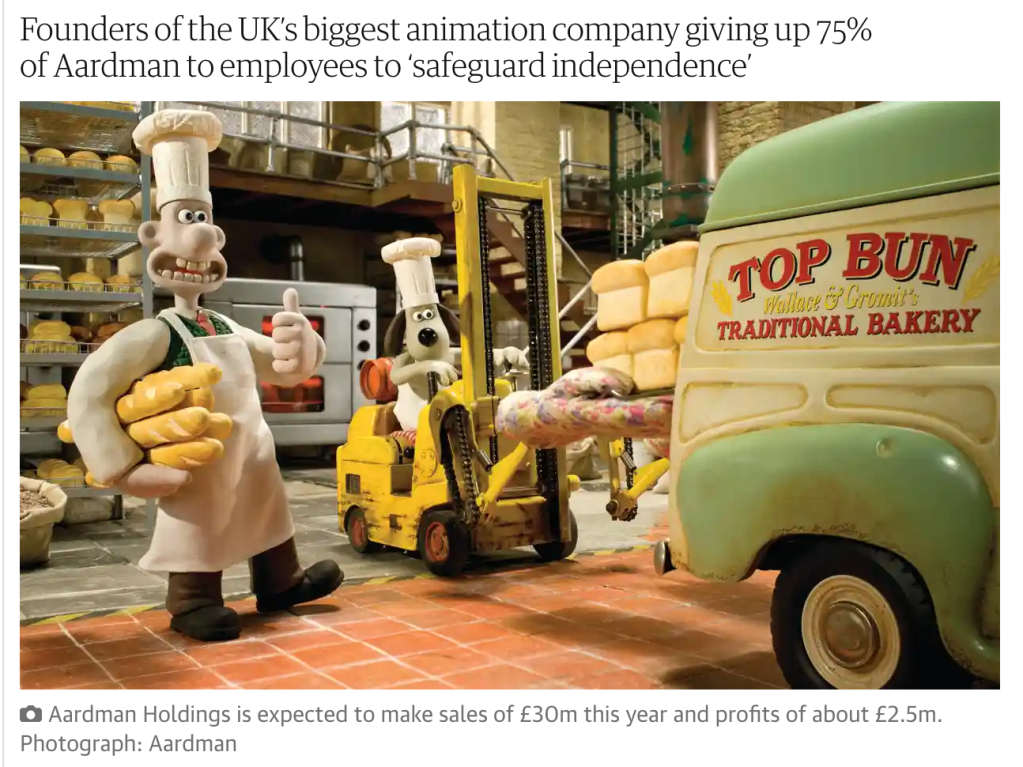
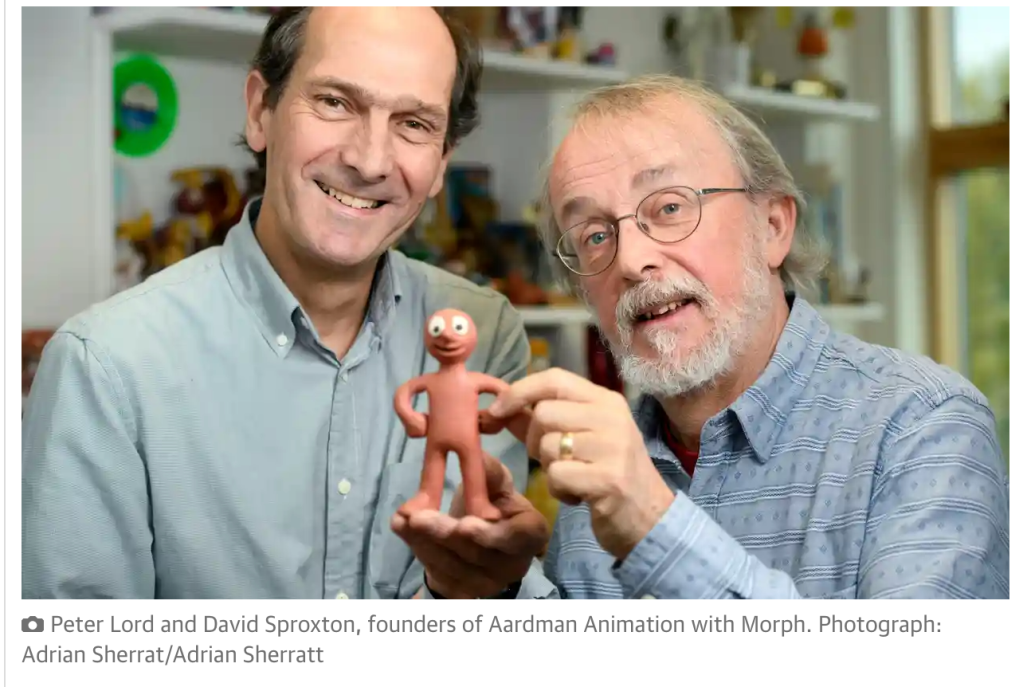
The owners of Aardman, the animation studio behind Wallace & Gromit, Shaun the Sheep and Morph, are handing over a 75% stake in the business to their 140 employees in a bid to protect the Bristol-based company’s independence…
On Friday, the company brought out its first major console game 11:11: Memories Retold, which follows two characters on opposing sides of the first world war, and Shaun the Sheep Movie: Farmageddon will be released next year.
It also makes millions from merchandising and licensing the rights to characters, putting Shaun the Sheep and Wallace & Gromit on everything from cafes to cushions around the world.
Employees will own their majority stake in the business via a trust, similar to the way the John Lewis Partnership is organised. The 140 employees, and freelancers, of which there are currently 180 working for Aardman, will also continue to receive a share of profits. Anyone who has worked for the company for at least three months of any financial year is entitled to a bonus.
Brexit and changing trends in the film and TV industries have created difficulties in the market, despite a mini boom for creative producers thanks to the battle for subscribers between Netflix, Amazon and the traditional players.
Sproxton and Lord believe employee ownership and the company’s varied slate of work will protect Aardman in the future when Brexit could make the UK film industry more vulnerable than ever to US imports.
Aardman’s first feature-length production, directed by Park and Peter Lord and released in 2000, featured the voices of actors including Mel Gibson, Jane Horrocks and Miranda Richardson and is the highest-grossing stop motion animated film ever, ahead of The Curse of the Were-Rabbit, with global box office takings of nearly $225m (£172.5m).
USI Events (2017) Redesigning Leadership John Maeda, at USILinks to an external site., [online video]. [Accessed 27 March 2019]
“John Maeda’s creative nature makes him a different sort of leader—one who prizes honest critique and learning how to “productively fail.” In this candid, entertaining, and instructive talk, Maeda uses perspectives from his various backgrounds—as an artist and designer, a technologist, and a professor—to discuss new leadership lessons he’s learned throughout his career. What are the opportunities and the limits of using social media in the new networked organization? What does leadership even look like today? And how can we adapt and move forward in our ever-changing innovation economy?”
I like that he said the key to everything in life is to be told that you have potential.
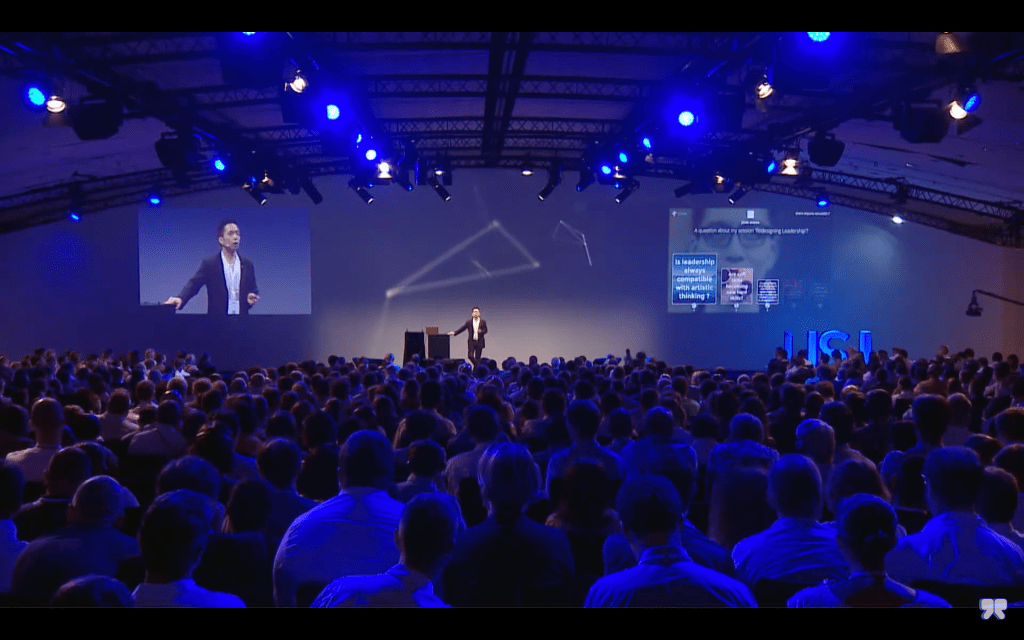
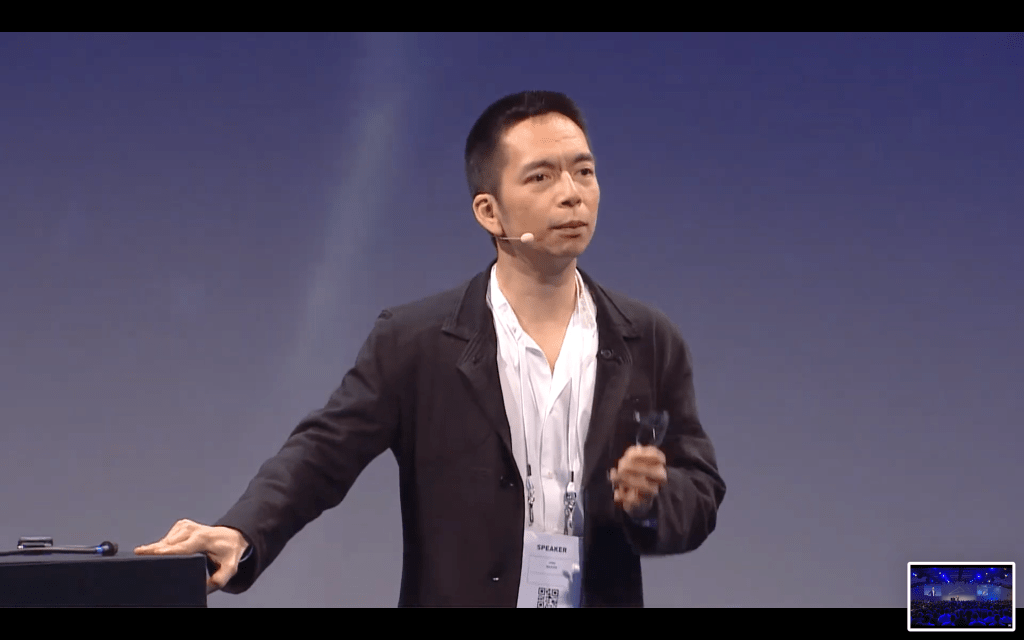
He explains veery good the importance and thee difference between soft and hard skills.
John also saiid “As you get smarter, you get dummer”
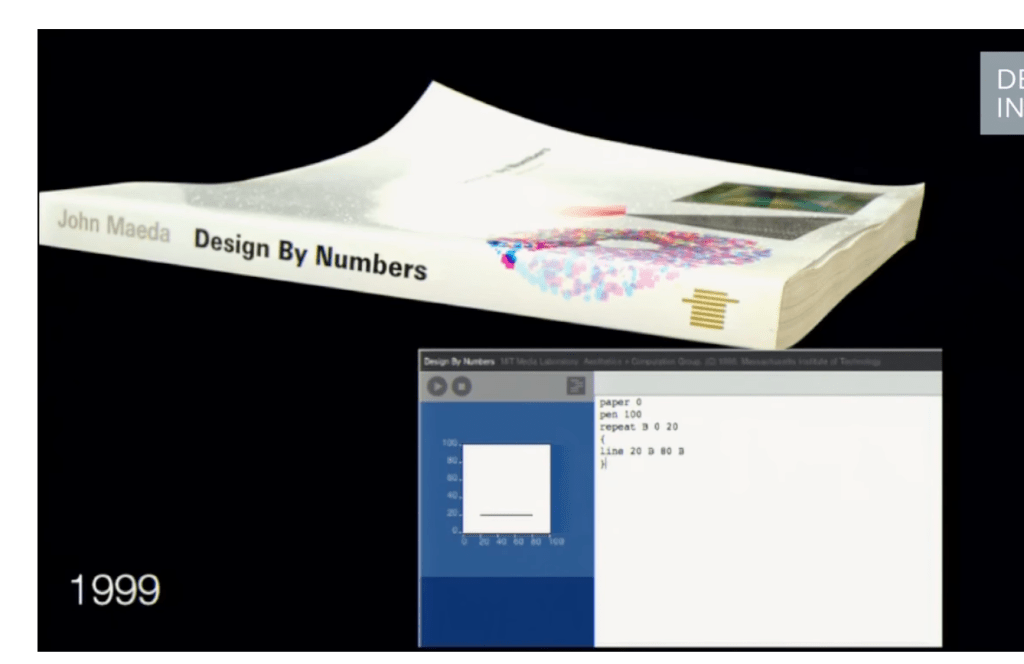
he combined art and programing (he was good on both)
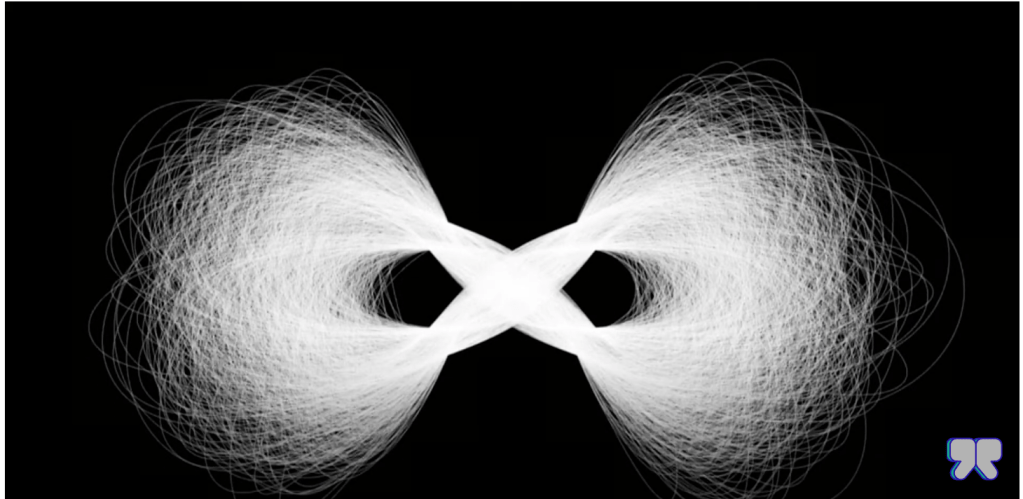
Teachers used to tell him “You are so good at this” but if you are the only one good at something is not good – how you will know how good you are – so, he created students …and they all destroyed him ..
“Much of my work was spend on educations – to educate people to do this kind of work.”
DesignInDaBa (2016) John Maeda on Design Thinking and Creative LeadershipLinks to an external site., [online video]. [Accessed 27 March 2019]
“Artist, graphic designer and educator John Maeda talks about the exchange between design thinking and creative leadership at 2013 Design Indaba Conference. John Maeda is a leader who integrates technology, design and leadership into a 21st -century synthesis of creativity and innovation. His focus is on imagining how design and technology can bring clarity to leadership in the era of social media. At Maeda kicks off his talk with a question on why anyone would try to do something hard?
Why would you try to do anything hard in a world where doing what is easier is better and more cost-efficient? When you think of people who are being creative, I don’t think they are trying to do it the hard way; they’re trying to do it the right way. And the right way has integrity, and integrity leads to great discovery, he explains. He tells of a book Orbiting the Giant Hairball that influenced his view on leadership. Author Gordon MacKenzie compares the traditional hierarchical organisation structure of a pyramid with an alternative structure in the shape of a plum tree. Unlike the pyramid where only the top leaders have a clear view of the future, the plum tree structure sees leaders supporting doers, who produce the work, like a trunk would support a tree. While a simplistic analogy, this had a significant impact on Maeda thinking around leader and organisational structures. Maeda also shows how social media and access to information have undermined traditional hierarchy, shifting it to a heterarchy. This however results in a chaotic environment and Maeda asks how we can bring design into this space to help us function more effectively. A key fact about art and design is this: The reason that you have the ability to make creative leaps is because the risk is so low. If you think about it, it poses no threat to your health and safety and as a result the creative endeavour is often marginalised. But this is also powerful because it is in these kinds of languages of expression where risk is low that I’ve seen designers and artists iterate at a very rapid rate. It is a developed skill and this ability to iterate, this ability to be agile, is becoming increasingly important.
He also goes on to talk about how design is sometimes its own worst enemy in what he terms the ‘design thinking paradox’: “Design as a discipline is not well designed to be understood. Part of this challenge is to communicate about what design is.” He shows an example of Florence Nightingale who was according to him is one of the first data scientists. She used an infographic to plot and make visible the amount of soldiers who died in hospitals in relation to those who died on the battlefield. She used this design as a way to advocate for improved sanitary conditions in hospitals. Design is most powerful when it tells a story about something that matters, in a voice that matters, says Maeda. He ends the talk by revisiting the organisation structure and advocates for thinking of it as an octopus. Despite its tiny brain, an octopus is one of the few organism shown to have the ability to plan and whose eight tentacles have the ability to act on their own, making it a good example of a smart, cooperative and trusting organisational structure.
John Maeda, who served as the president of the Rhode Island School of Design from 2008, announced at the end of 2013 that he will become a design partner at Kleiner Perkins Caufield & Byers starting from January 2014. He will also be chairing eBay Inc.’s Design Advisory Board. Watch all the talks from Design Indaba Conference on your tablet or smart phone while you’re on the go.”
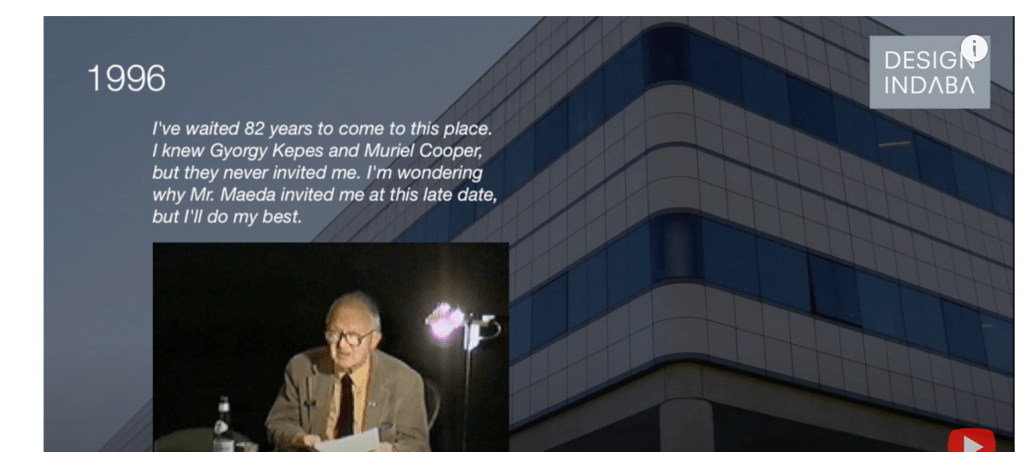
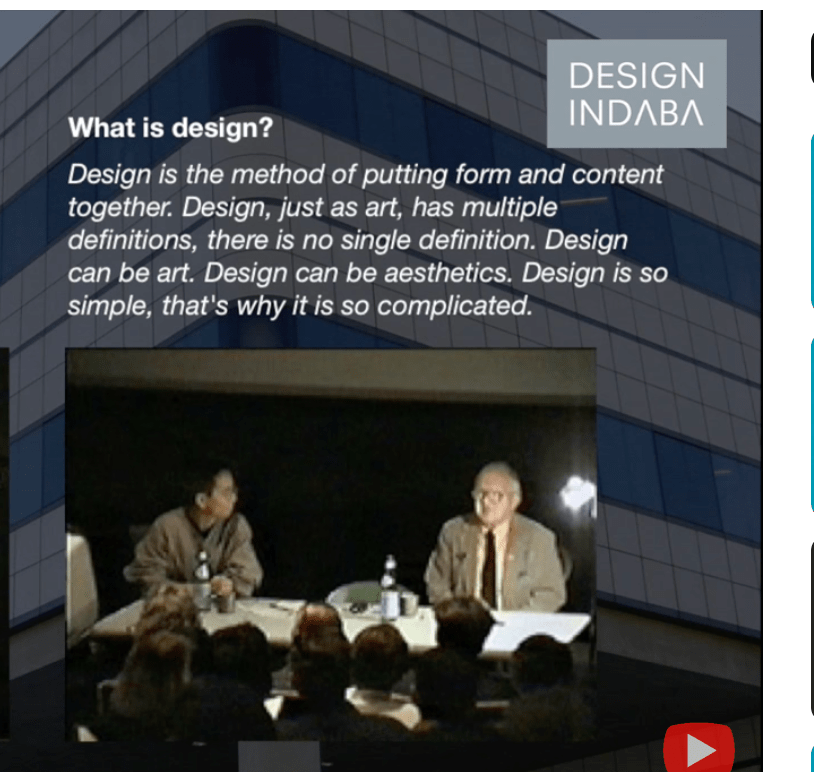
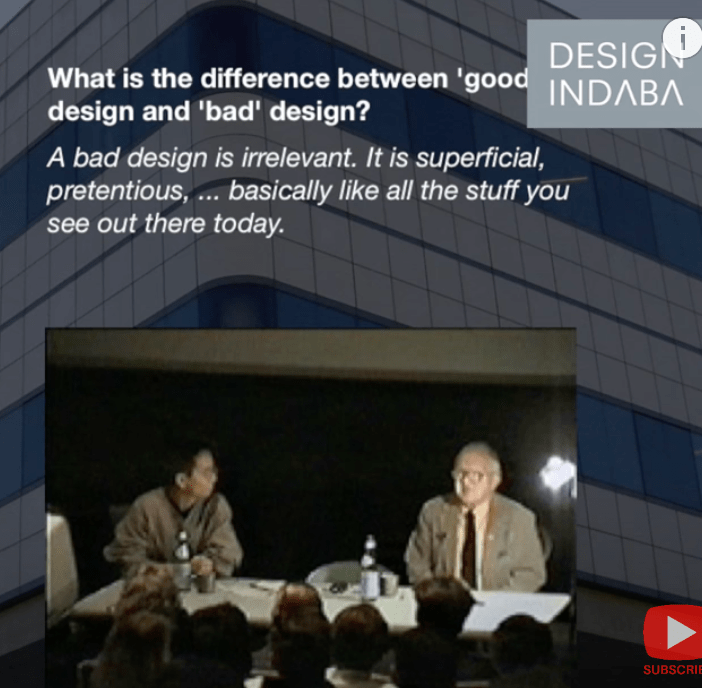
He talks about Paul Rand – he invited him to talk.
He recommends the book “Leadership”.
He noticed this signs in Saint Petersburg:


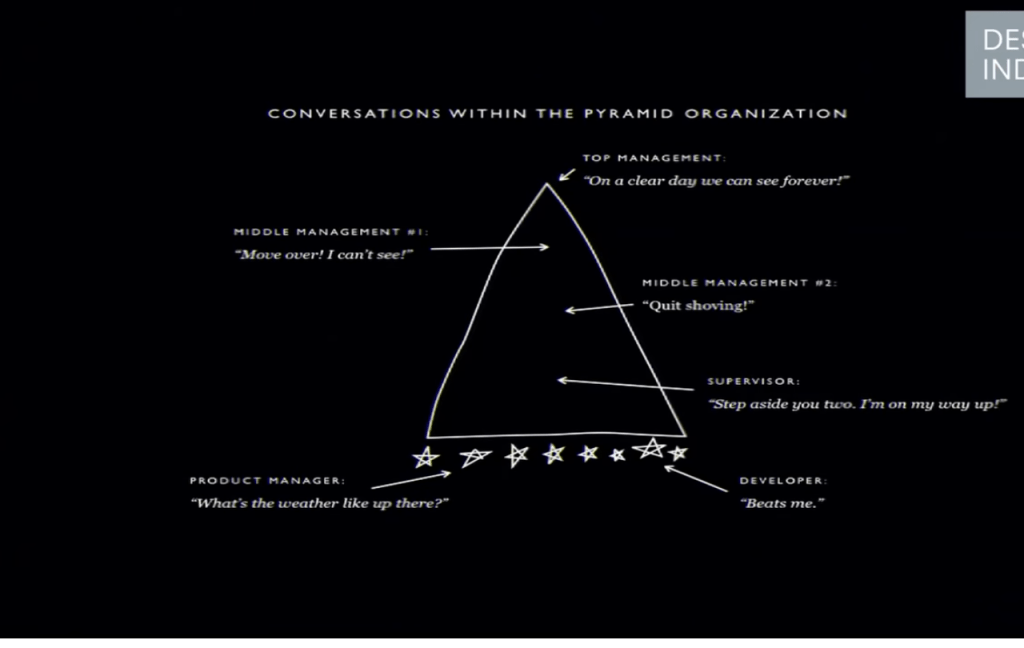
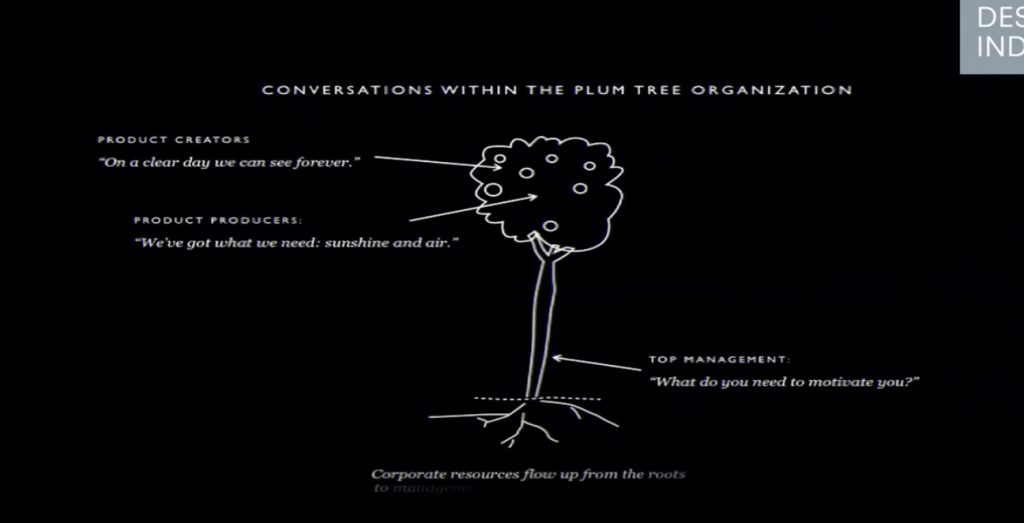
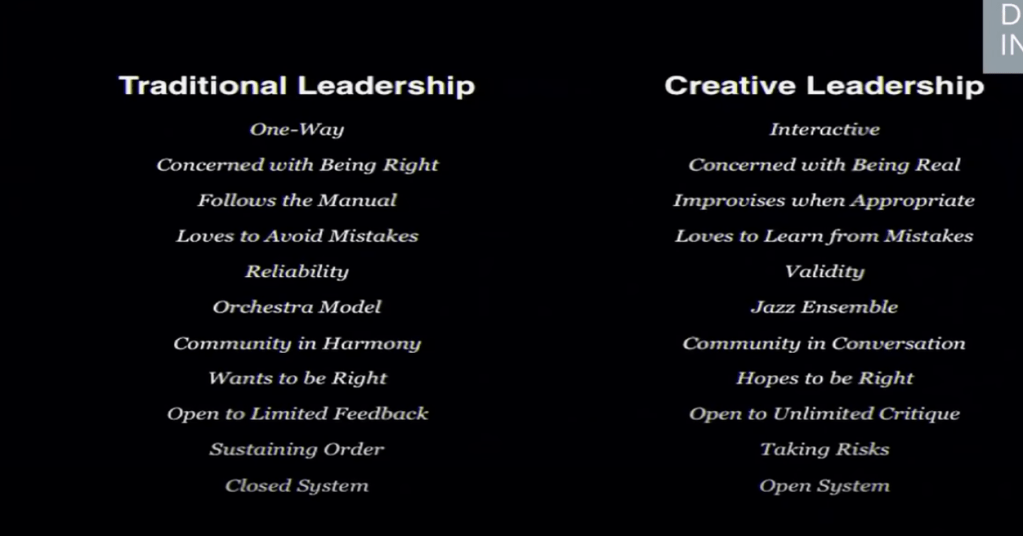
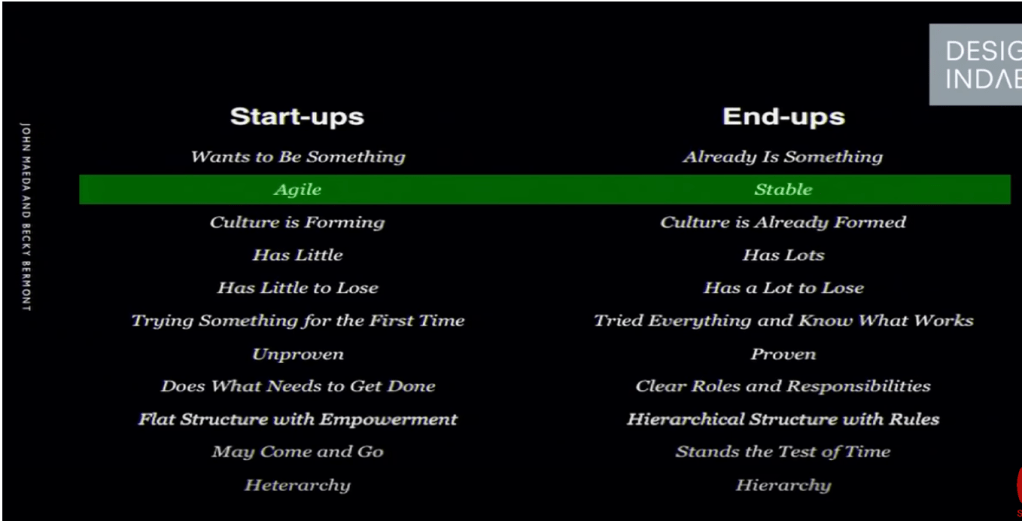
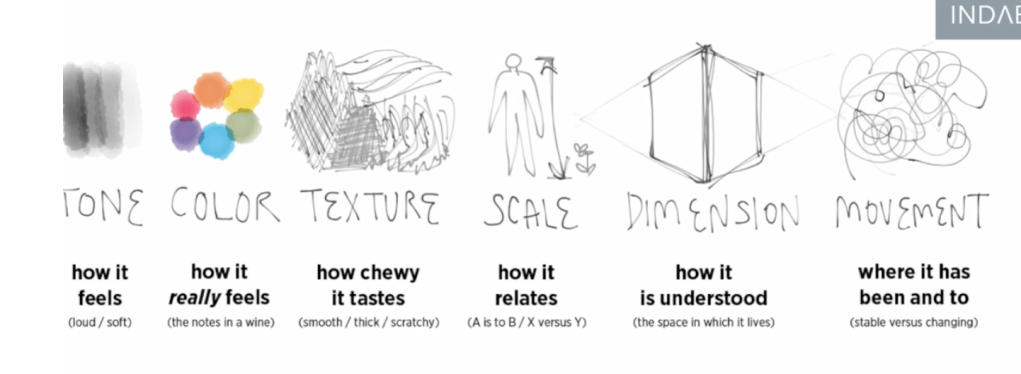
“There is a large need of designers where I work in Silicon Valey – not to make nice pictures but to rethink how business should evolve.
Art and Design improves the economy.”
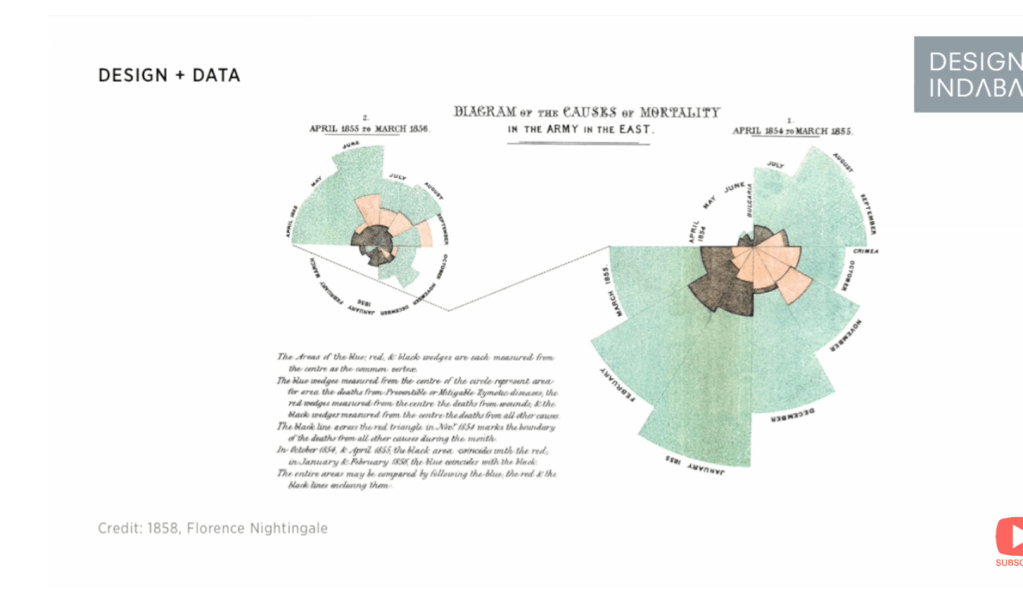
The blue are the solders dying in the hospitals – so, she convinced them that the conditions in the hospitals are veery important. Design is powerful.
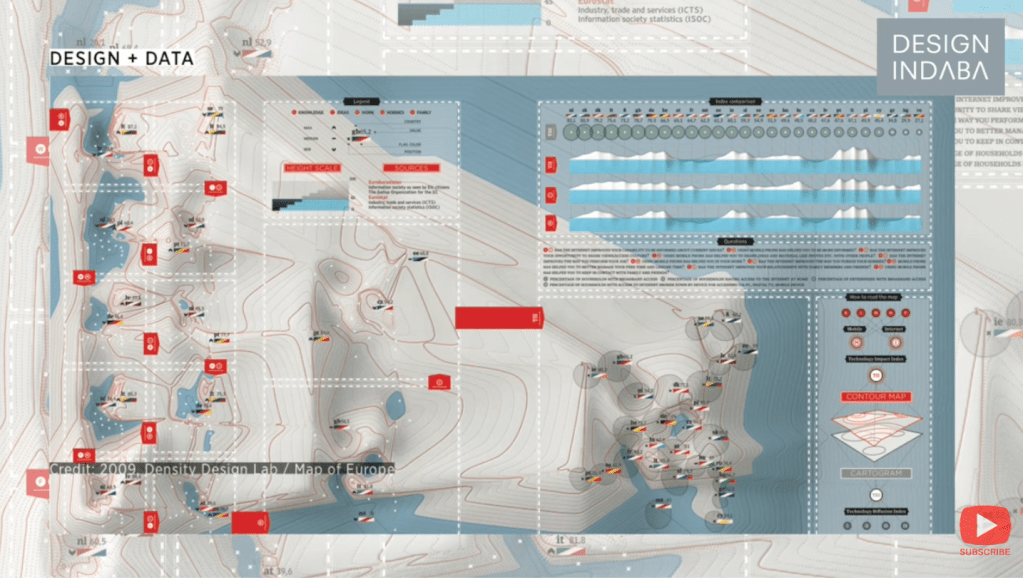
Design can be confusing:
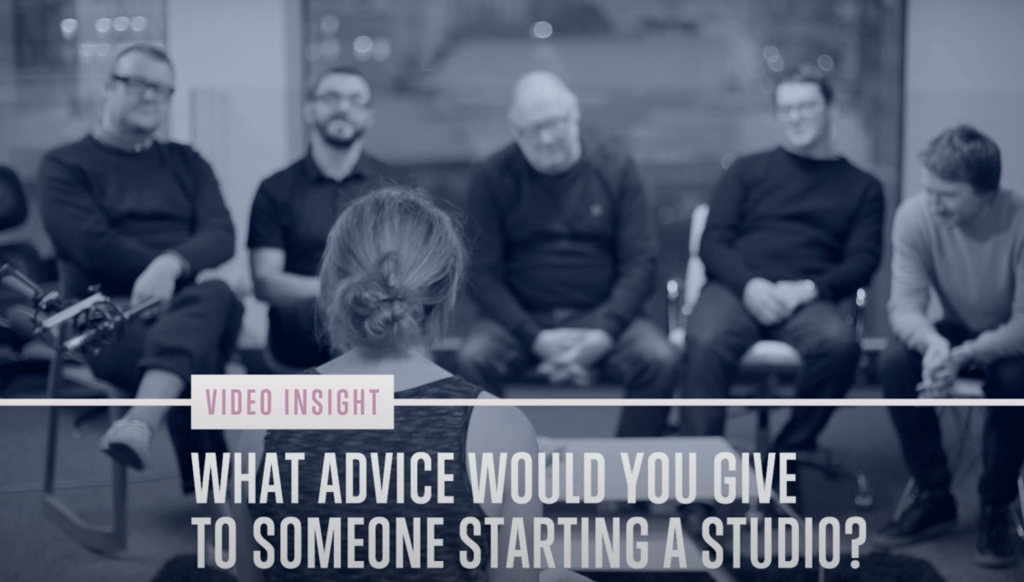
Computer Arts (2016) How to Launch and Run a Design StudioLinks to an external site., [online video]. [Accessed 27 March 2019
In our second video interview, Michael C. Place, David Bailey, Ian Anderson, Nick Bax and Matt Pyke share their secrets for launching and running a successful design studio, from how to employ people and structure your team to when to stop growing. Read the full interview inside Computer Arts issue 250: https://www.myfavouritemagazines.co.u…
millsustwo (2017) Inside ustwoLinks to an external site., [online video]. [Accessed 27 March 2019]
The Futur (2017) How To Run A Creative Business: In-depth breakdown w/ Melinda LivseyLinks to an external site., [online video]. [Accessed 27 March 2019]
Sagmeister, Stefan (2013) ‘Medalist Stefan SagmeisterLinks to an external site.’, AIGA [online]. [Accessed 27 March 2019]
&walsh – https://andwalsh.comLinks to an external site
Sagmeister inc – https://sagmeister.comLinks to an external site.
Maeda Studio – https://maedastudio.com/Links to an external site.
How to find your niche as a designer
https://99designs.com/blog/freelancing/find-design-niche/
https://www.clientjoy.io/blog/how-to-start-freelancing-as-a-side-hustle
https://www.creativebloq.com/advice/perfect-business-plan-for-creatives
https://www.themuse.com/advice/how-to-turn-passion-project-into-business
 Vicky Kafkaki - Graphic Design MA Falmouth University
Leave a comment