This week we explored how creative processes, platforms for networking and tools for collaboration today are changing the landscape of design.
The lecture is delivered by Dan and Nana Parry, co-founders of Tectonic (and formerly of Metier Digital).
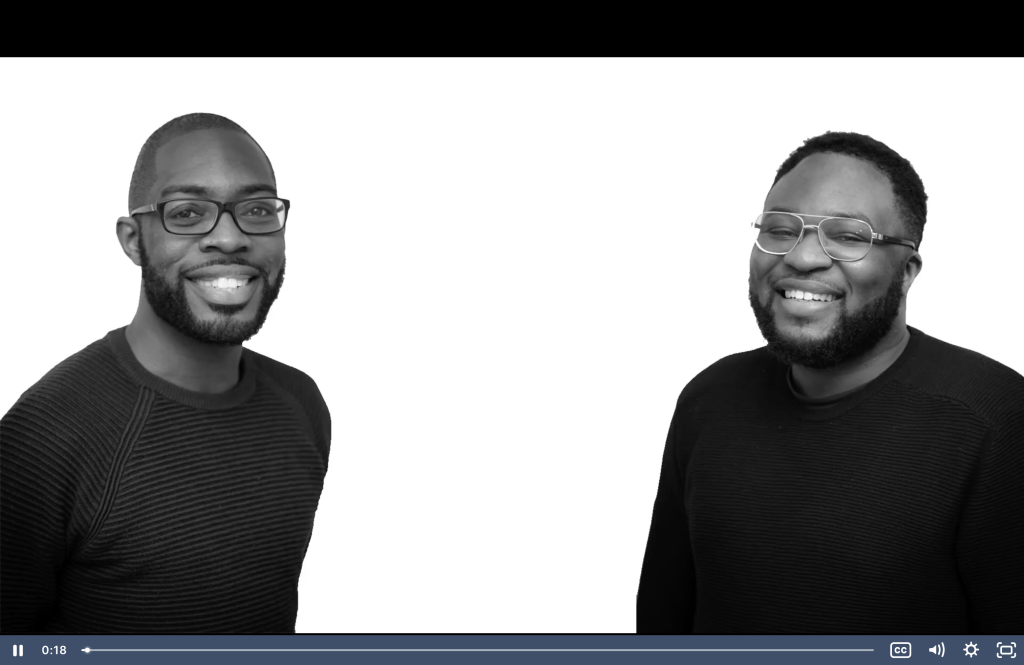
Nana Parry explained the importance of the collaboration. He said that “from our point of view, collaboration is key to the success of any product or service because collaboration brings out the best in people. You find that ideas become stronger, you learn better, everything is quicker. It’s just a better thing for everyone when you have a collaborative process that combines lots of different skills and unique points of views together. You end up with something greater than the whole.”
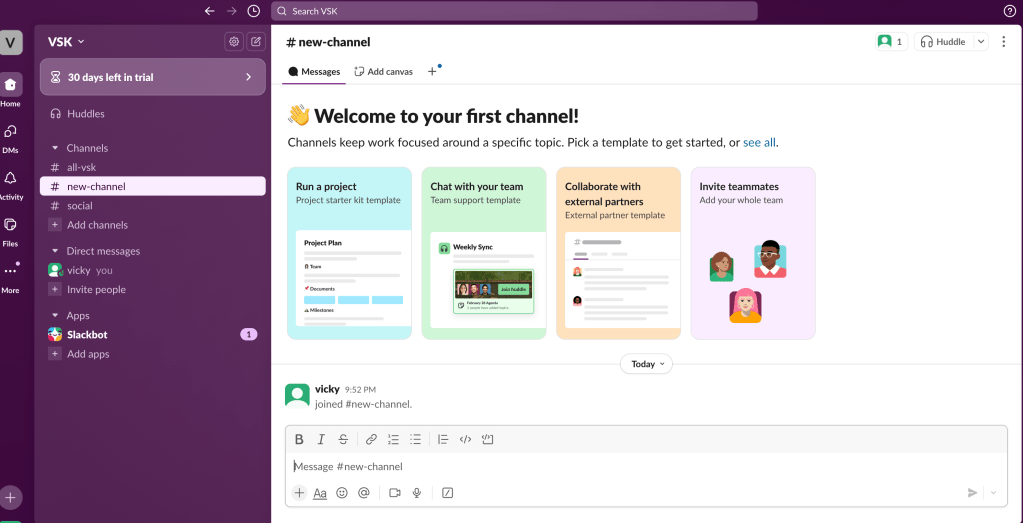
The use https://slack.com/
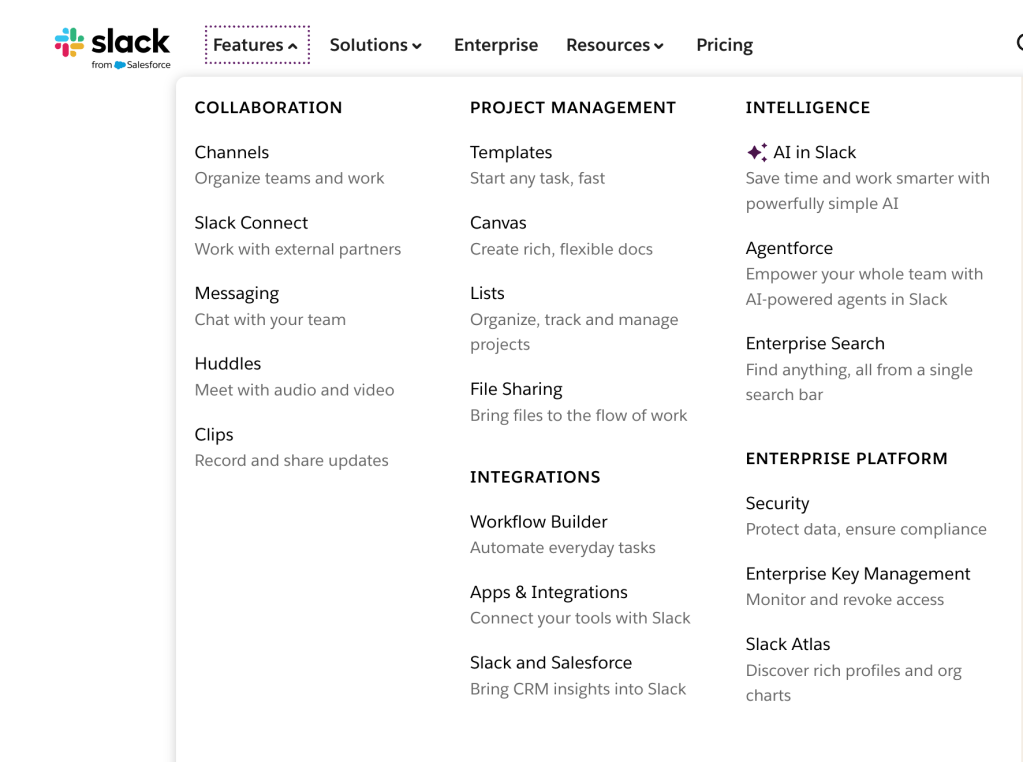
I created account – it seems very useful
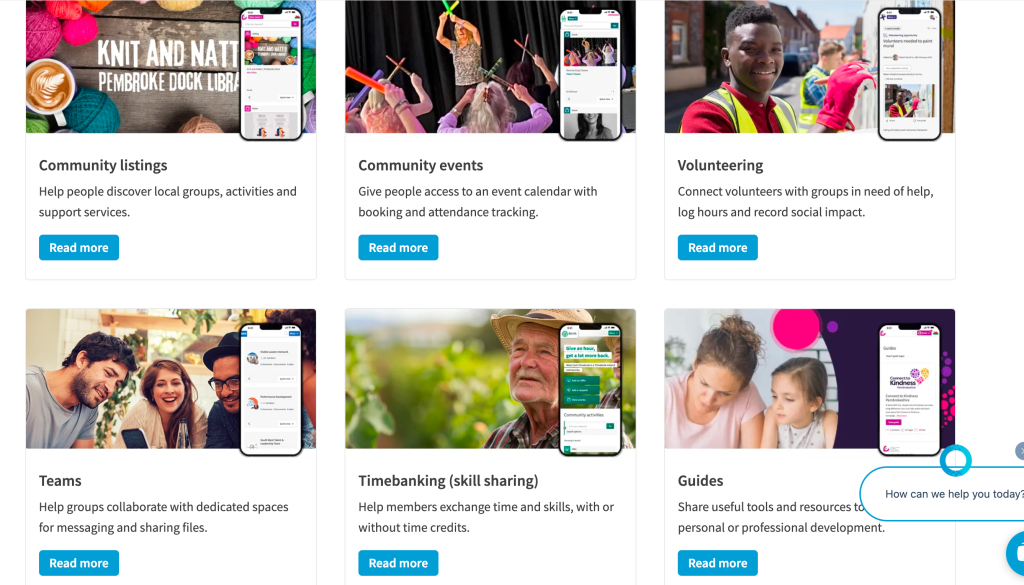
More collaborative tools:
- Slack, appear.in;
- Google Docs to share and edit documents;
- monday.com for project management;
Dan said that “when you’re creating anything together, it’s about understanding what the goals are of each of the different people that will be using the platform, and making sure that they can achieve what they want to achieve…
When it comes to writing down problems, the way that we do it is write down as many problems as you think your audience has. Then list them all down and try and pick your top three, which are the top three problems that your audience wants to be solved…
Understanding the competitive landscape, helps you understand where your competitors are doing things correctly or incorrectly.
Just because there are competitors shouldn’t be a reason for you to stop…
Go to where your audience is and go to where your customers would be as well”
He mention also that is important to monitor the results on order to grow.
“There’s also a concept called vanity metrics. Vanity metrics are metrics that look really good and can make you think that you’re doing better, or worse, than you actually are and potentially may guide you in incorrect directions. A good vanity metric is ‘likes’ on an Instagram post, for example. At the end of the day it doesn’t really matter unless that’s part of your strategy. If you’re a business on Instagram, it’s really about trying to get those people to come to your page and purchase your goods or services. ‘Likes’ look good and they make you feel good, but they may not be attractive as a business metric…
Oftentimes you find out that when you put something into the real world, the results are far different than you would expect. You are validating or invalidating your assumptions. However, your audience never really behaves in the same way that you think that they are going to behave and it’s something that has thrown us multiple times. Thrown many businesses. That’s why really getting to know your customers and your audience is key for building products.
What we’ve recognised is, when you work with someone else, or when you are held accountable to someone else, you end up achieving your creative goals.“
So, my take way from this lecture is that are many tools for collaborations out there but is important to figure out what will work for us, for our team, for our project. Also we need to think positive, just because is a lot of competition, doesn’t mean that we should give up.
“HATO is a creative studio based in London and Hong Kong exploring design and production through various mediums. In 2009 we established a publishing house and in 2020 a concept store. These three elements encompass our experimental approach to communicating ideas.
The studio’s experience spans over a decade working with the cultural, hospitality, tech and fashion sectors. Our clients are a network of forward-thinking people who are looking to create better ways of being. Together we transform brands and organizations through strategy, design and digital production, intricately building a visual language and brand behaviors that bring genuine connections and lasting engagement with communities.
Our work focuses on emotional connections and ideas that create opportunities for brands to truly resonate with their audiences. Our projects are recognized for their playful and progressive approach often bringing new perspectives to common ways of thinking, winning awards from Webby to the Good Design Award.”
https://www.johnsonbanks.co.uk/work/mozilla

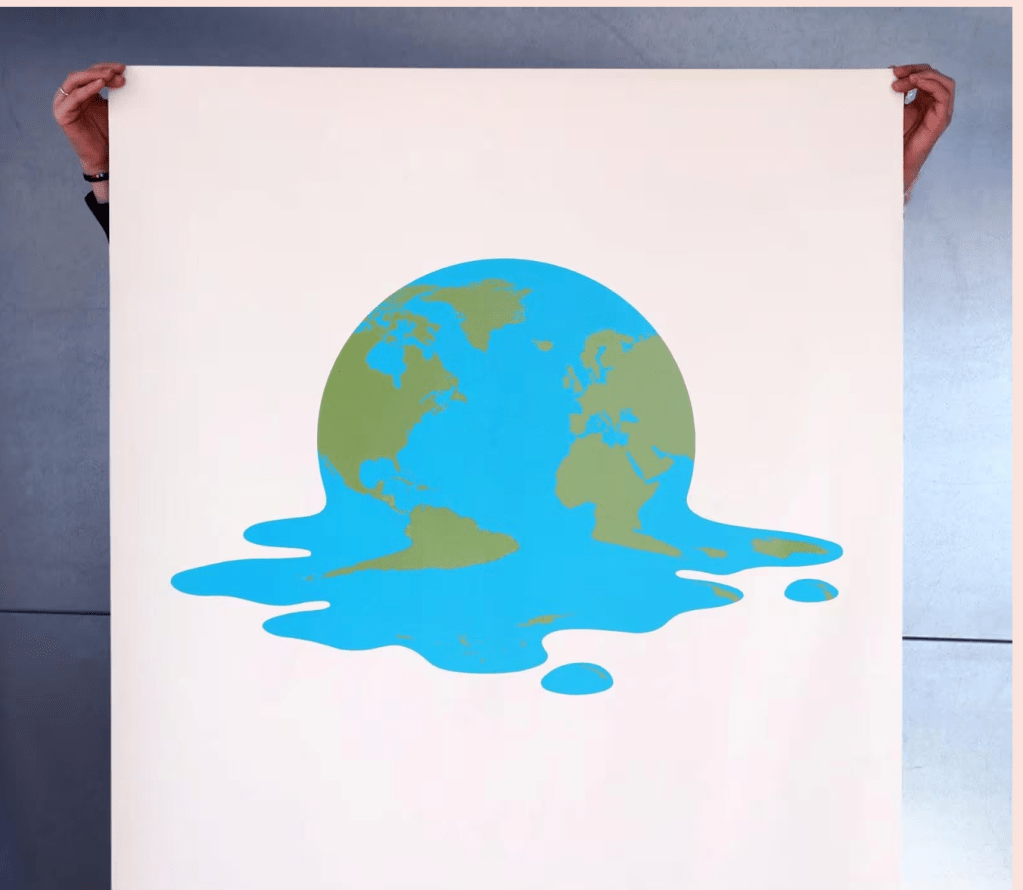
https://www.johnsonbanks.co.uk/thoughts/from-catastrophe-to-can-do
https://www.johnsonbanks.co.uk/thoughts/branding-politics-and-pandemics
https://www.dezeen.com/2016/11/10/mozilla-rebrand-logo-johnson-banks-open-design-process-graphics/
https://www.wired.com/2017/01/introducing-mozillas-new-logo-moza-get/
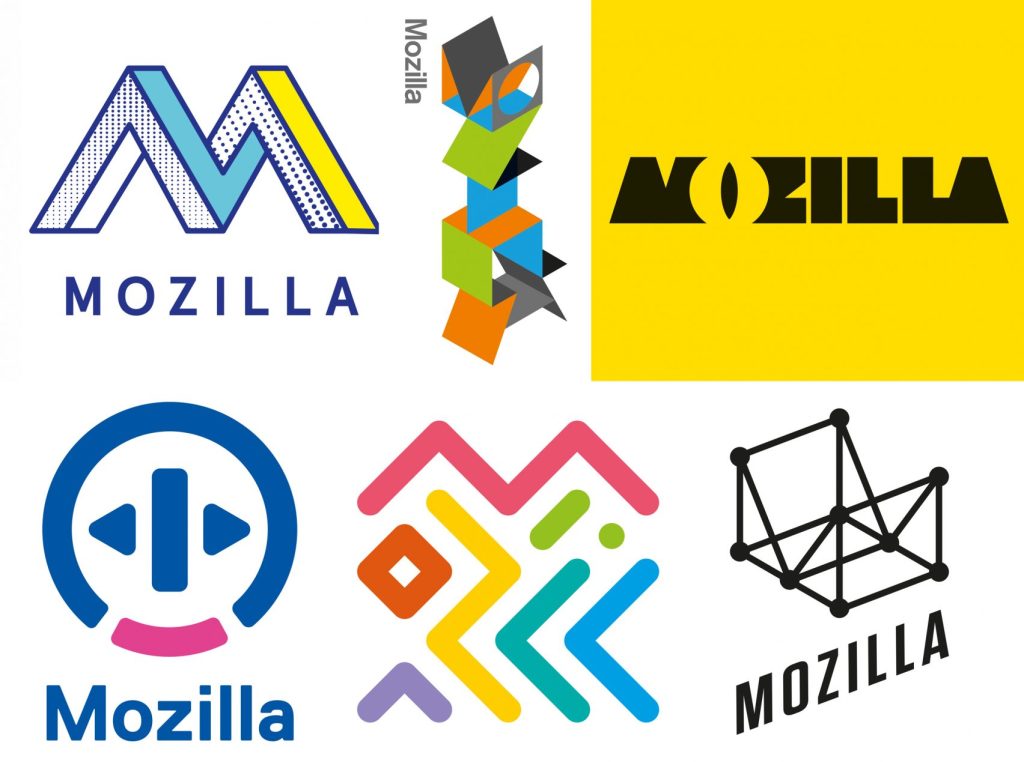
I love the idea of open design https://blog.mozilla.org/opendesign/
“Mozilla has a new logo. Maybe you’ve seen it before—the wordmark, which replaces the “ill” in “Mozilla” with the colon and twin slashes commonly found in URLs, was one of several design candidates the company floated last fall. That was unusual. When a big tech company unveils a new identity, it usually does so with a surprise announcement. There’s a splashy rollout, a how-we-did-it essay on Medium, and critiques from news outlets (like this one!) and the internet at large.
Instead, Mozilla flipped the rebranding process on its head by sharing each step with the masses. The experiment was a response to the vitriolic state of online logo criticism. Rather than defend itself after the fact, Mozilla posted proposed logos from London firm Johnson Banks online, where anyone could comment. Which they did: The Mozilla and Johnson Banks teams reviewed around 3,000 comments during the five-month-long project.”
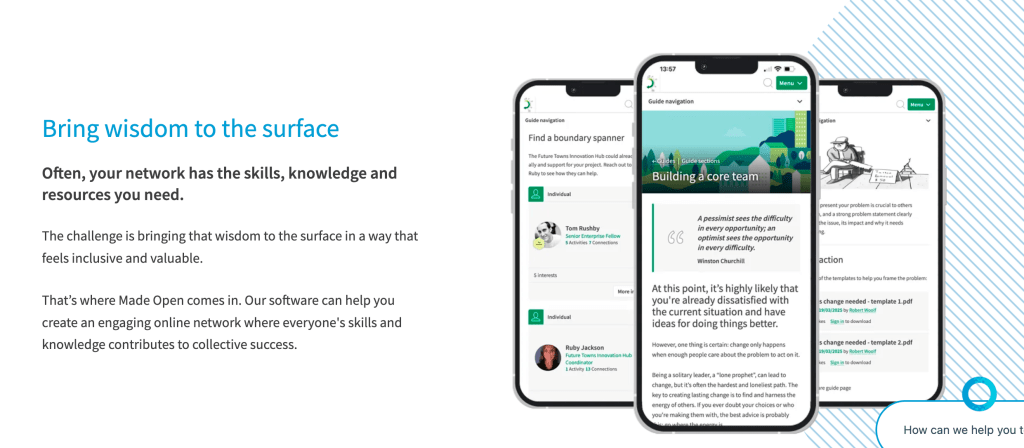
“Our mission is to create a network that every person who wants to can access by 2025, which will enable them to create solutions for themselves, their communities and the wider world. Each of those solutions are interoperable and open source, and build towards a ‘smart planet’ where everyone is able to benefit from the solutions that everyone else has built for any aspect of their lives.”
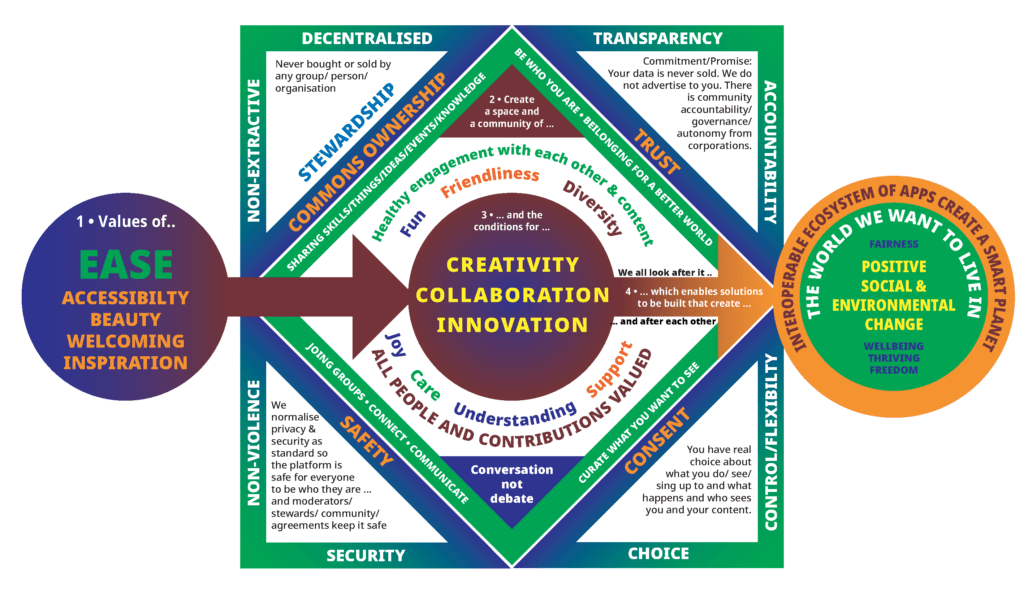
Very interesting story – she has 3 kids but yet she finds time to be so innovative – this is very inspiring.
I like the story with forest – they can collaborate to grow the forest and then trough collaboration, they can protect it and see in real time the changes.
 Vicky Kafkaki - Graphic Design MA Falmouth University