Business, Project Plans and Communication – Client Relationships, Insight, Content, Structure.
Podcast

Emma Harverson is an editor at White Lion Publishing.
White Lion is a trade, illustrated, non-fiction publisher. The do variety of topics from smart thinking, food and drink, sport, wellness, gardening, popular science, heritage, arts…
Stuart Tolley is a creative director and founder of a graphic design studio called Transmission, based in Brighton.
Lucy Warburton is a commissioning editor.
The three of them have worked together over the last couple of years on the Build+Become book series.
Lucy felt that the changing nature of the world outside meant that people were more and more looking for books that are personal development focused, or answering questions about the hot topics of today.
Stuart said that It’s a process of identifying the area of the market you want to be in then approaching people that are in the heart of that and have a profile within it, a following within it, that you can see how they would not only write a good book or come to it with really good ideas, but also be able to talk to people that want that book in the end. That is a huge part of commissioning. Knowing that the person there is going to help you market that book. It definitely is both that they need to understand the idea, or they will come with their idea, and know how to get a message out there.
Emma explained the book making process: “We have a commissioning editor, a project editor and an inhouse designer for all of our books. The commissioning editor works with the author to pull the manuscript together, that is what then comes to me. I commission a freelance designer, more often than not, to work on the book. Sometimes our inhouse designers work on these. We also work with freelance copywriters, proofreaders, indexers. Obviously with inhouse we’ve still got our editorial teams, but we also have our sales teams, our marketing teams, our foreign sales teams. It’s all about communication mainly, making sure we’re sharing material with people as the book goes through the process of being made. Keeping things up to date and to schedule. Making sure we share that with people. I’ve been here four years and I’m yet to work on one book where everything has gone on schedule, so you always have to be flexible with dates moving around. But I think communication is probably the biggest and most important thing.”
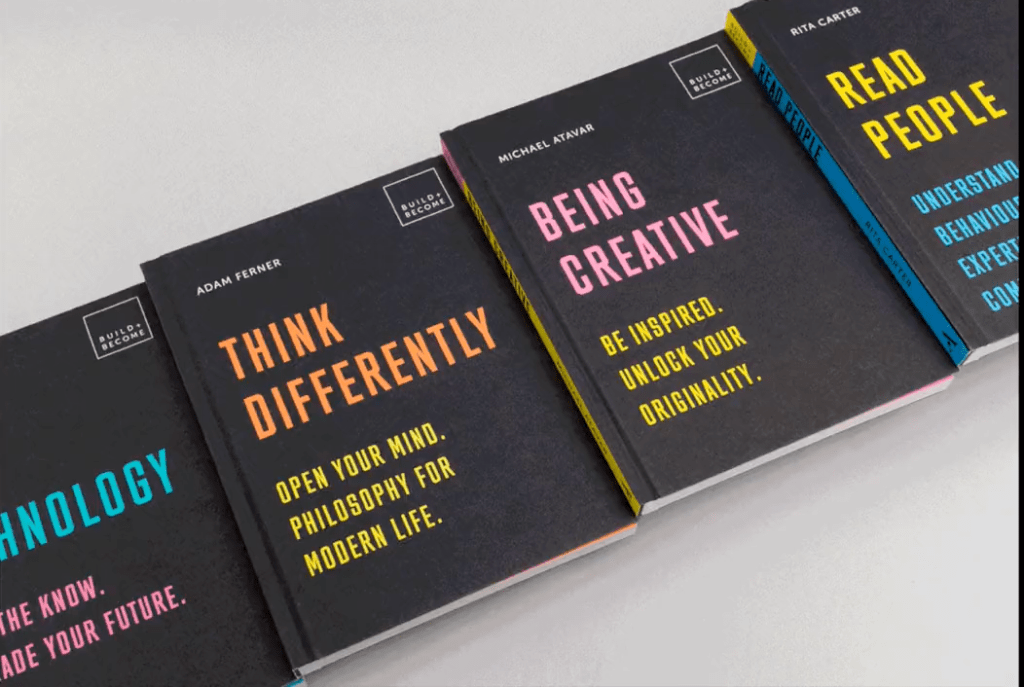
“2. Build+Become Series Concept and Development
- The Build+Become series was designed to address modern topics through 20 bite-sized lessons, making complex subjects accessible and applicable to daily life.
- Lucy explained the initial pitch process, where she identified smart thinking as a growth area in publishing and proposed a series with longevity and global appeal.
- The series aims to create a distinct brand identity, with consistent design and content that resonates across multiple markets and languages.
3. Strategic Planning and Business Model
- Lucy outlined the rigorous planning process for the series, including a three-to-five-year business plan to ensure financial stability and long-term success.
- The series required higher initial investment compared to individual books, with a focus on creating a resilient model adaptable to changing markets.
- Globalization was a key strategic element, with foreign language editions and co-editions being integral to the series’ success.
4. Design Direction and Branding
- Design played a crucial role in establishing the Build+Become series as a recognizable brand, with Stuart Tolley’s Transmission studio creating a distinct visual identity.
- Lucy organized focus groups and conducted tests to refine the design, ensuring it aligned with market expectations and stood out on shelves.
- The design evolved from hardback to paperback formats based on sales data and consumer behavior, particularly in travel stores.
5. Author Commissioning and Content Development
- Lucy described the process of identifying and commissioning authors, focusing on fresh voices and expertise in relevant subject areas like philosophy and personal development.
- Recommendations, university talks, TED events, and market research were key methods for finding suitable authors who could contribute to the series’ vision.
- Emma highlighted the importance of considering authors’ perspectives, especially first-time authors, and ensuring their involvement in the process.
6. Publishing Process and Team Roles
- Emma detailed the publishing process, including manuscript development, design phases, copy editing, proofreading, and indexing, with input from in-house and freelance teams.
- Communication and flexibility were emphasized as critical to managing schedules and addressing delays, ensuring all stakeholders are kept informed.
- The series benefits from having a consistent team, including a dedicated copy editor familiar with its structure and style.
7. Feedback and Adaptation
- Feedback structures evolved as the series developed, with consolidated comments from multiple stakeholders being shared with Stuart to streamline the design process.
- Lucy and Emma discussed the importance of responding to market data, such as sales trends and retail behavior, to adapt formats and titles for better placement and sales.
- The series has grown in recognition, with foreign publishers adopting its design and authors expressing interest in contributing to future books.
8. Metrics for Success
- Success for the Build+Become series is measured not only by sales but also by its longevity, brand recognition, and global reach, with editions in nine languages.
- Emma and Lucy emphasized the importance of backlist sales and consistent presence in stores, aiming for widespread recognition similar to established brands like “Dummies.”
- The series has shown promising growth, with foreign publishers continuing to invest in additional titles and maintaining the original design across markets.”
Stuart said that is very important to keep the people involved in the process as up-to-date as you possibly can.
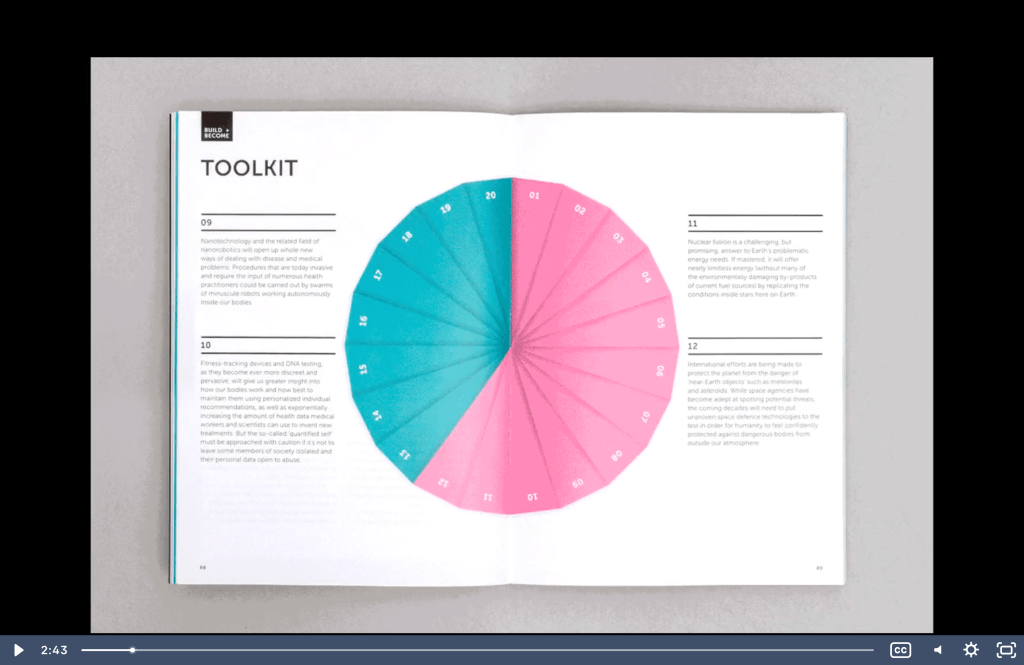
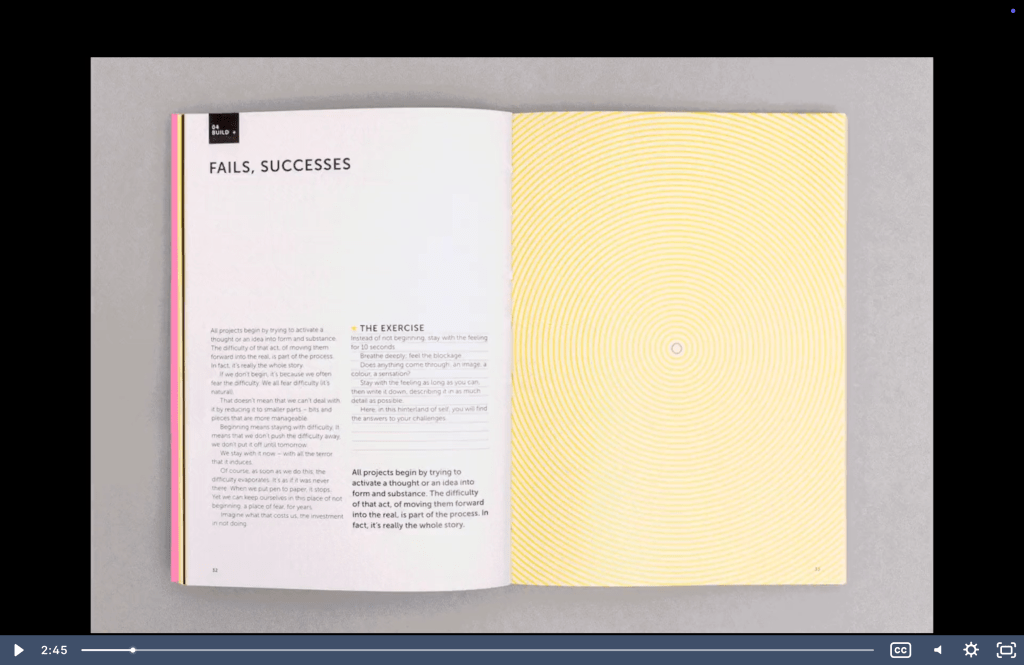
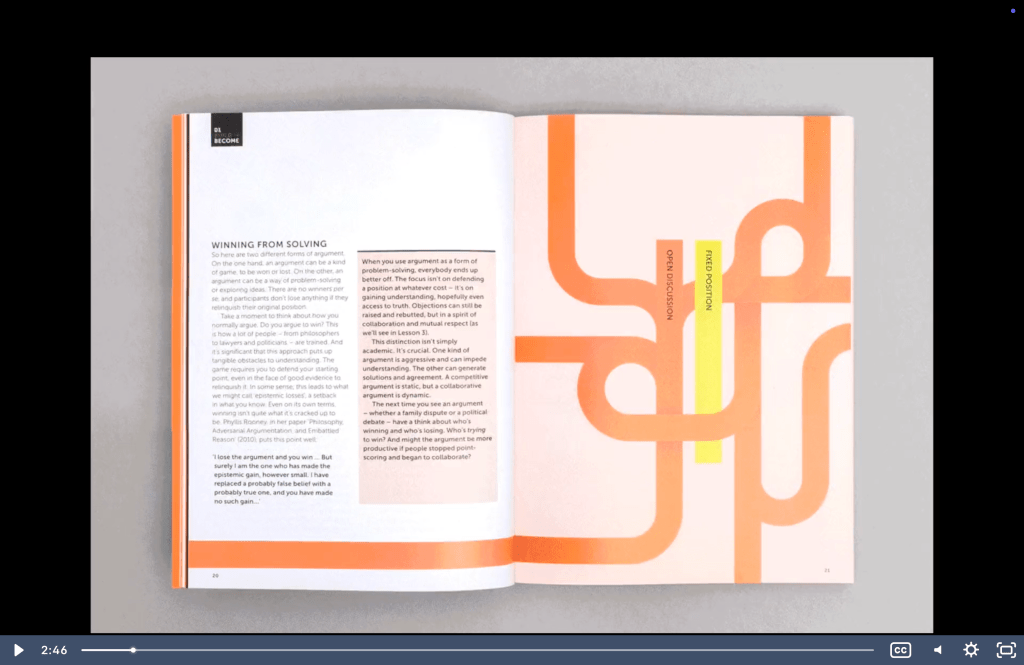




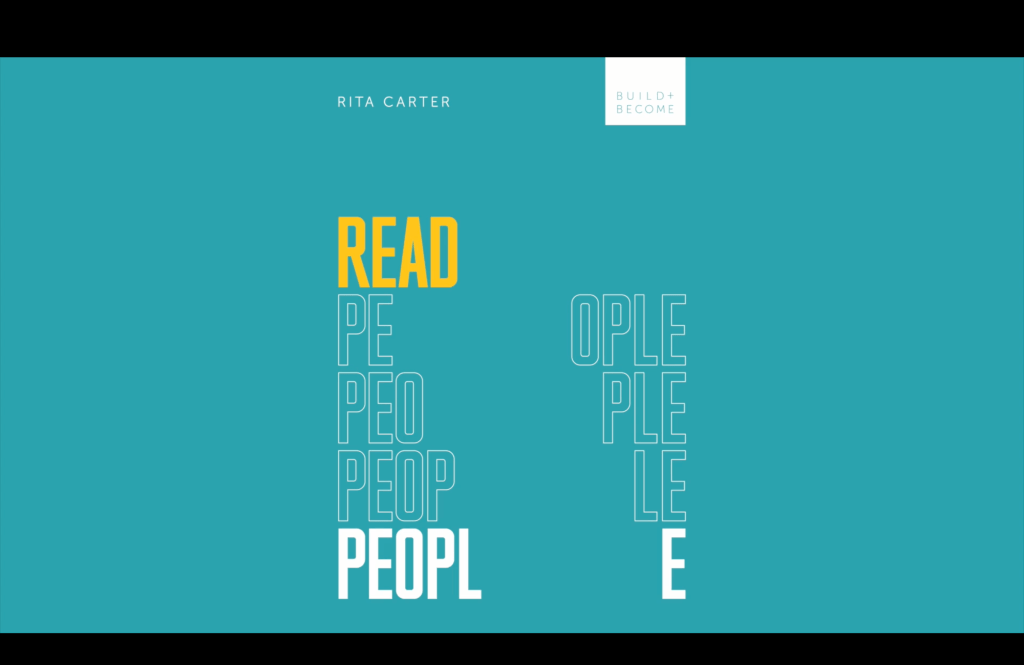
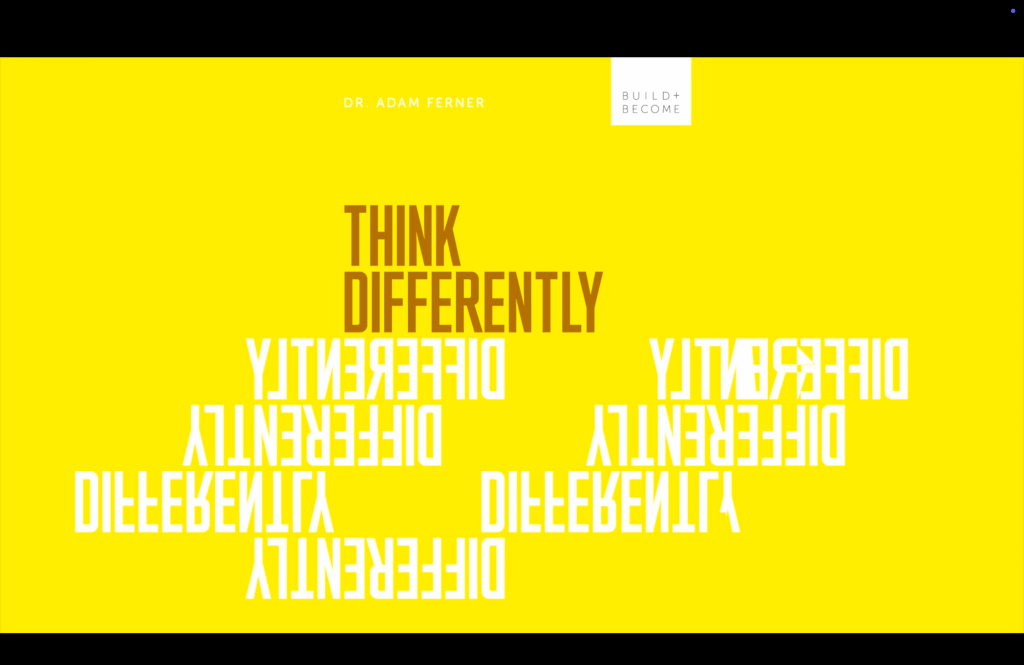
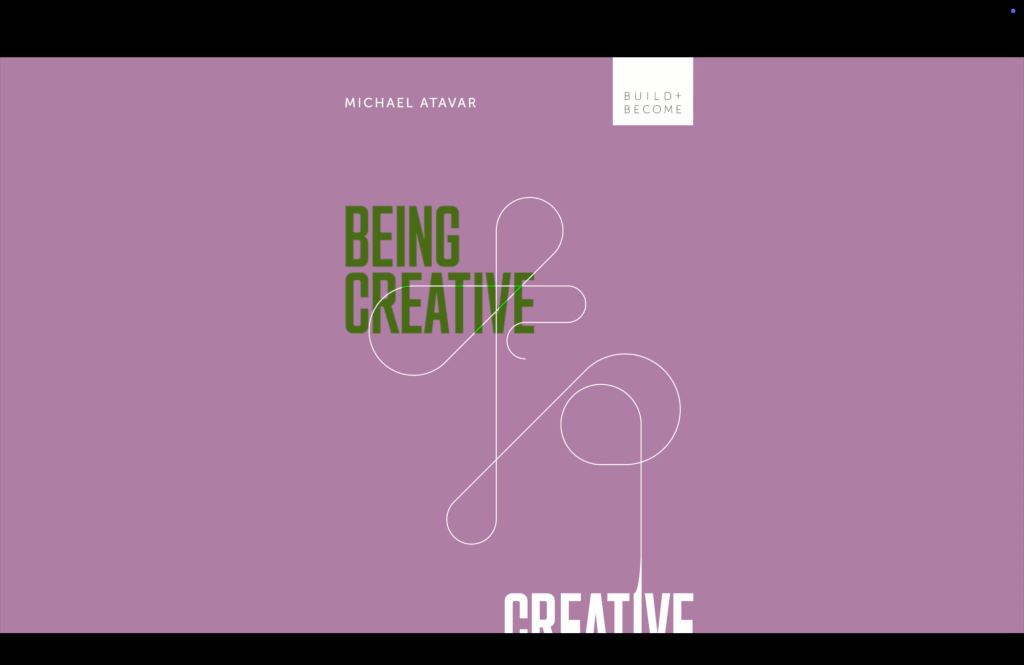
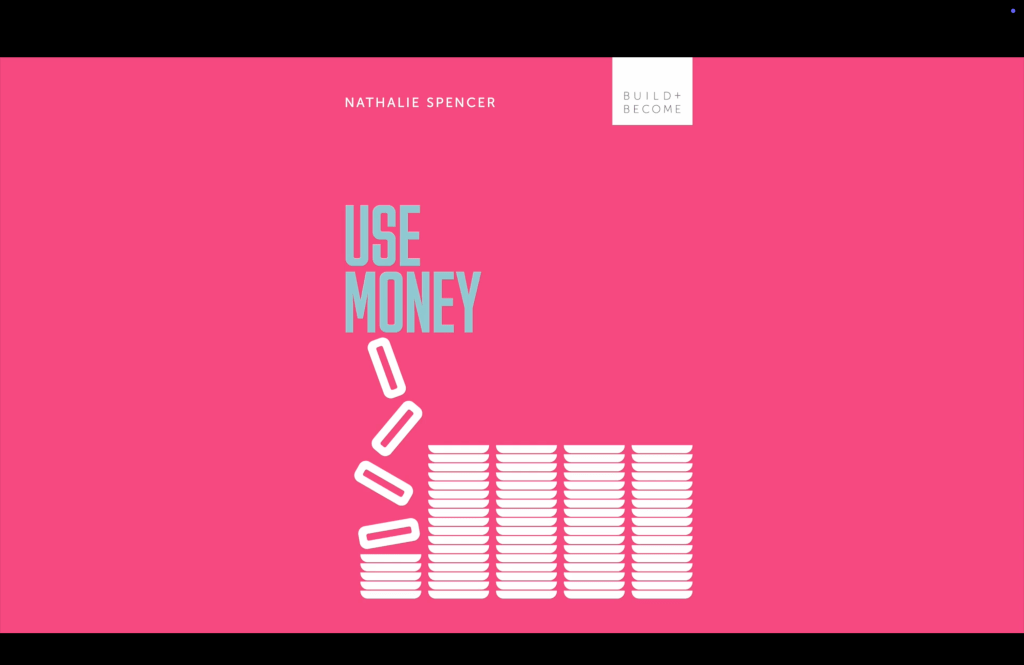


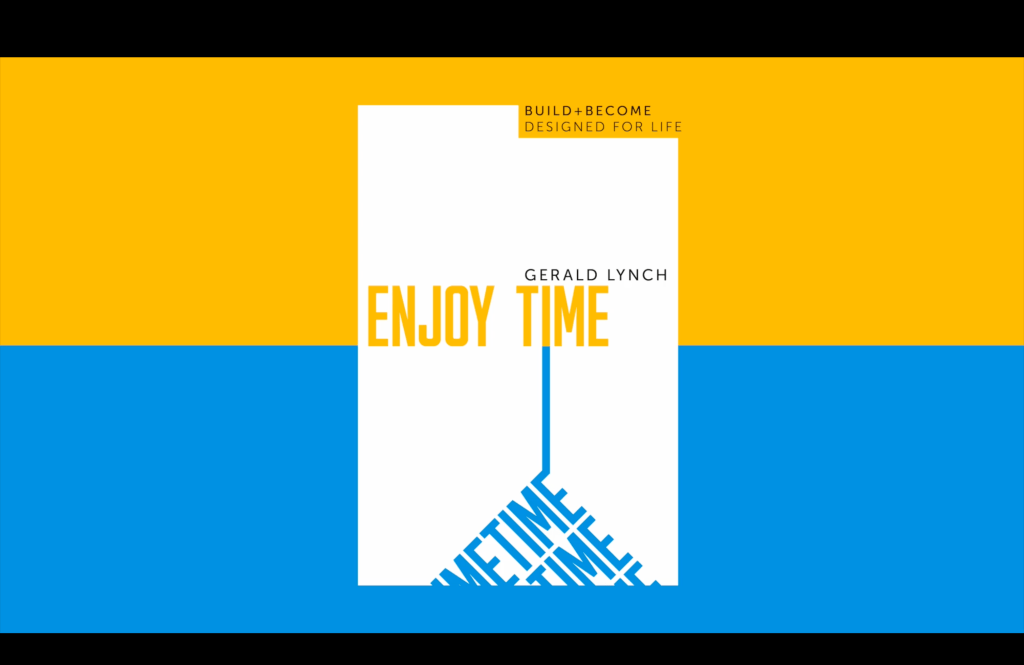


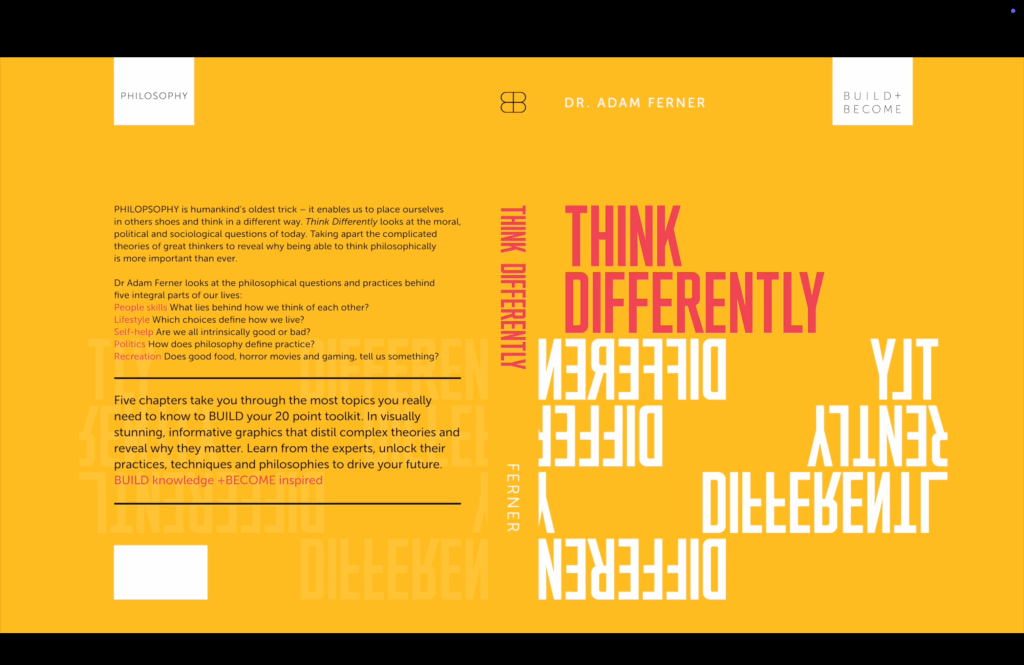

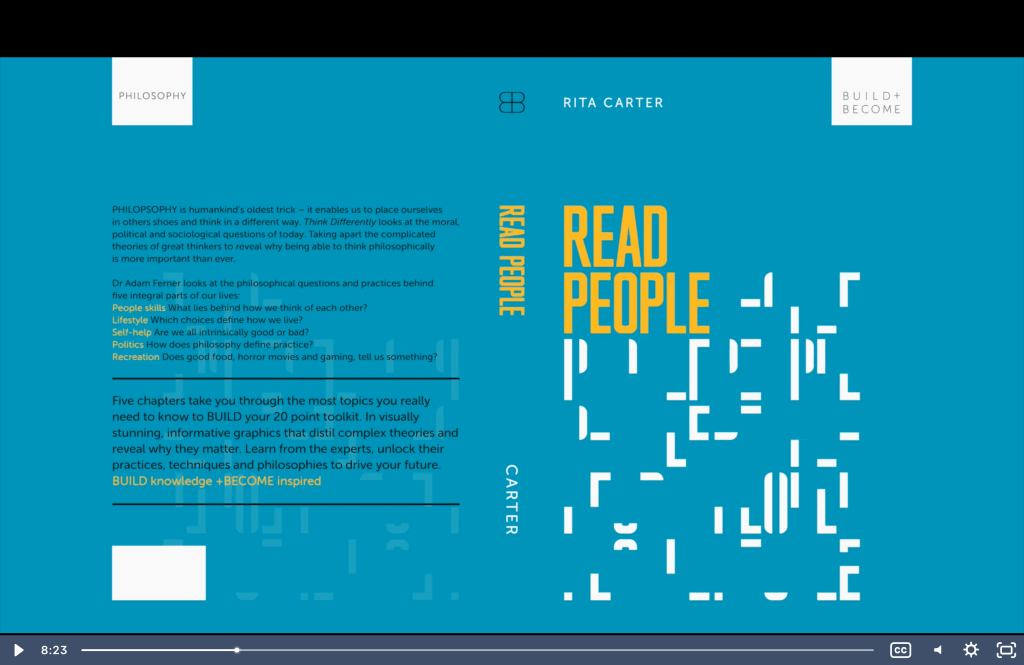
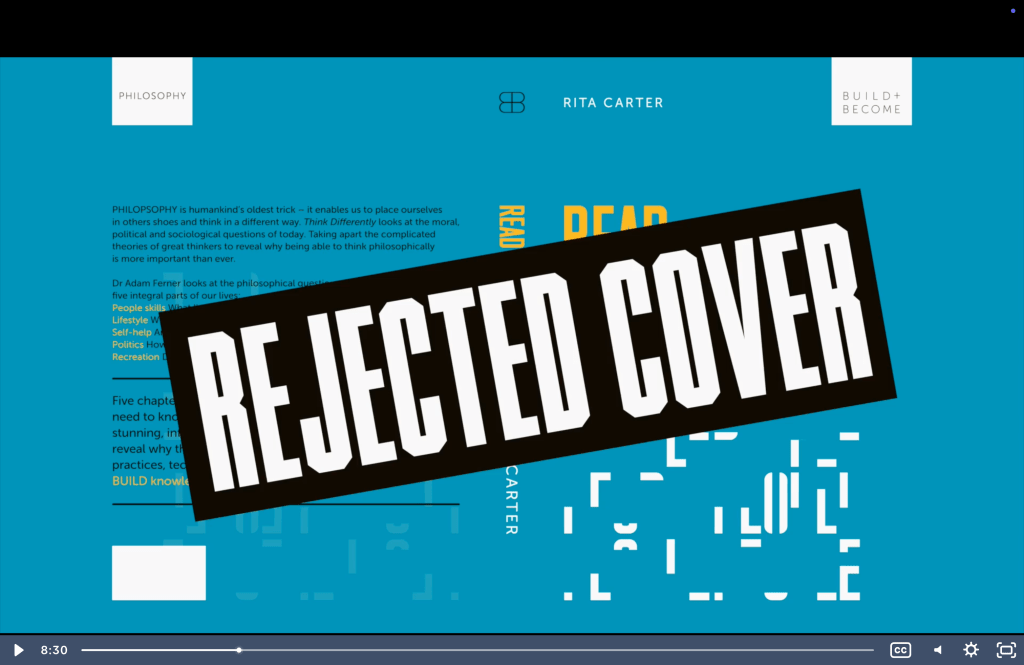
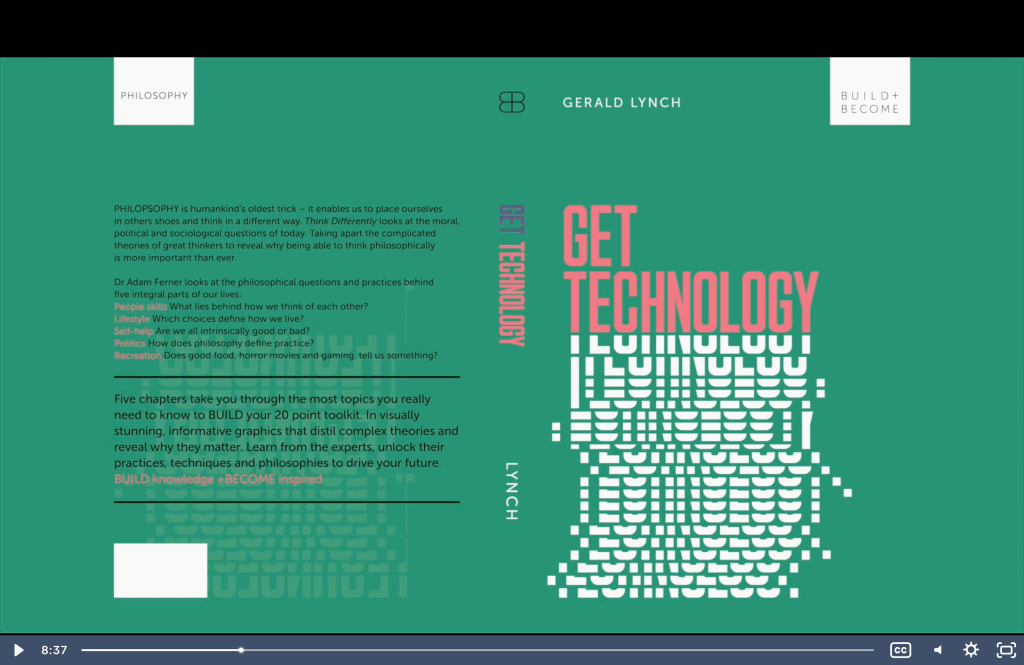
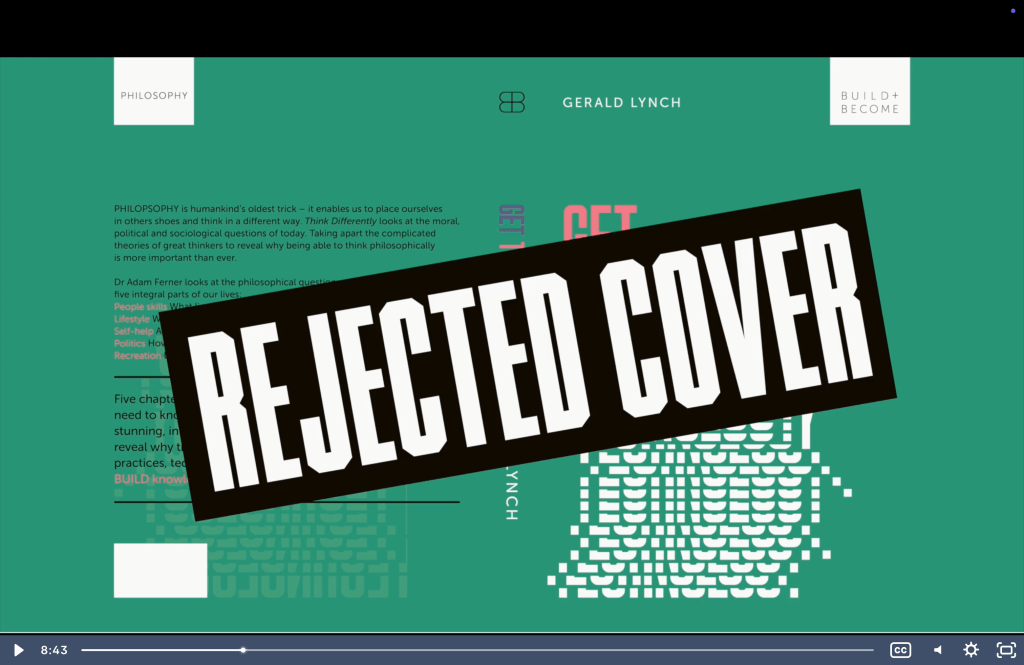
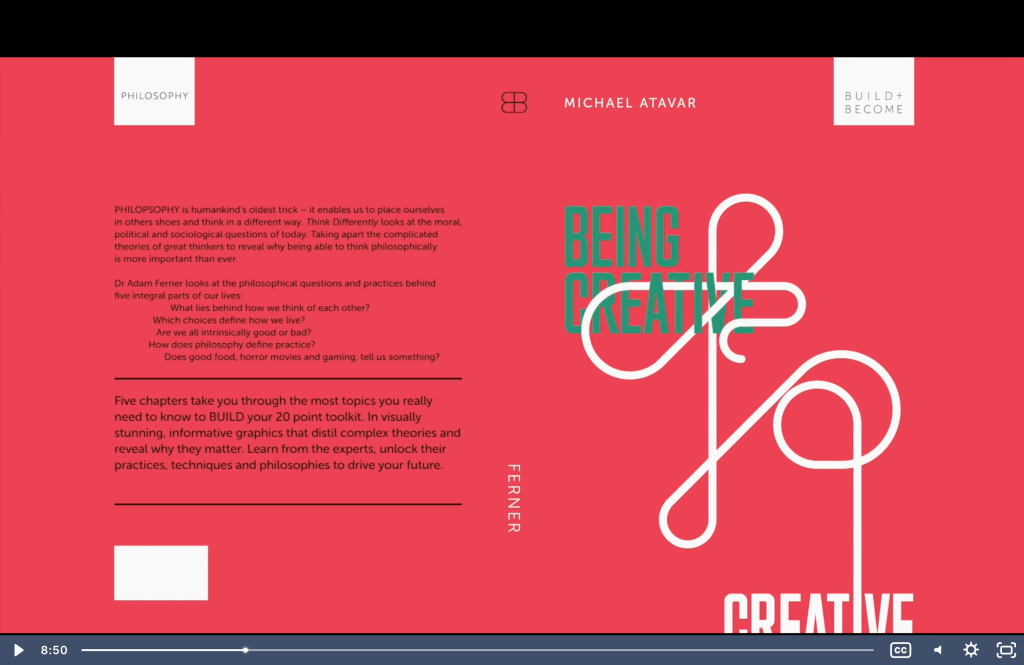
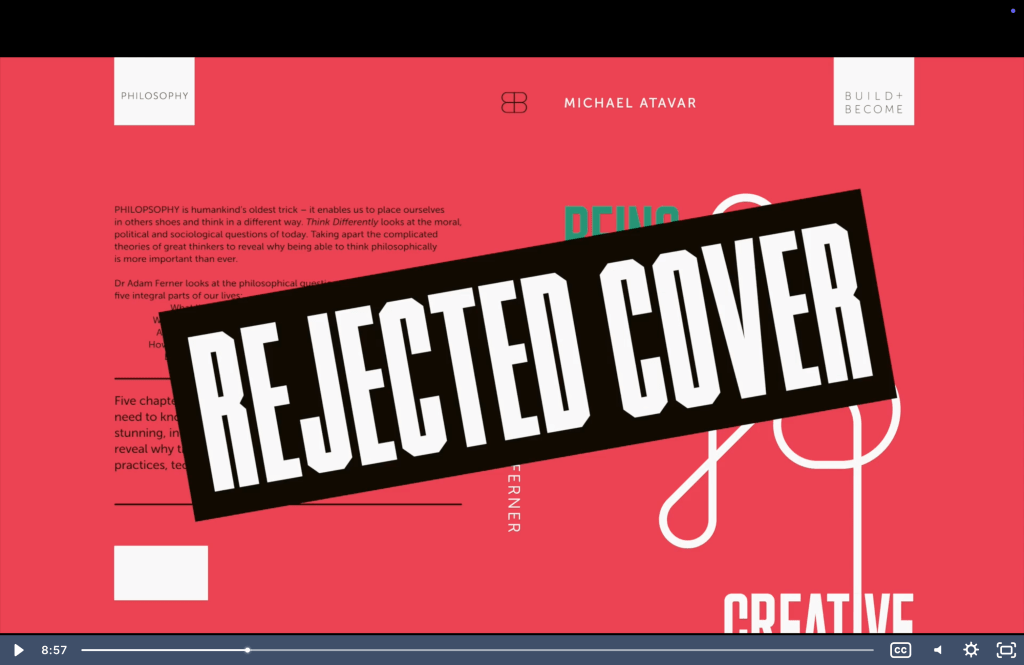
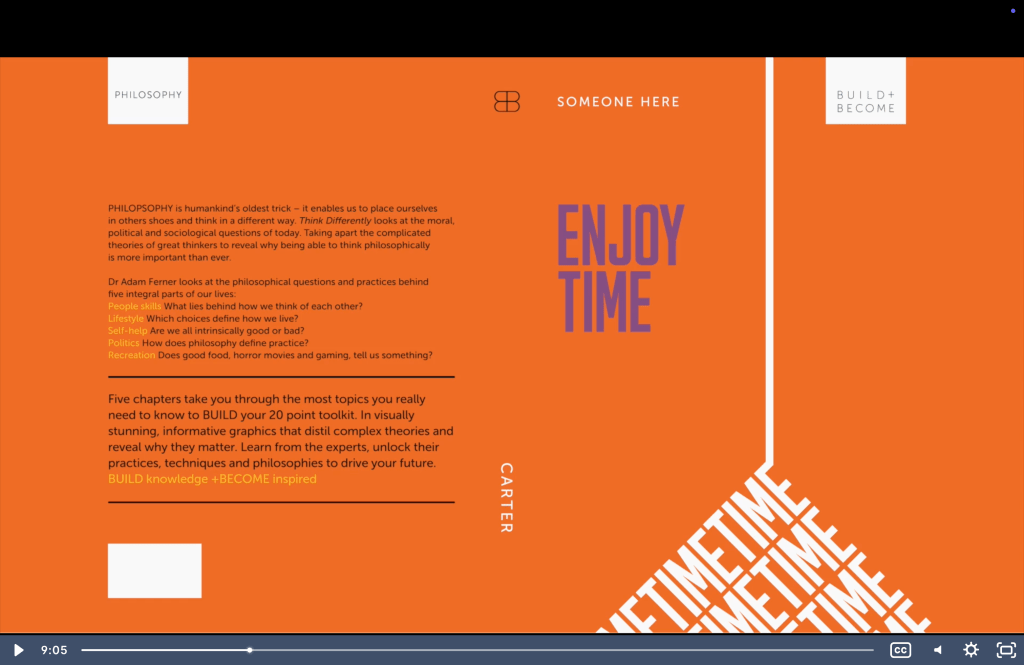

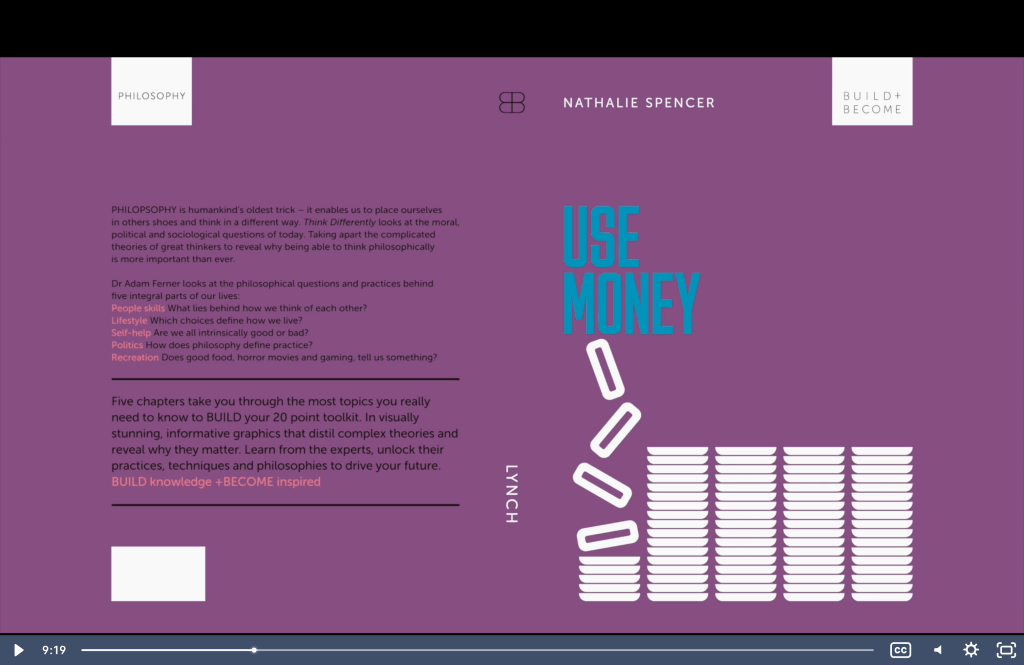
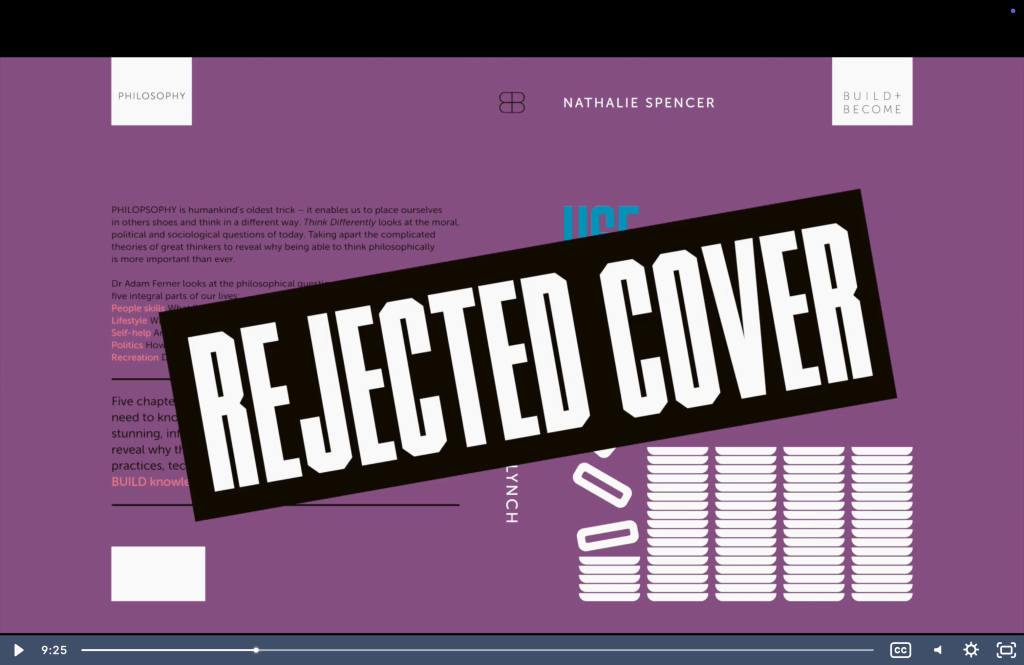
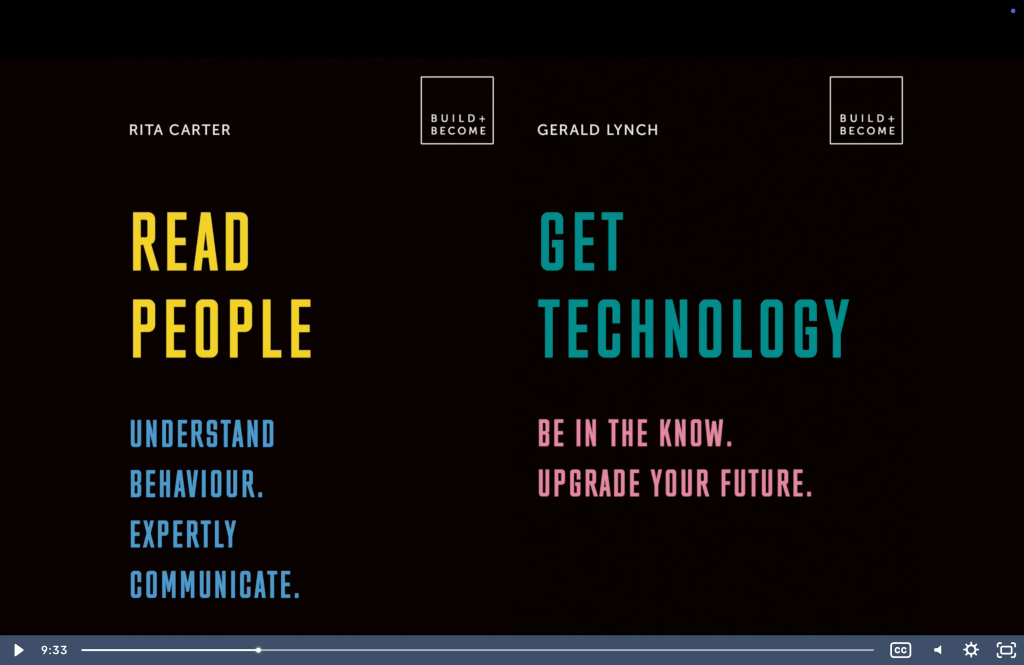

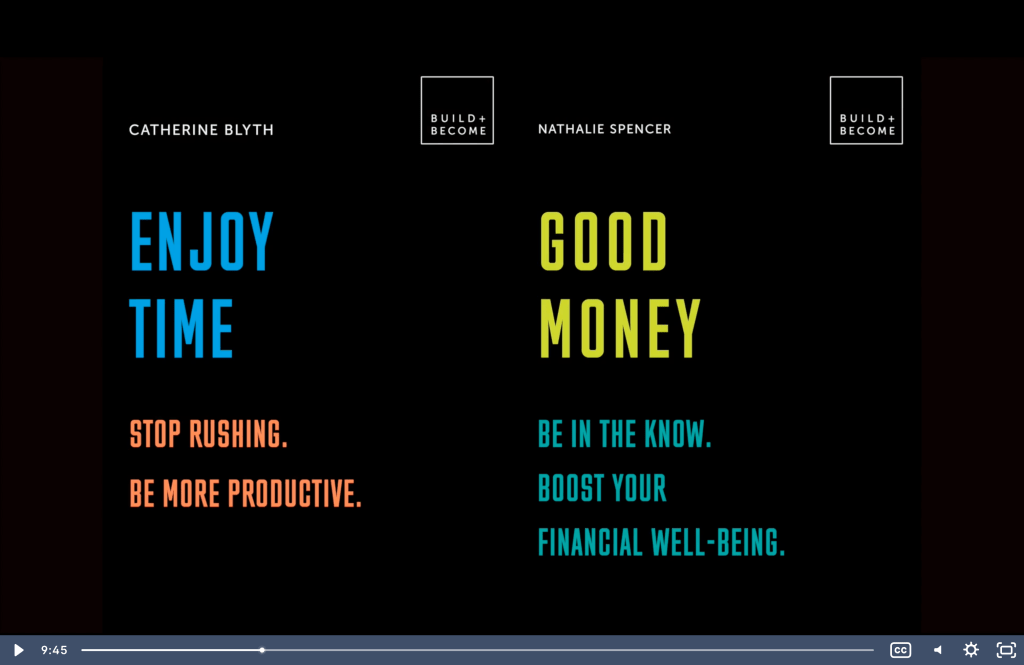

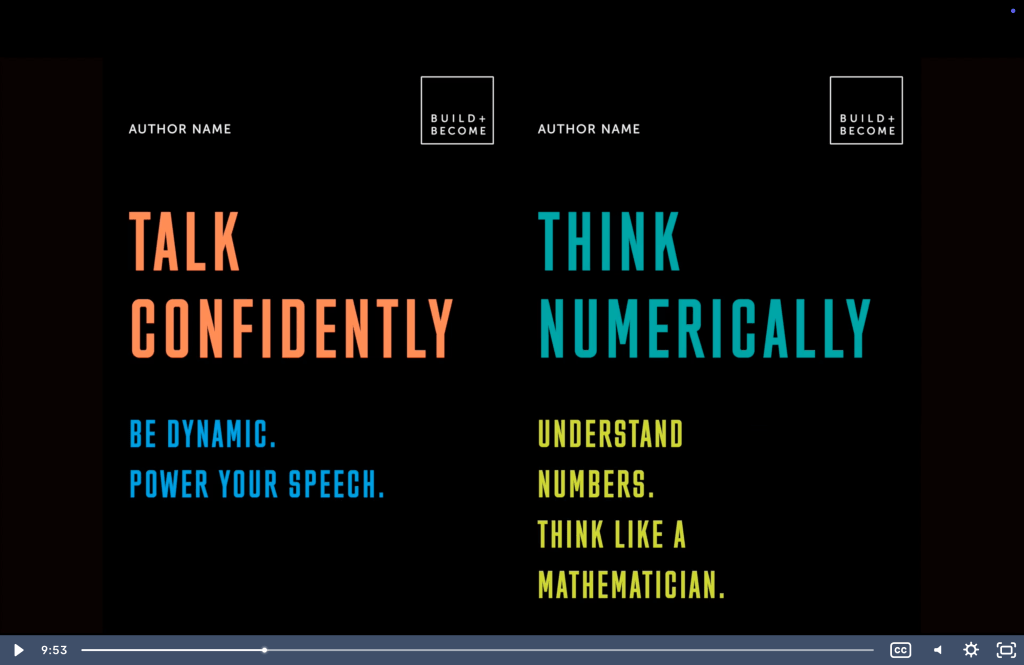

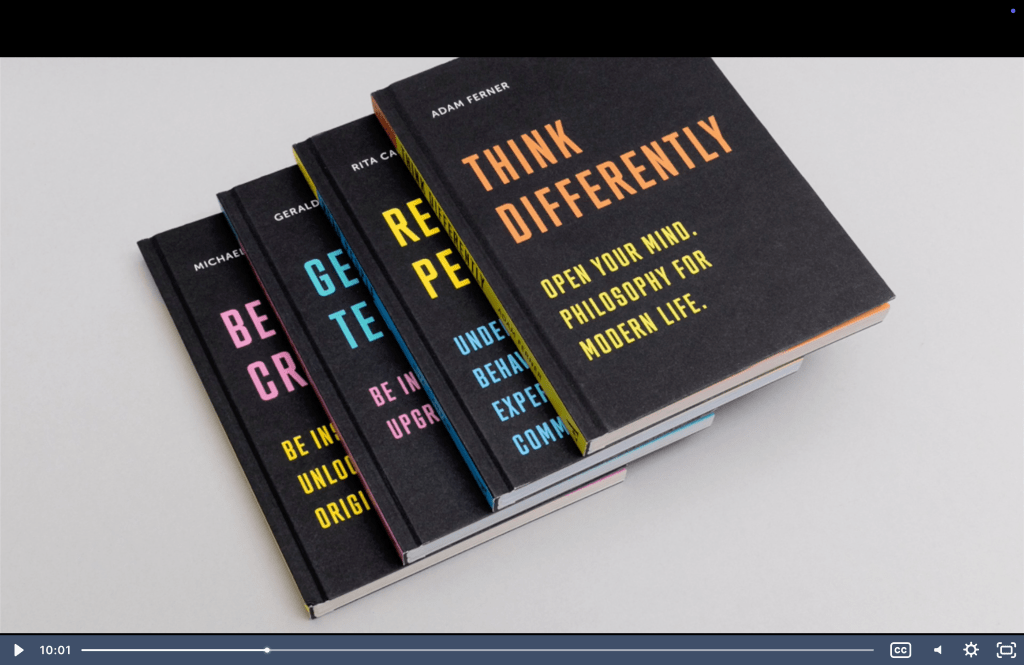
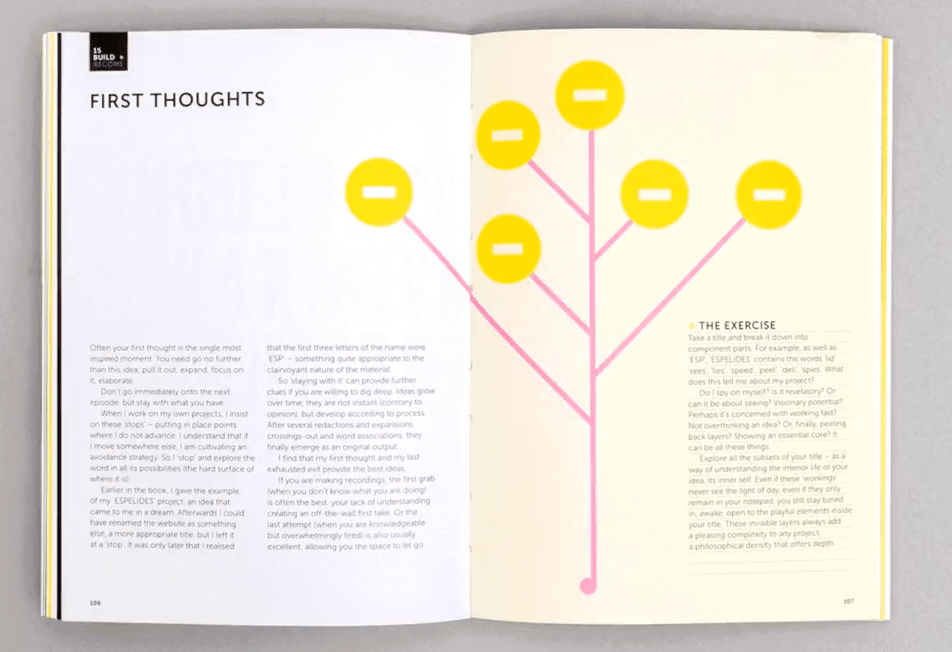
It is amazing to see how many rejections this design got before the final one!
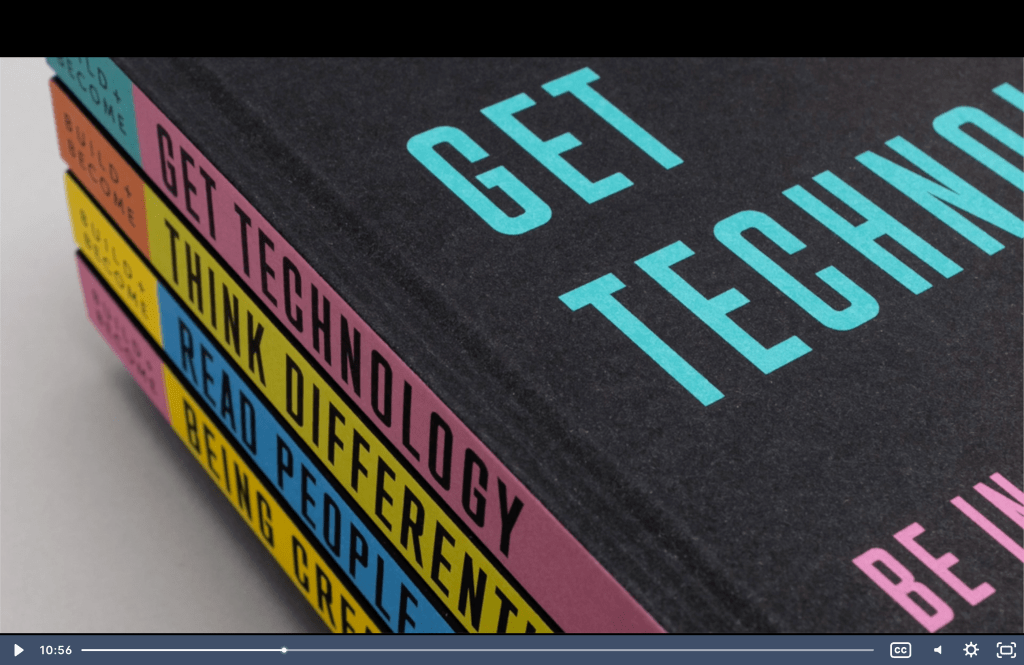
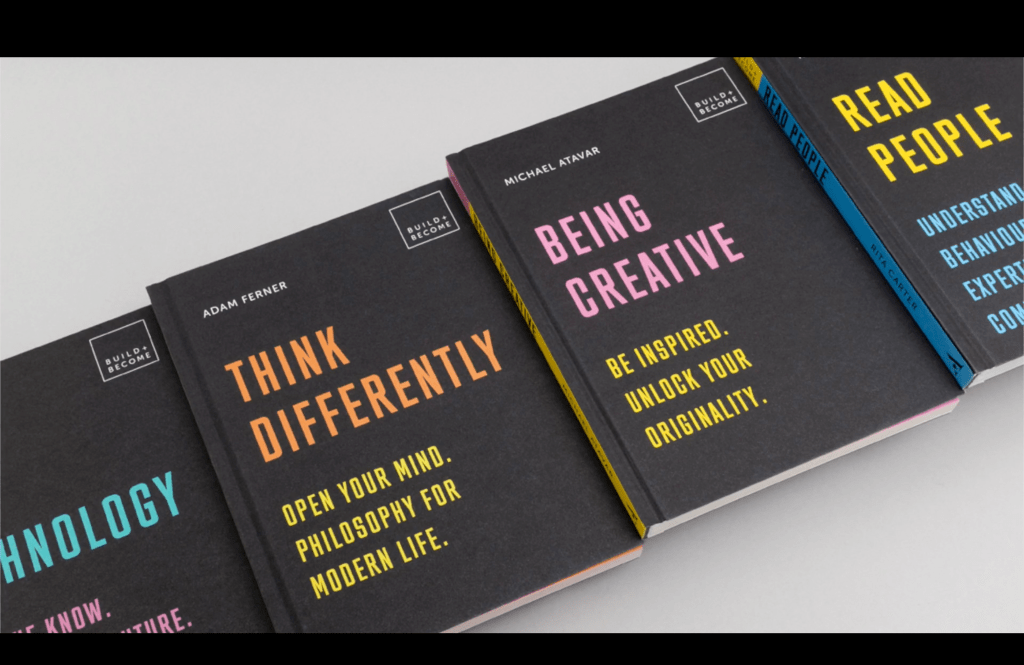
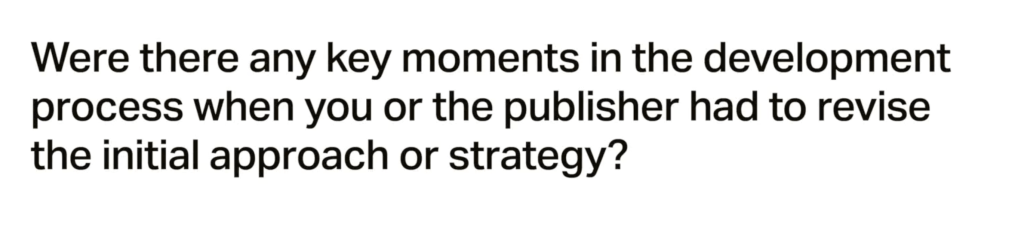






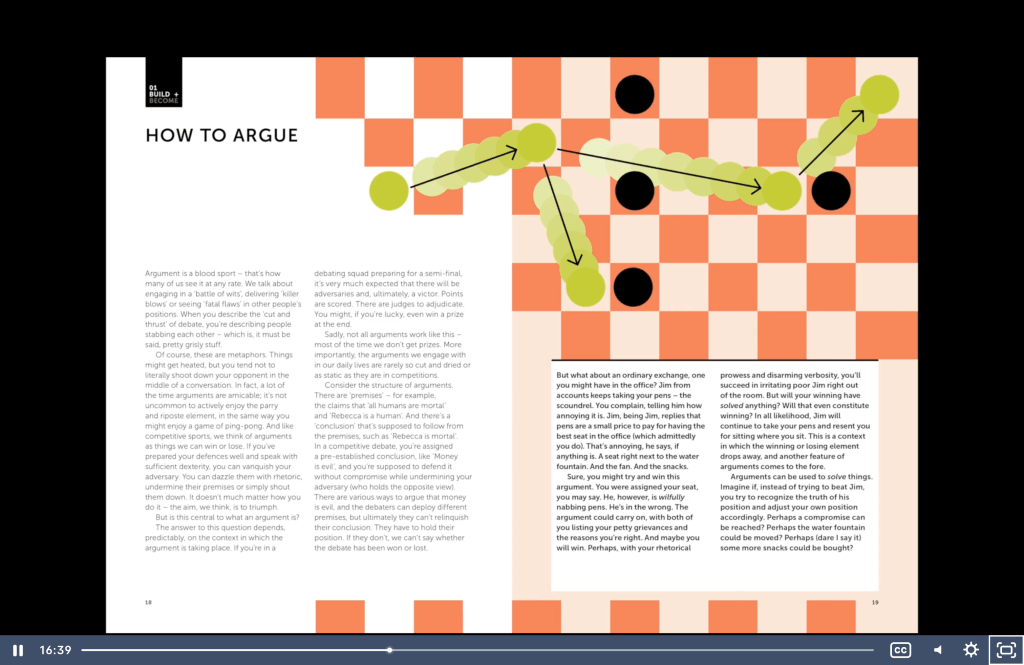
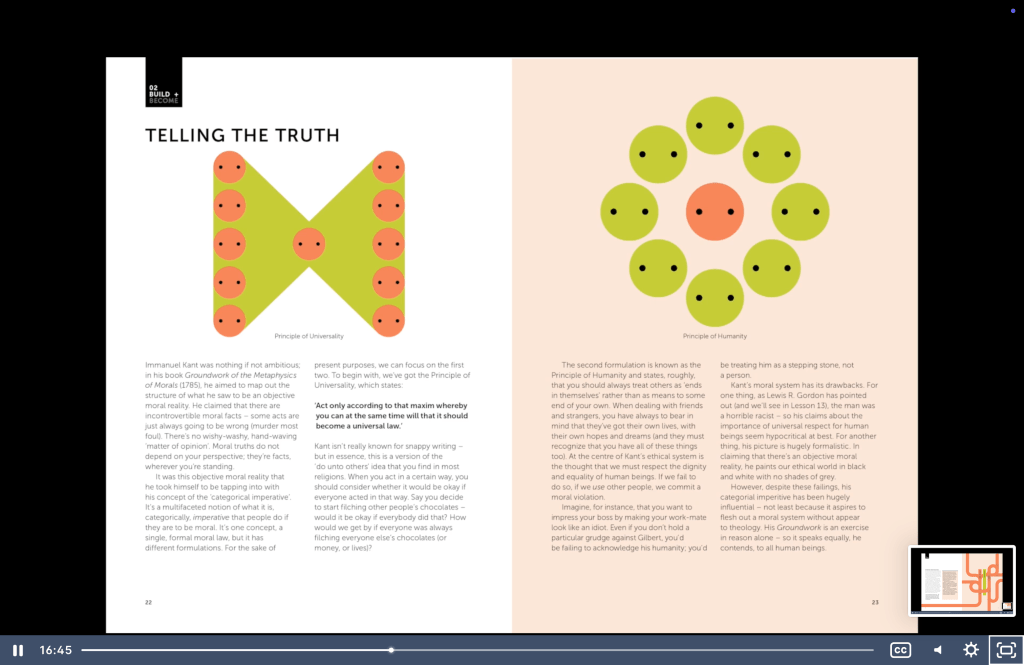
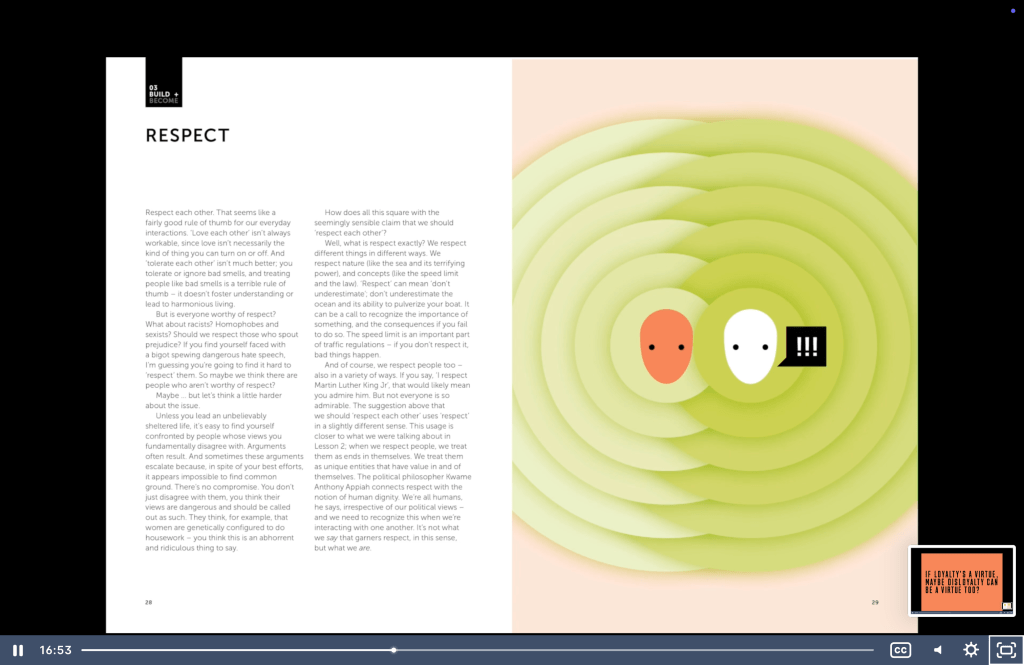
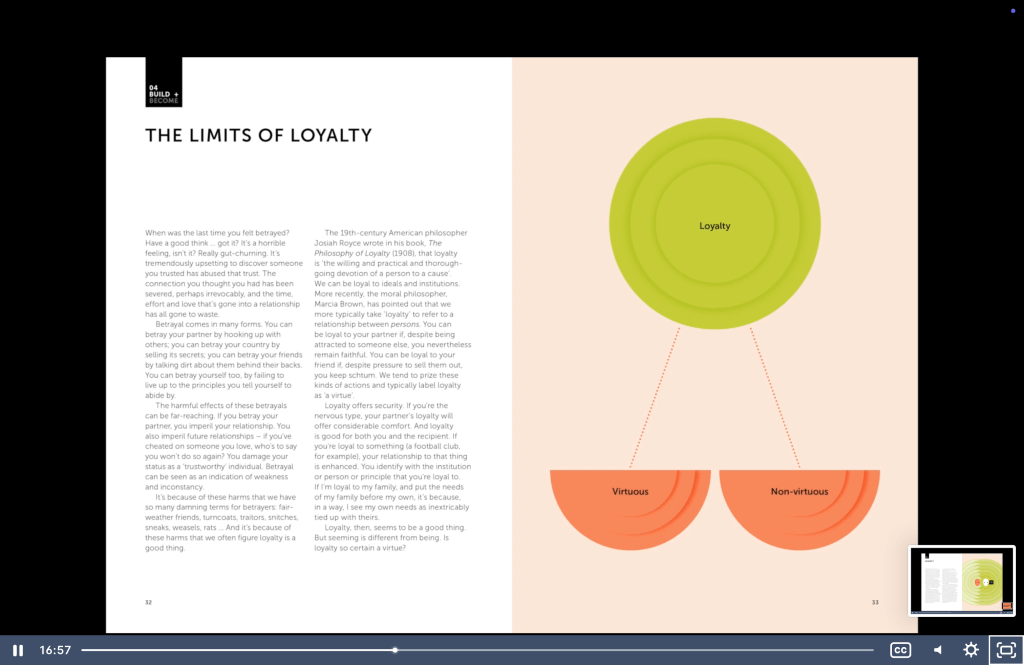
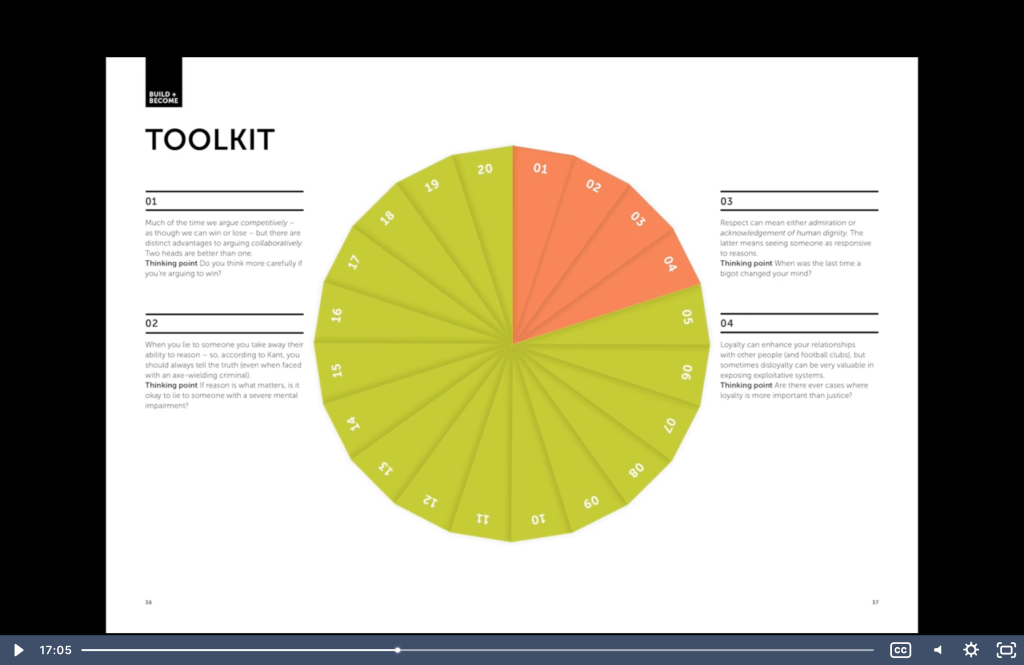
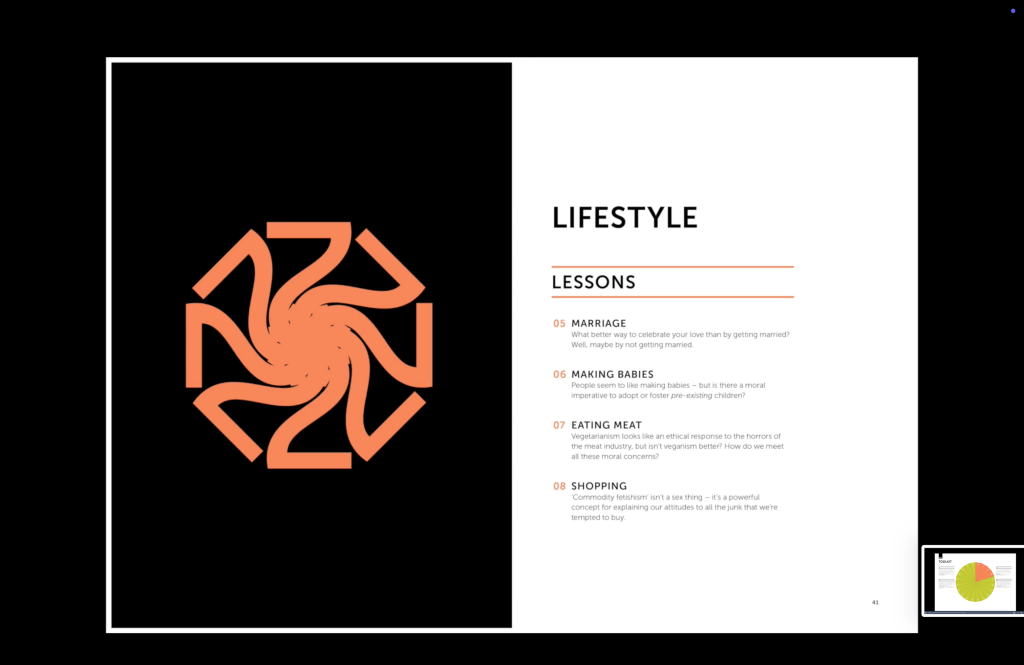
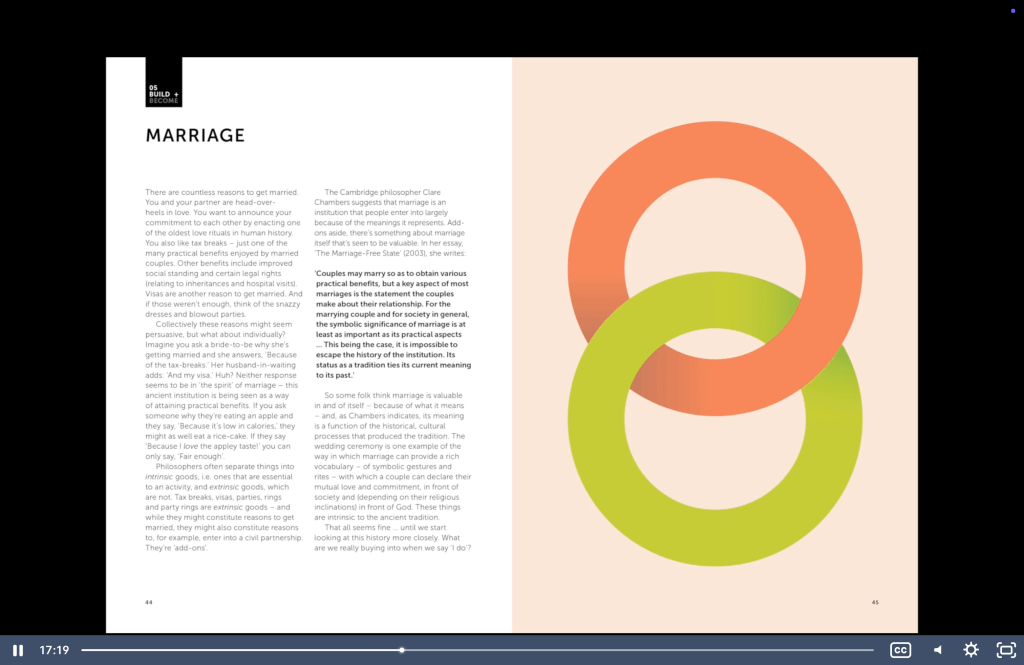
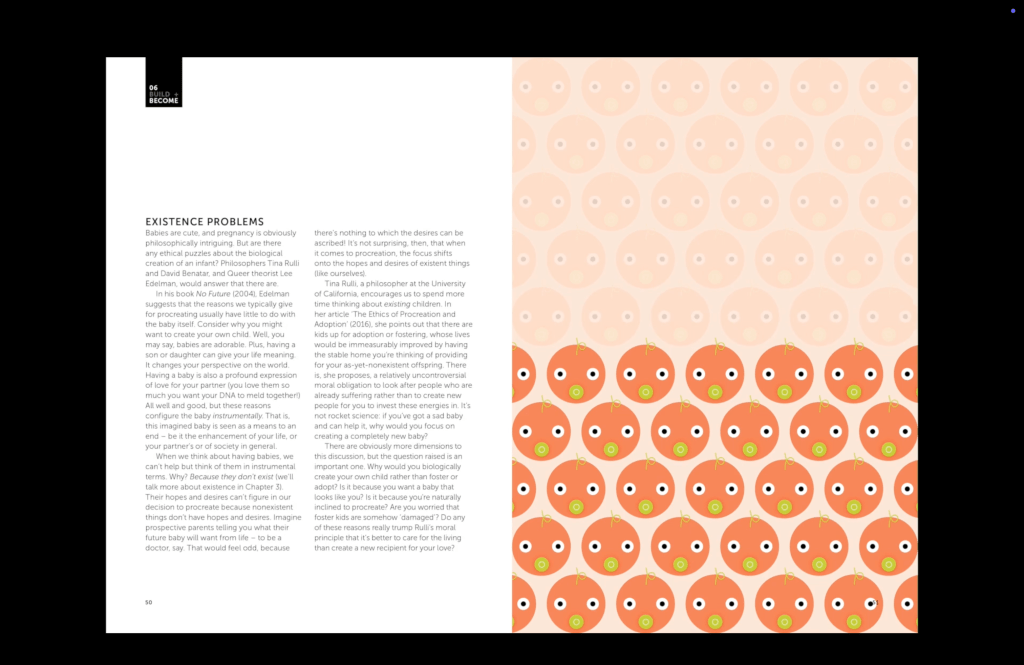
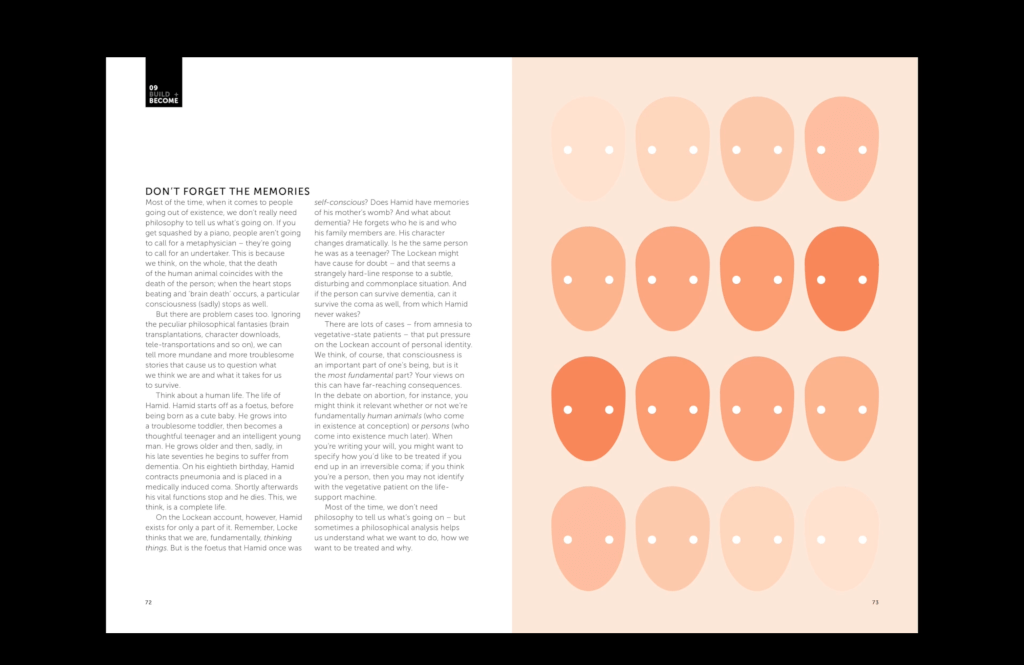
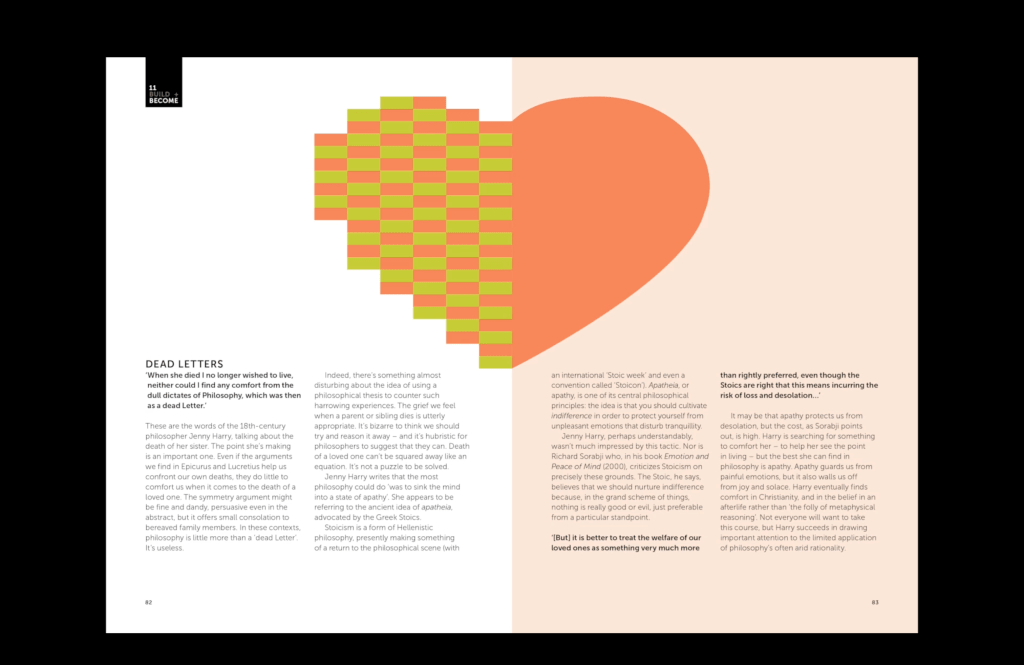
These books look amazing – very useful content and the layout is designed beautifully.
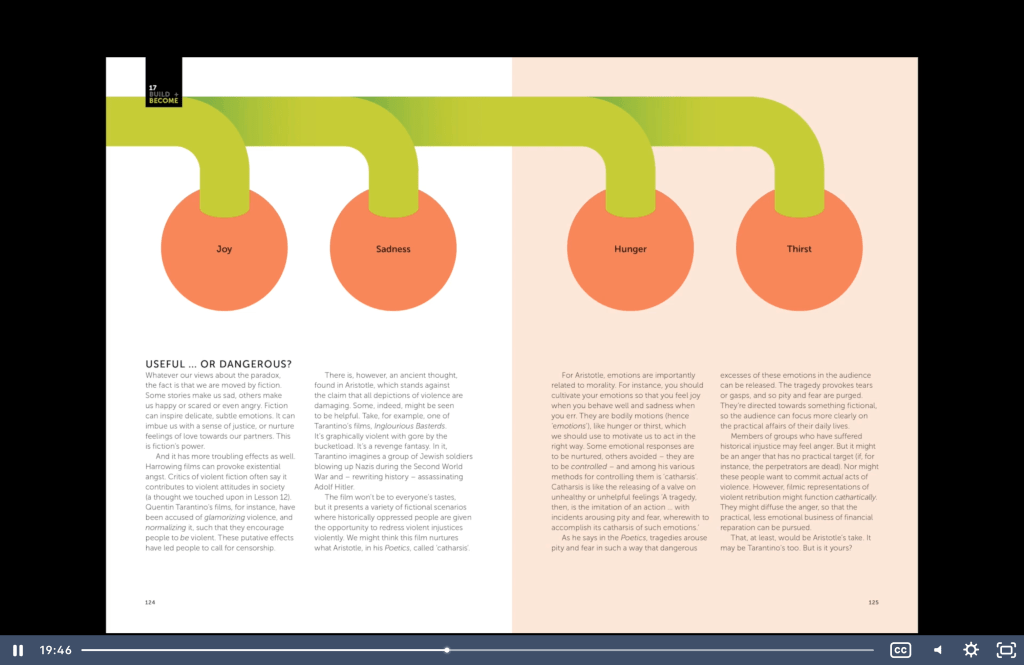
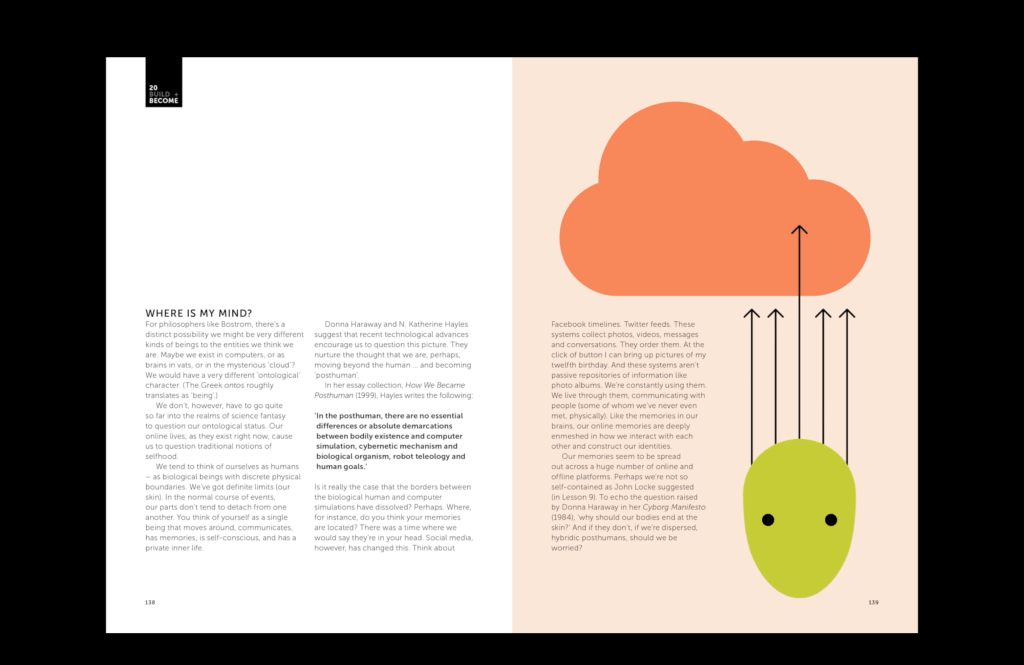

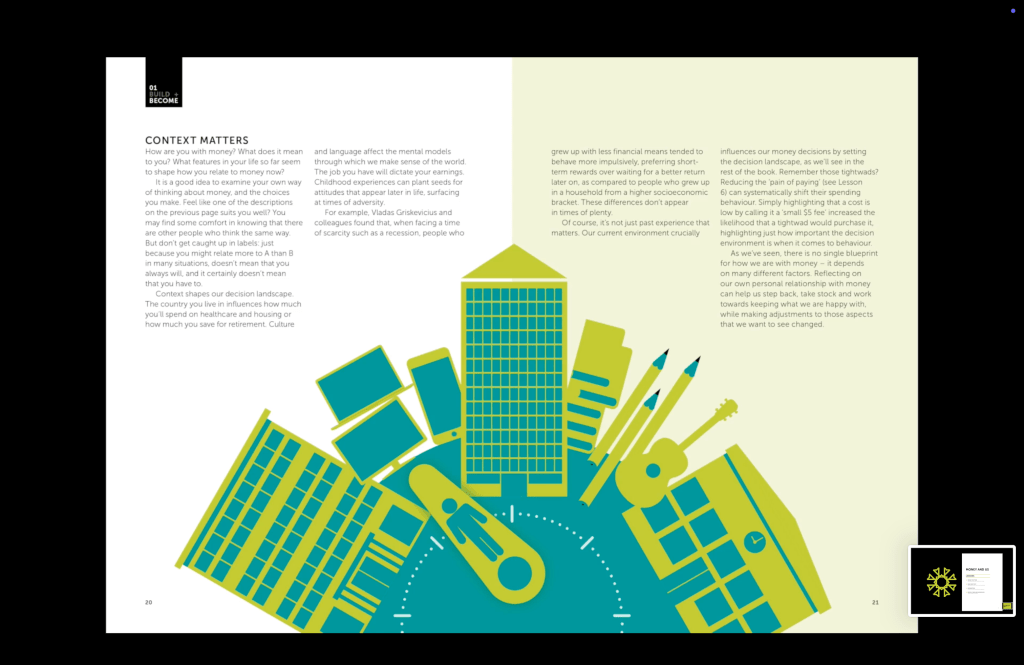
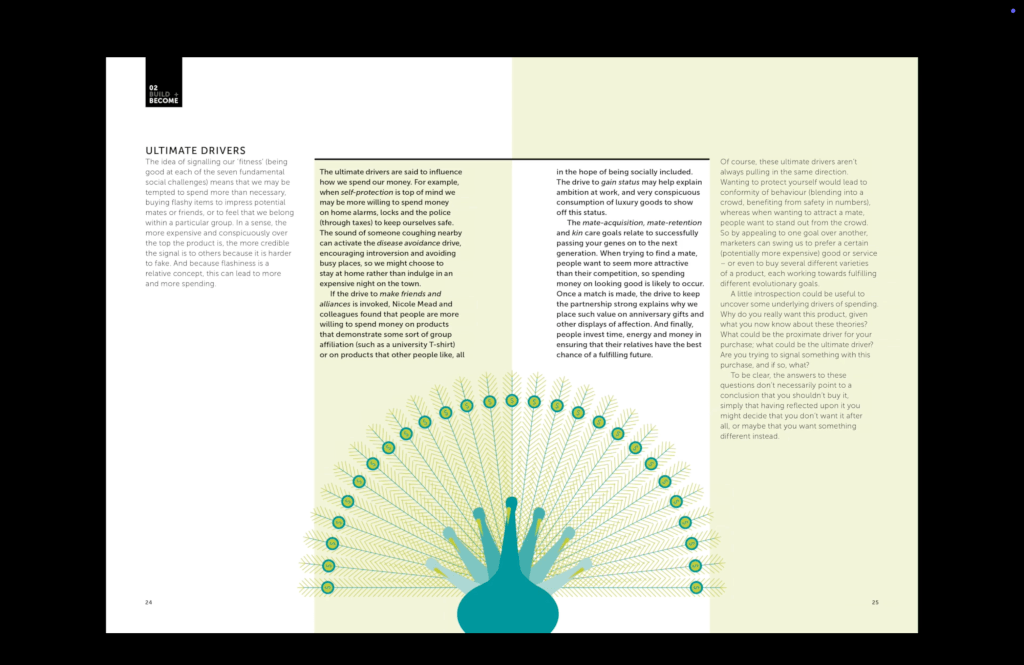
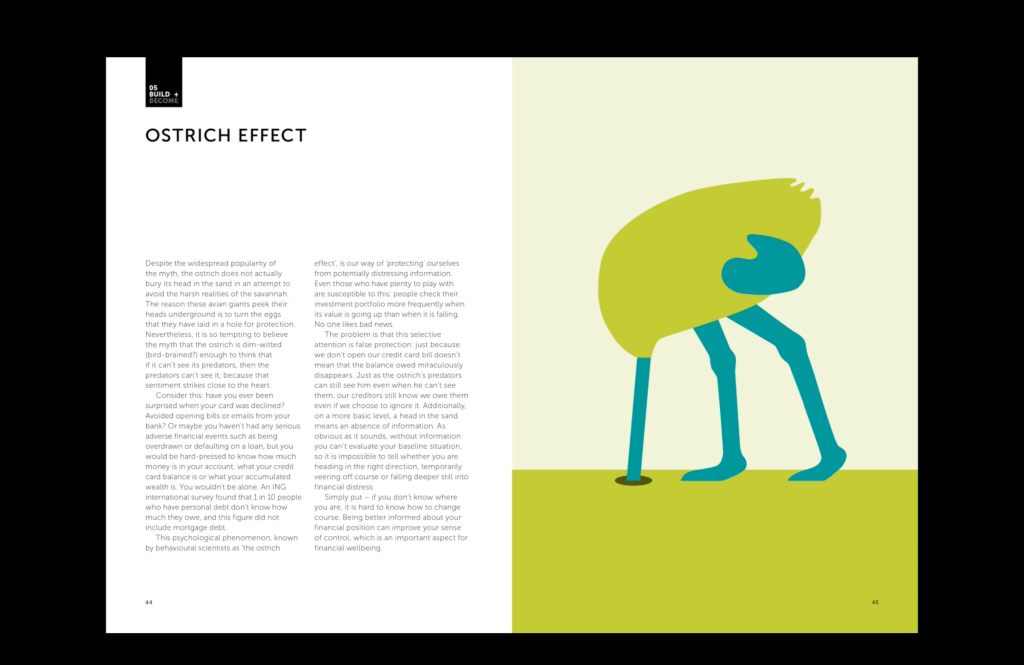
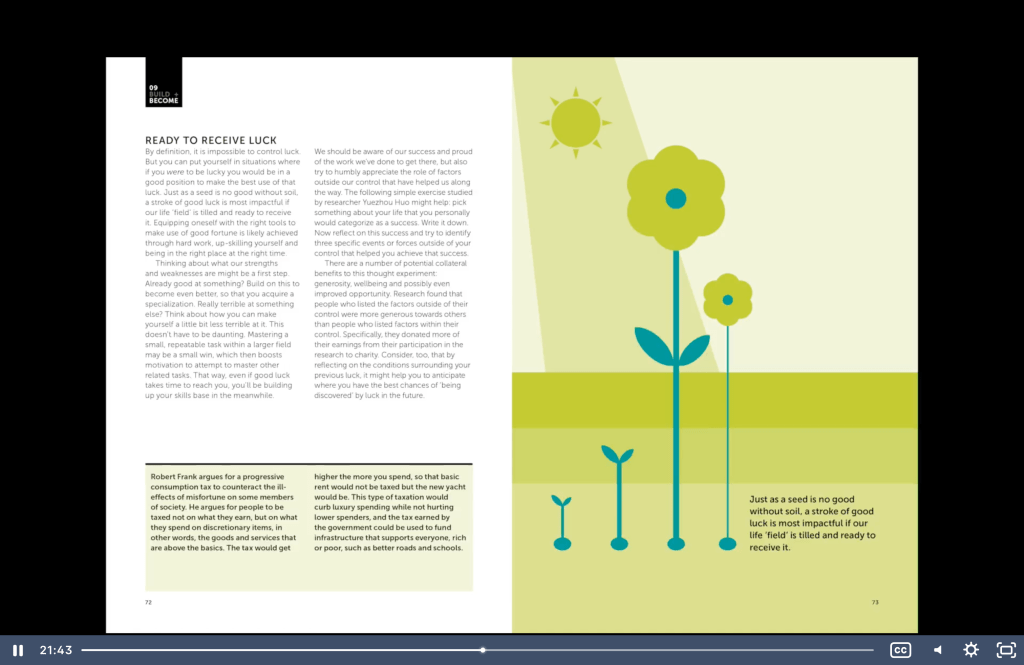
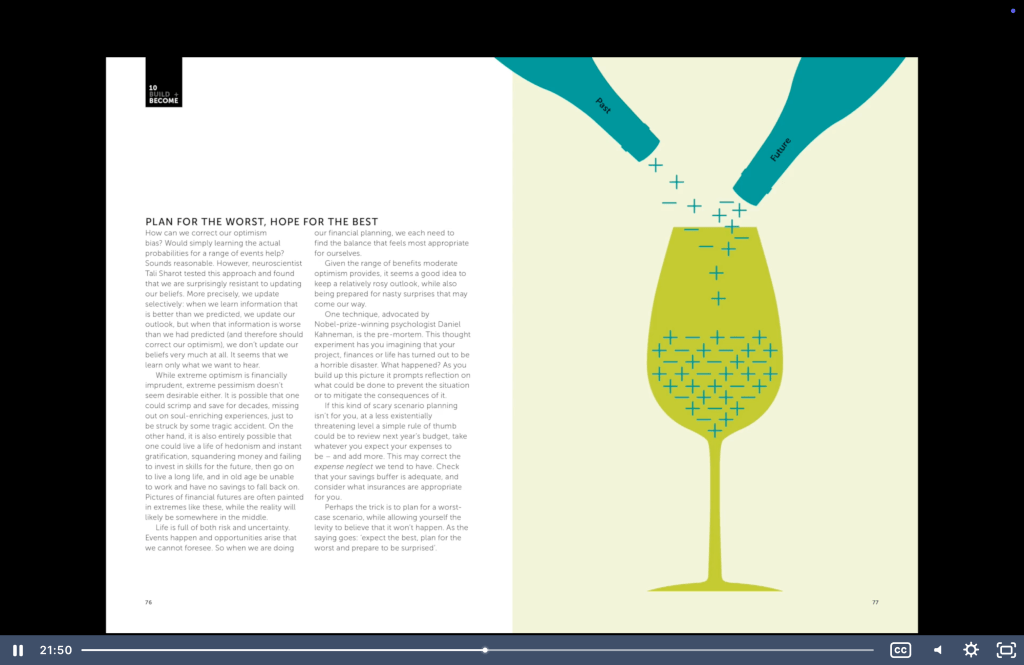
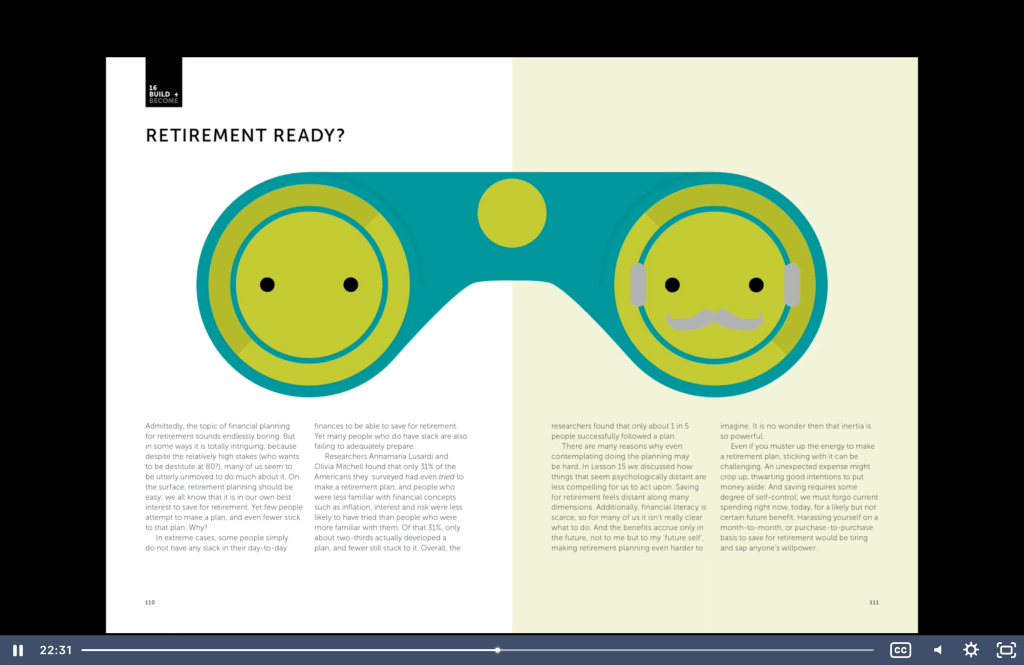
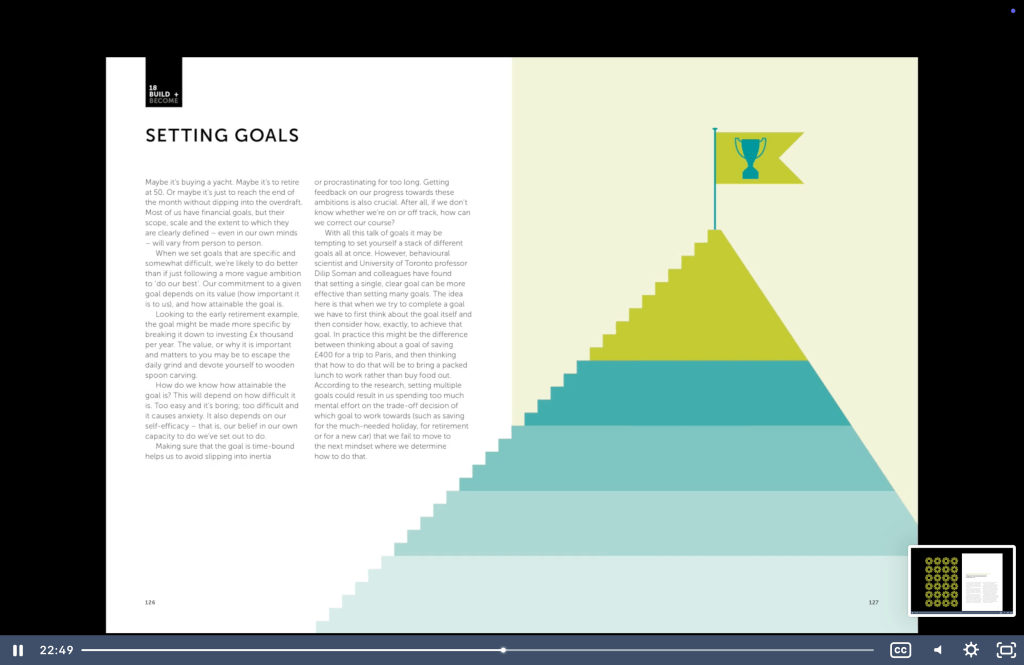
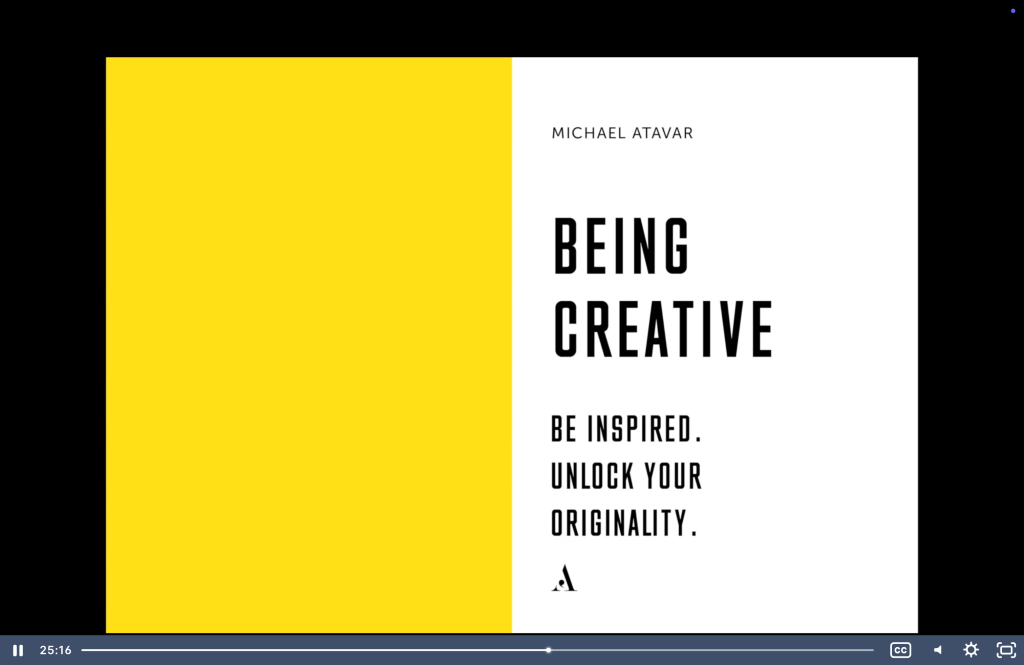
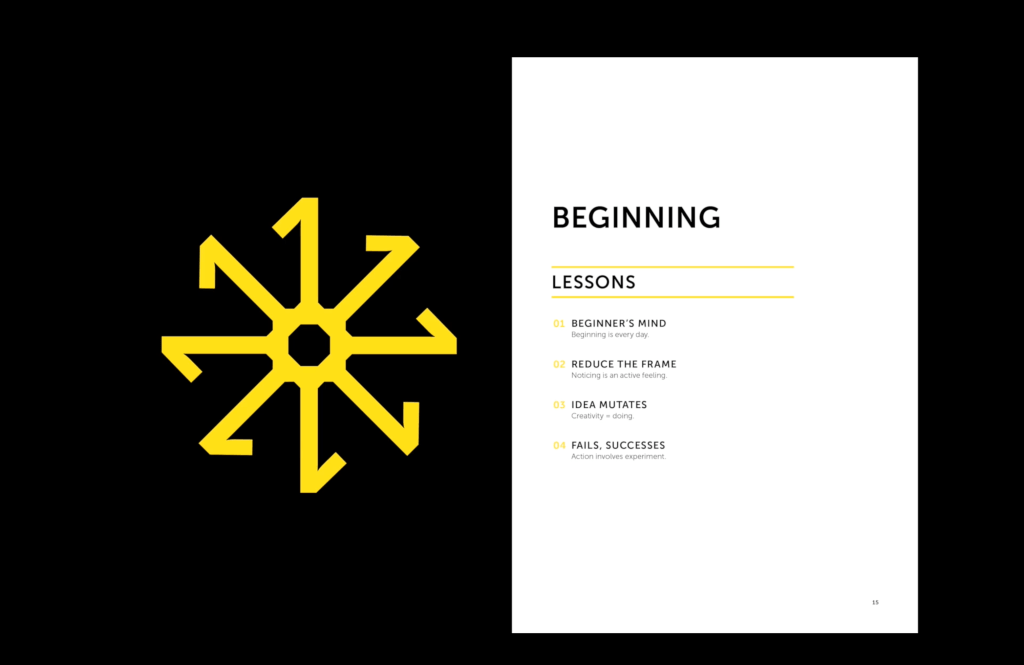
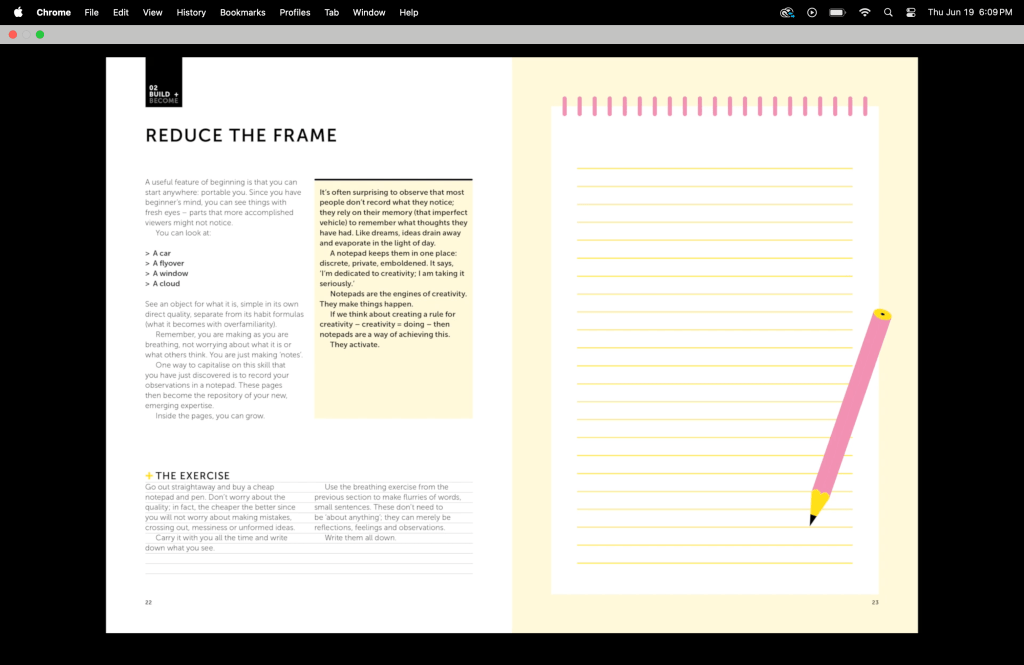
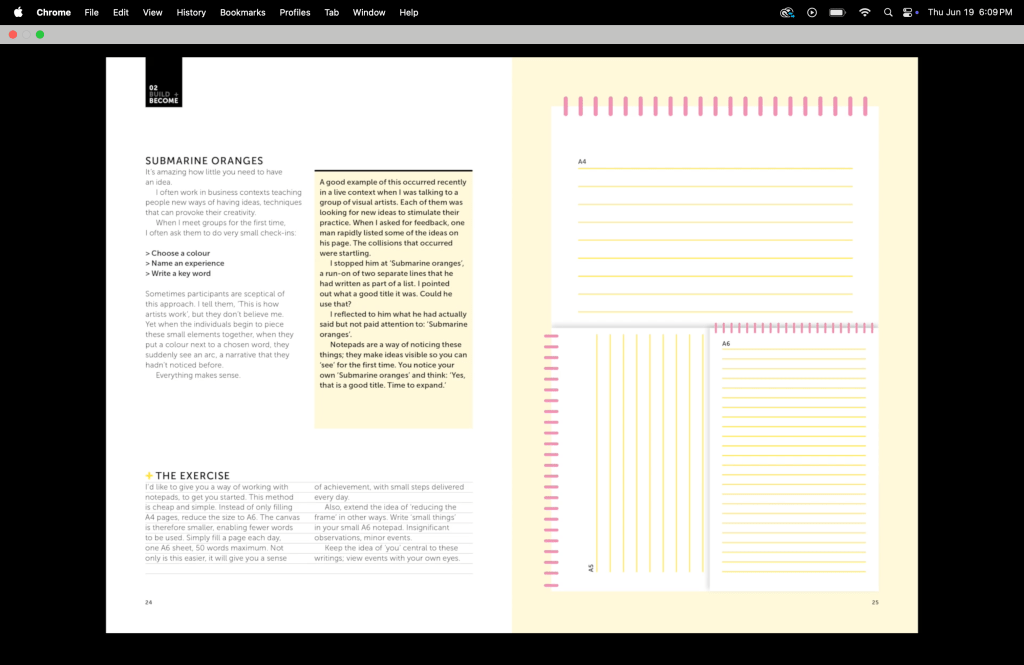
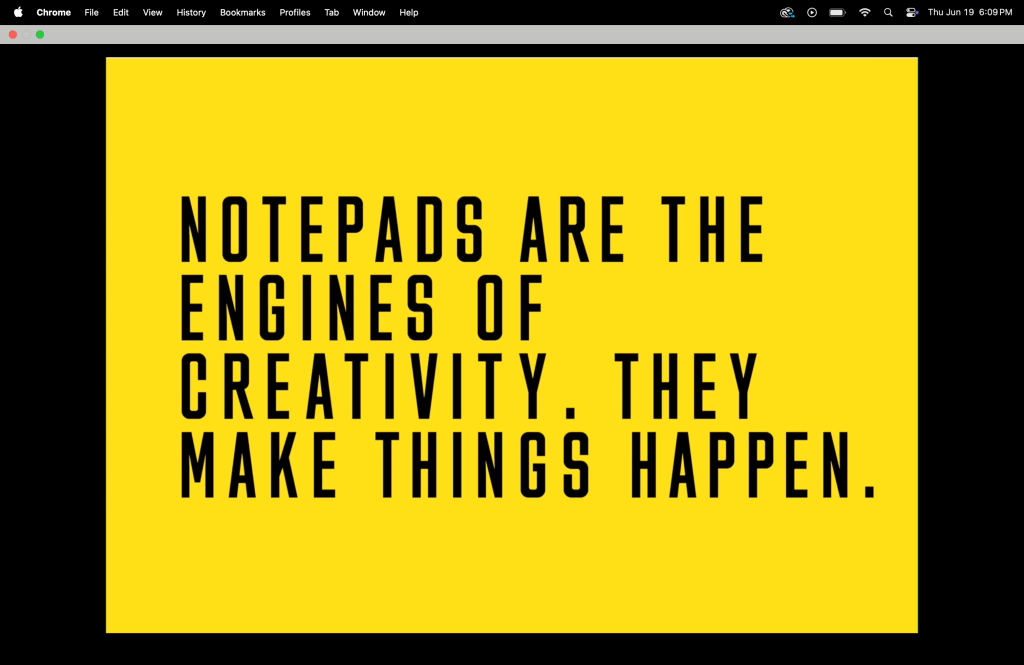
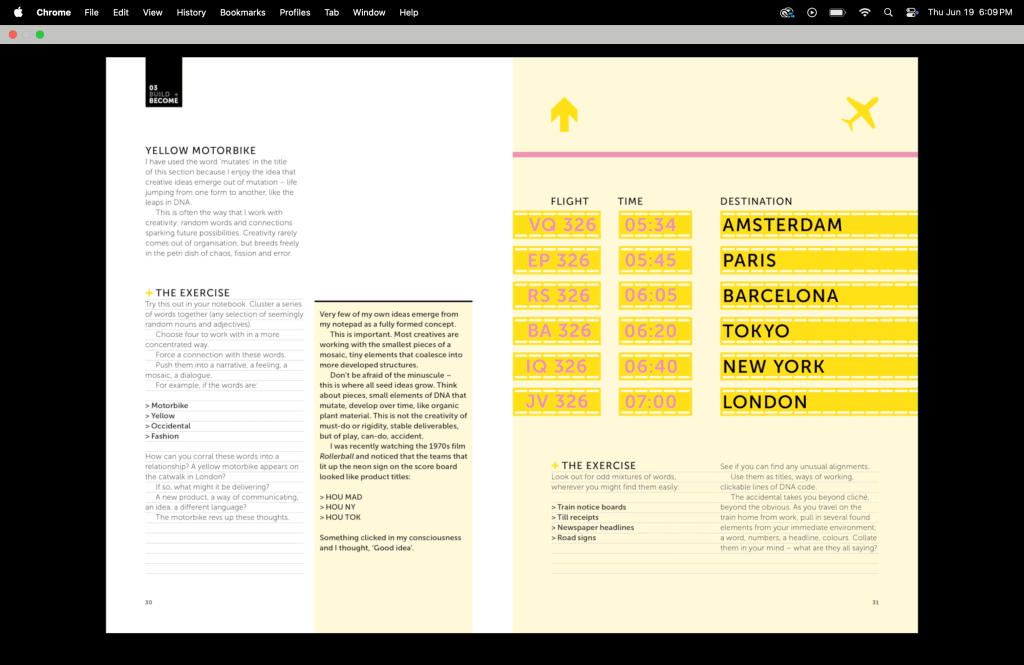
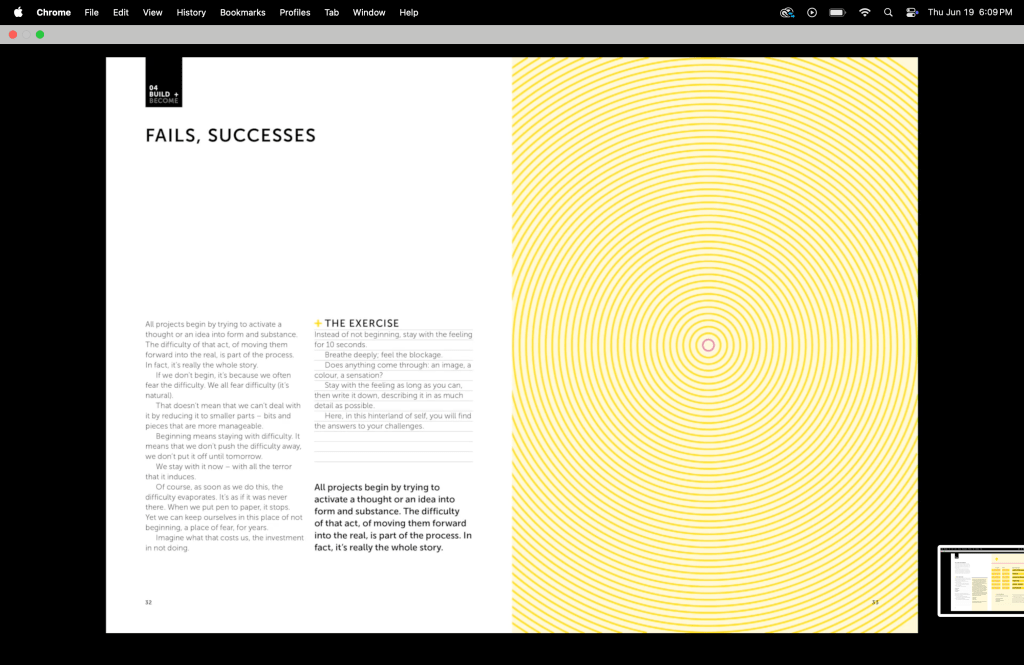
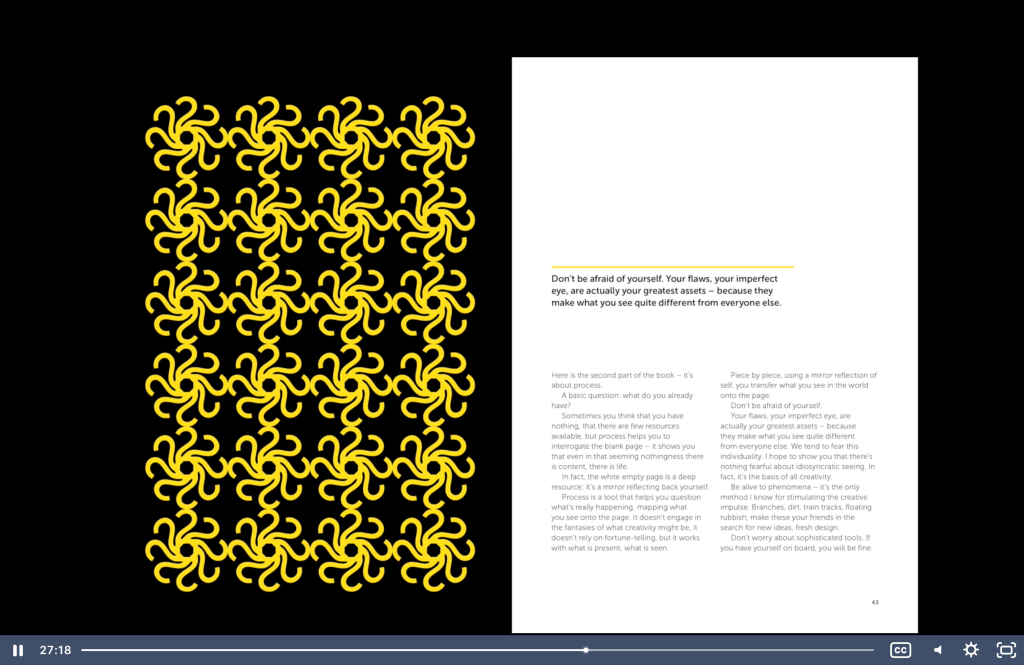
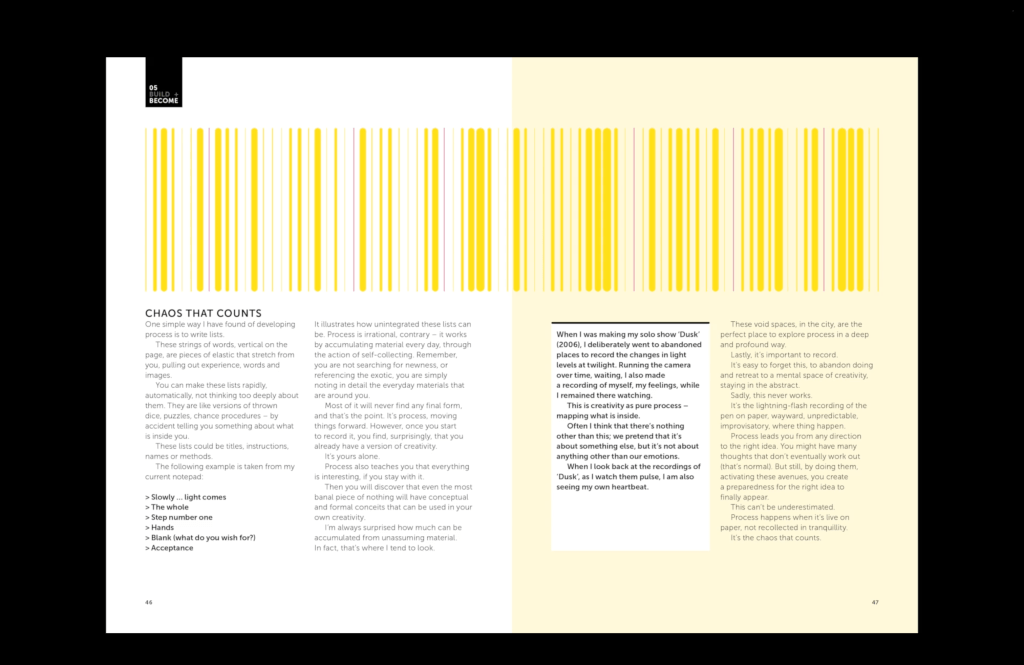
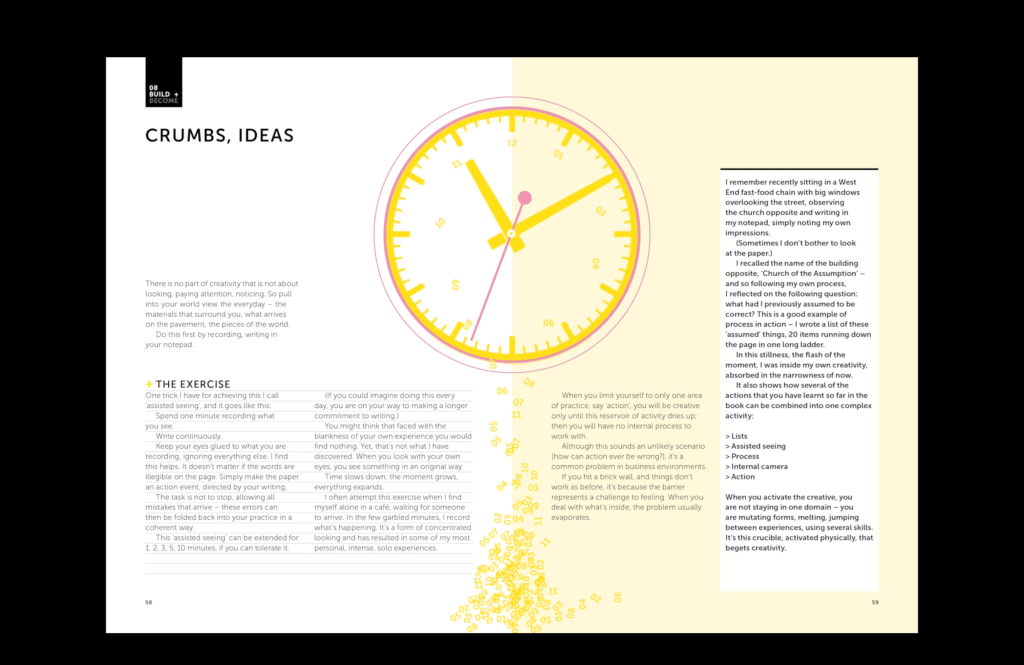
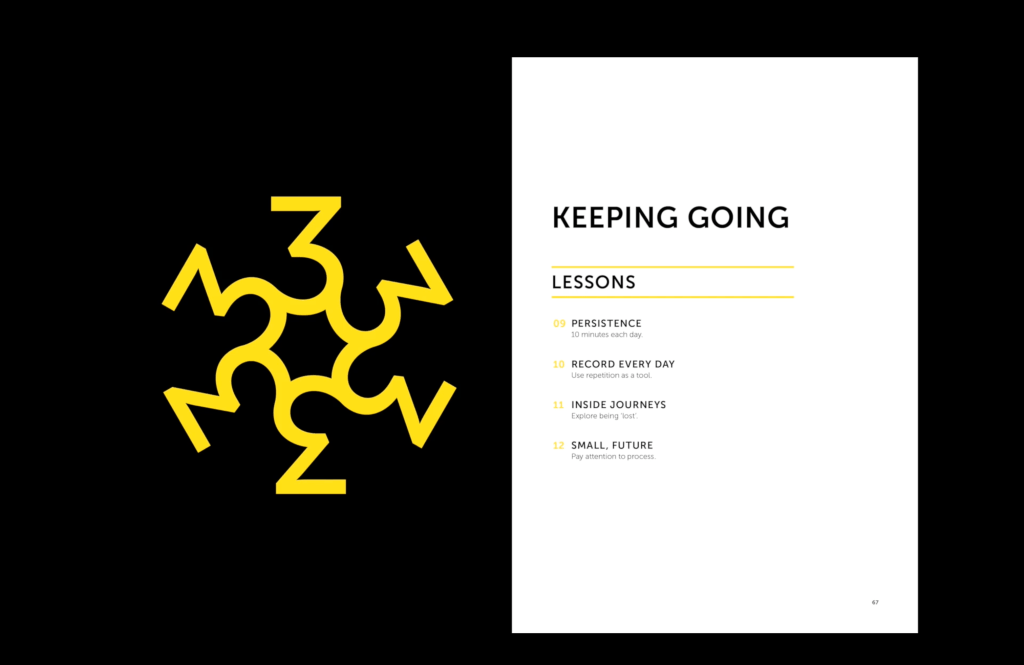
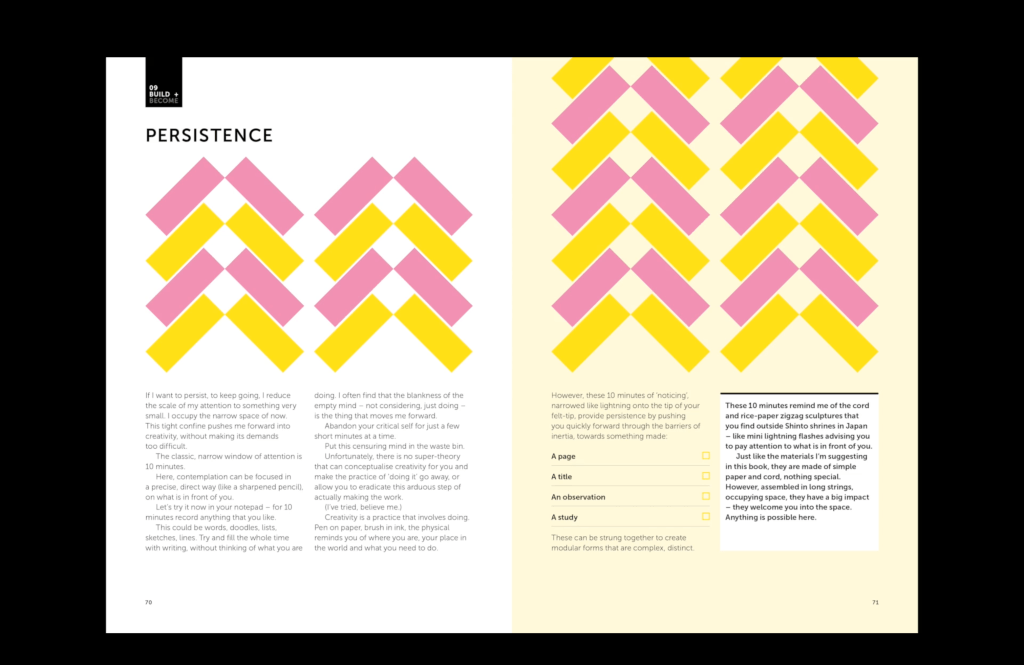
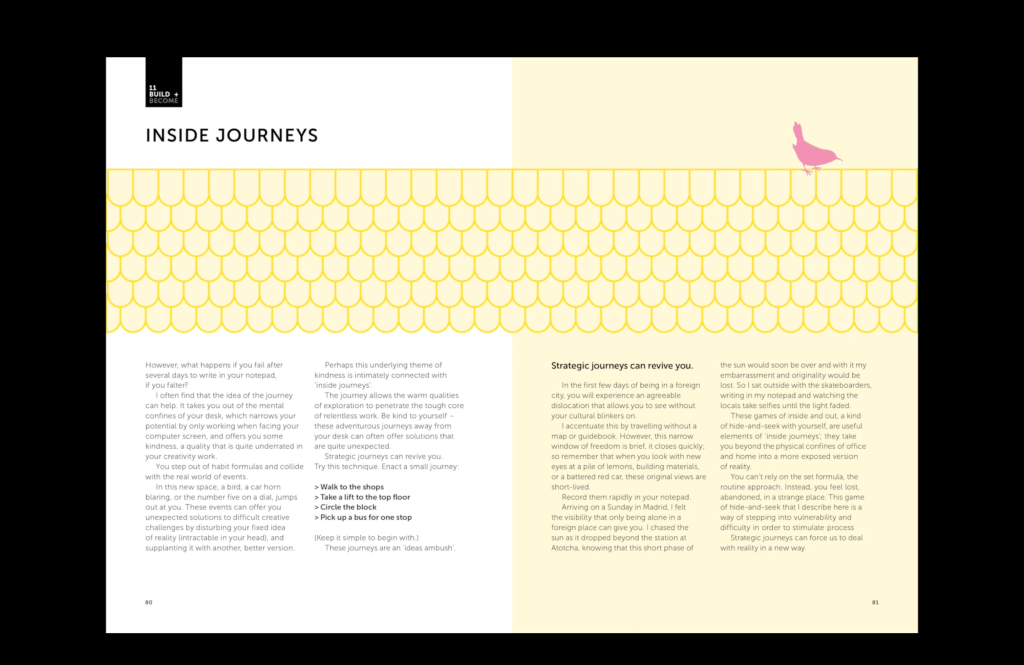
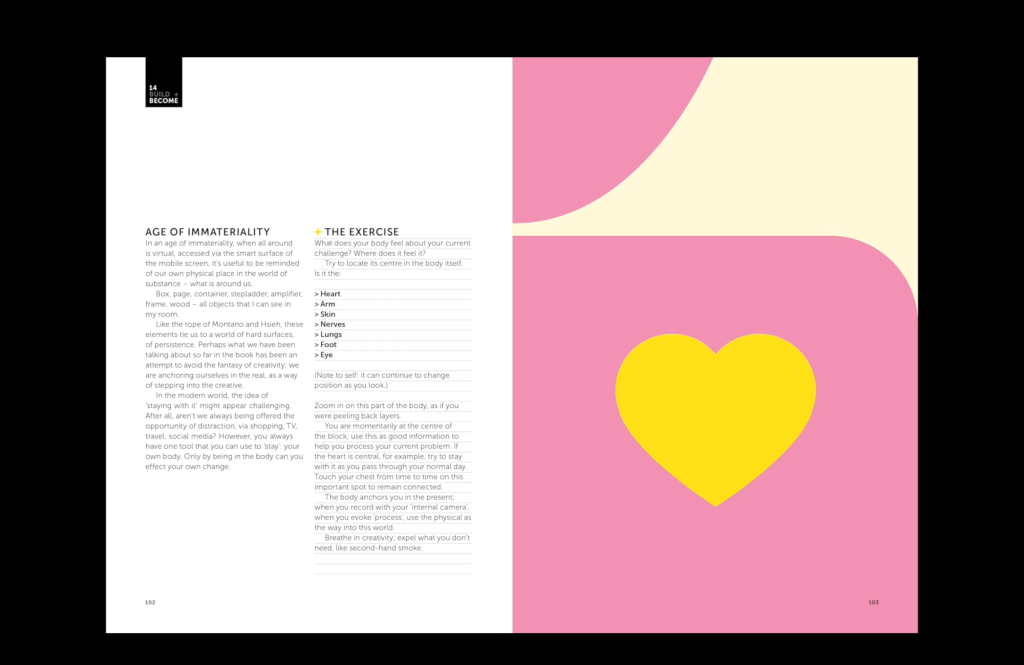
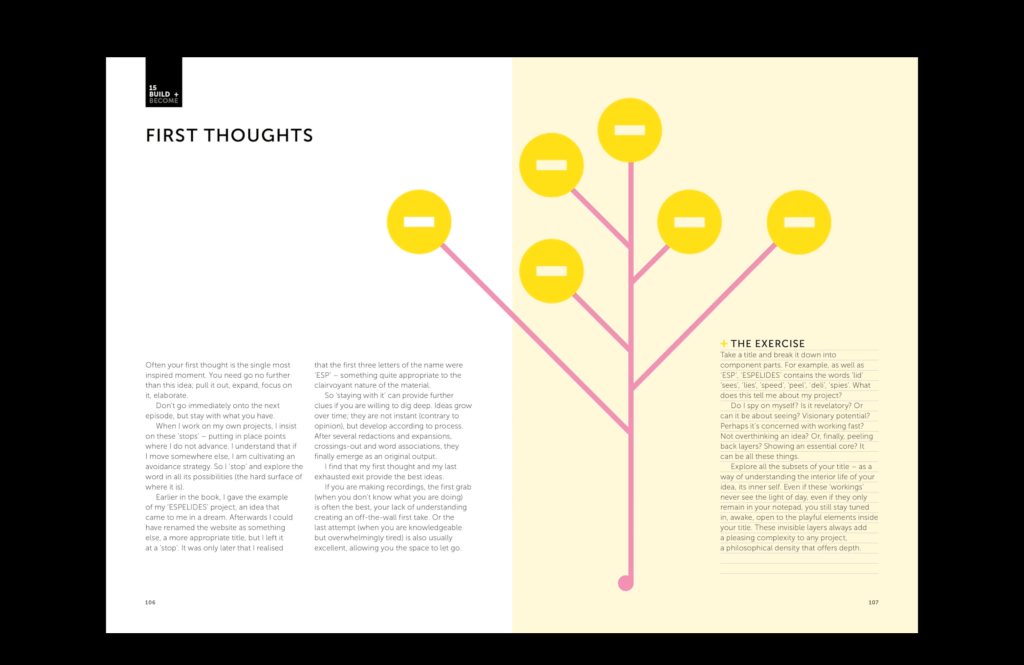
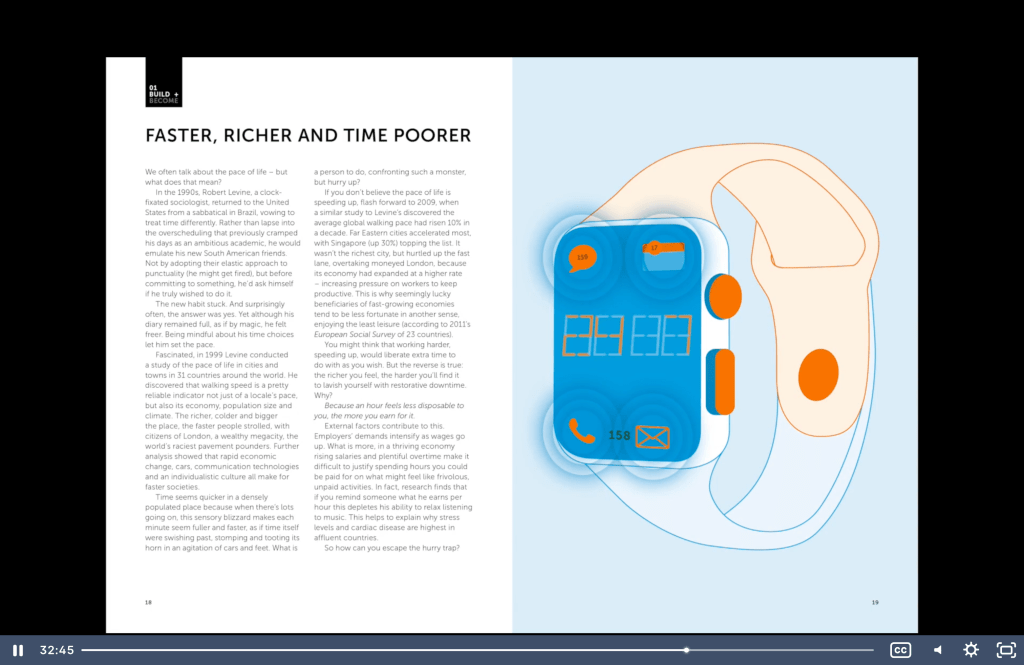
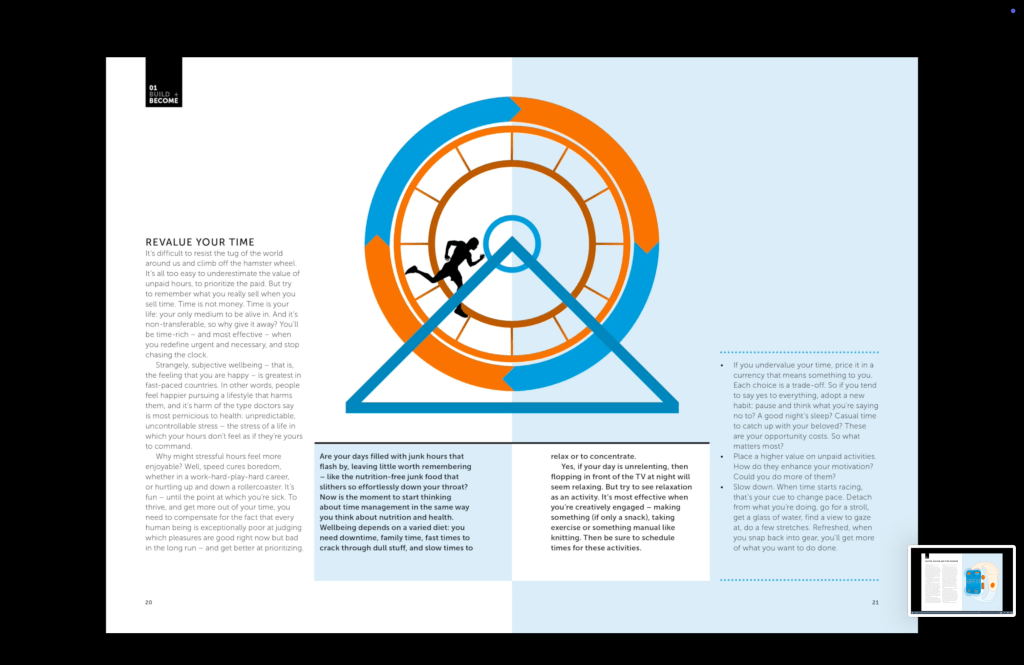
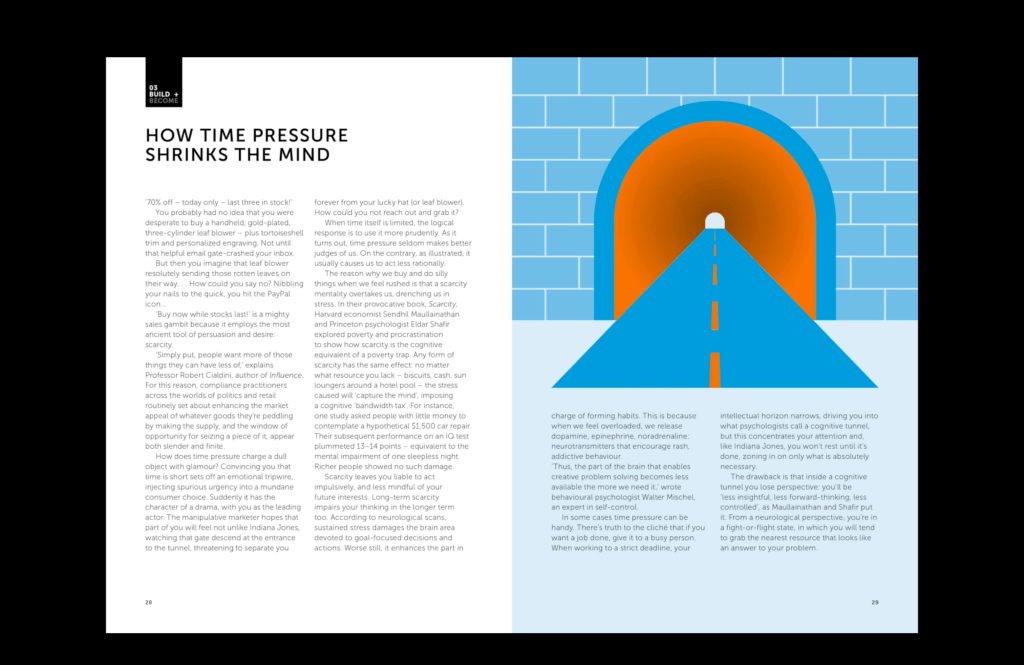
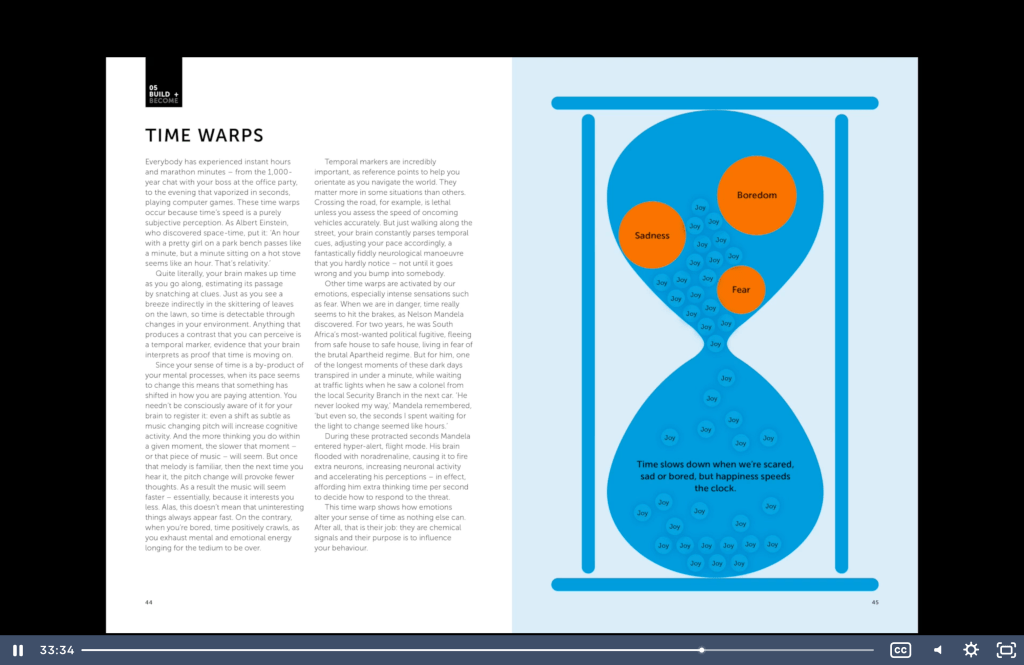
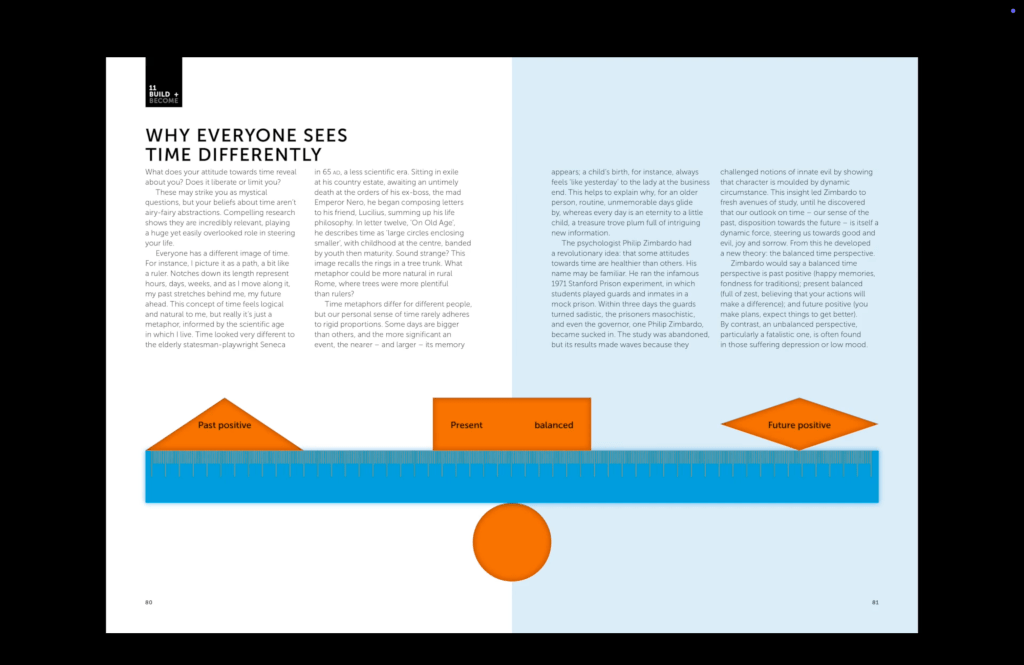
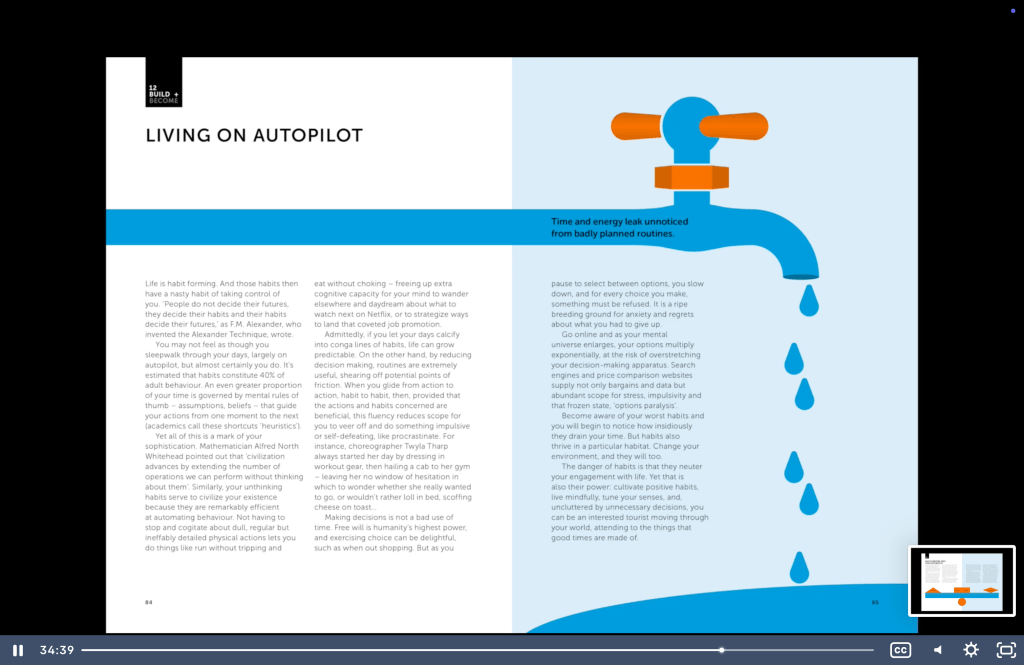
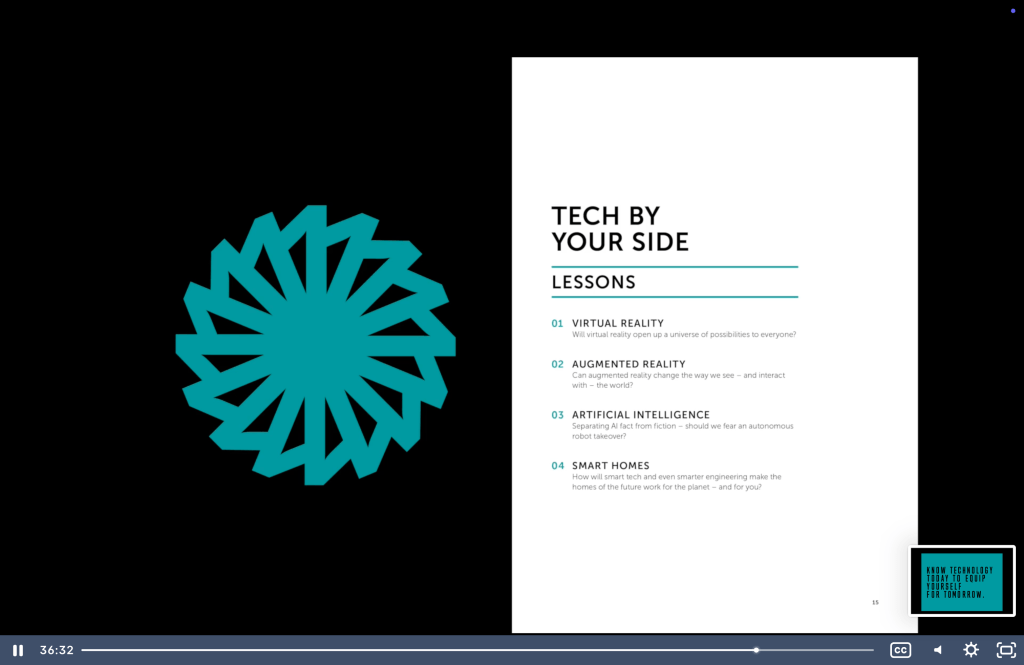
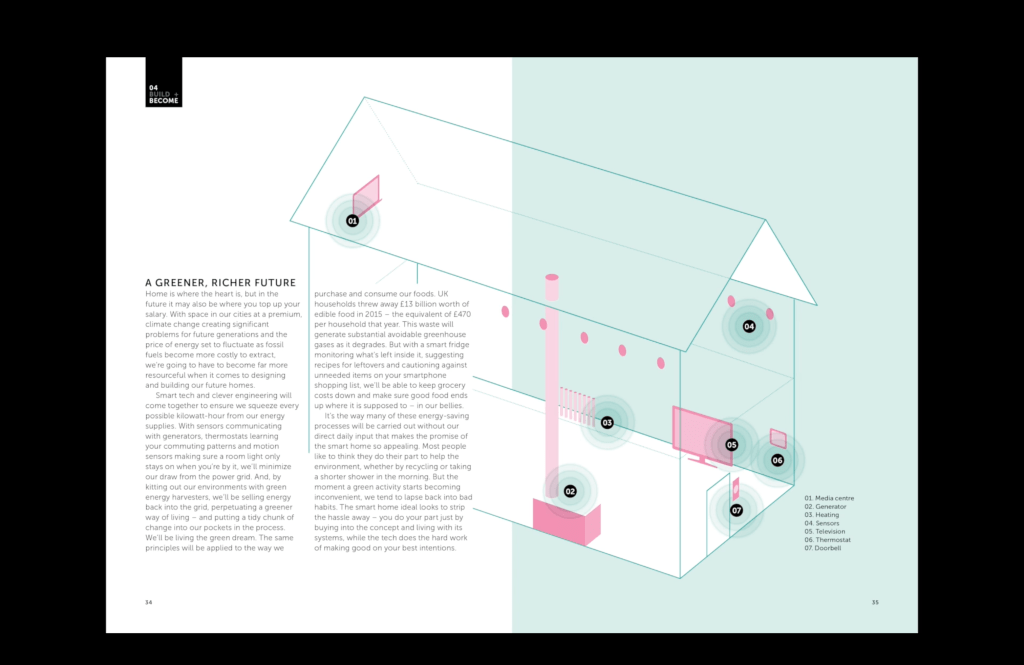
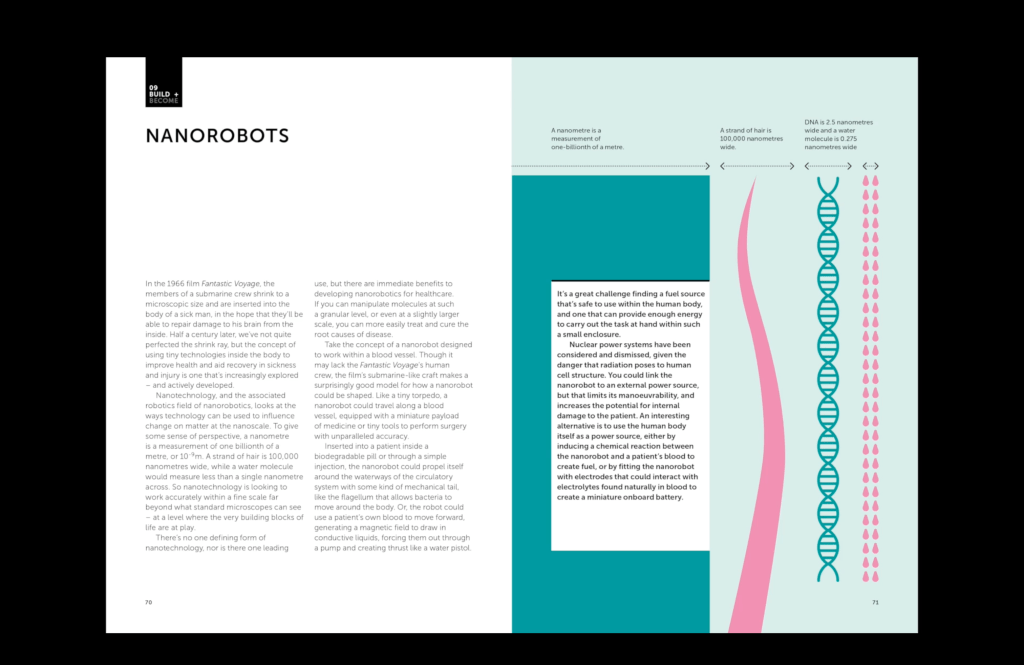
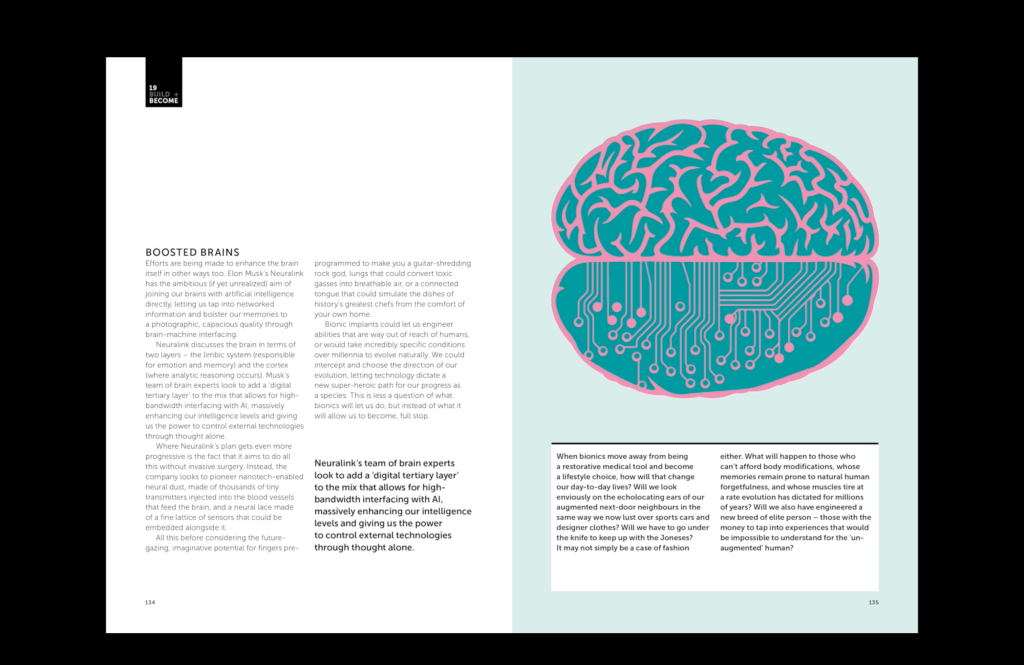
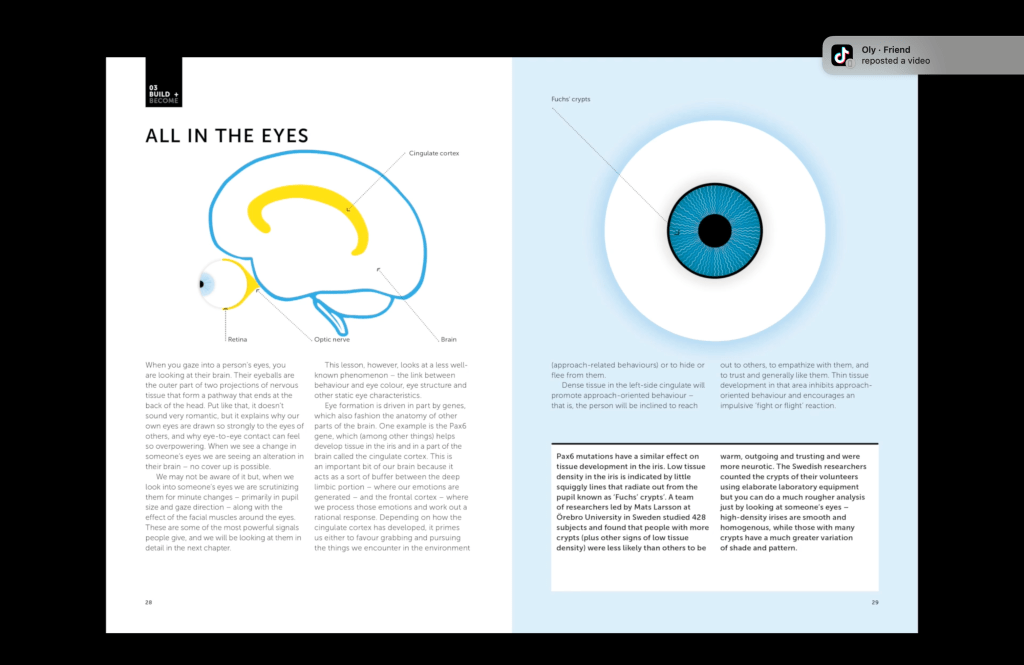
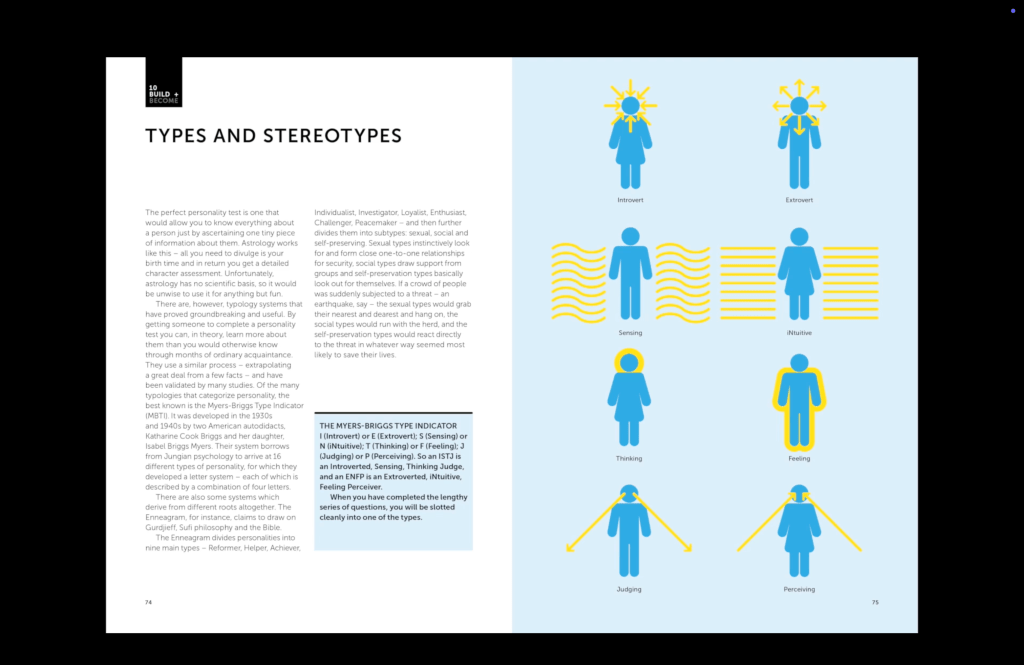
I couldn’t have enough of these pages – they are so well designed, so that make you stop and look over and over at the illustrations and read the content. The content sound very interesting – I wander how they come up with so many important topics for our daily life.
Stuart Tolley has examined how Hamish Makgill set up his design studio and business at the point at which formal business planning was required.
Hamish Makgill created with his friend Ed Templeton the studio Red Design in 2007.
It is interesting that he didn’t know anything about setting up studio before that – he had to learn like he said “the hard way”. So, we have now the opportunity to learn all this and apply it later to our practice.
Something else important that he mentioned is that partnerships are complicated. You have to make sure everyone is working, listening to and getting what they need out of it.
He said “I think some people just don’t get it. I think that’s how some people excel on their own, probably, being able to understand how clients operate. The art is understanding the client then pushing it on, taking them somewhere where they wouldn’t expect it to go, but always keeping it in sight of their needs.”
So, the conclusion is that we need to listen good to the client and understand what he wants.
Something else that I learn is that economic climates plays huge role in having design studio. If the business are going to a hard time, that will minimize their need of design work, so you will need to have a backup plan or saved money to make it trough.








Chris is talking about having a purpose – not about making money but about something bigger, something beyond money.
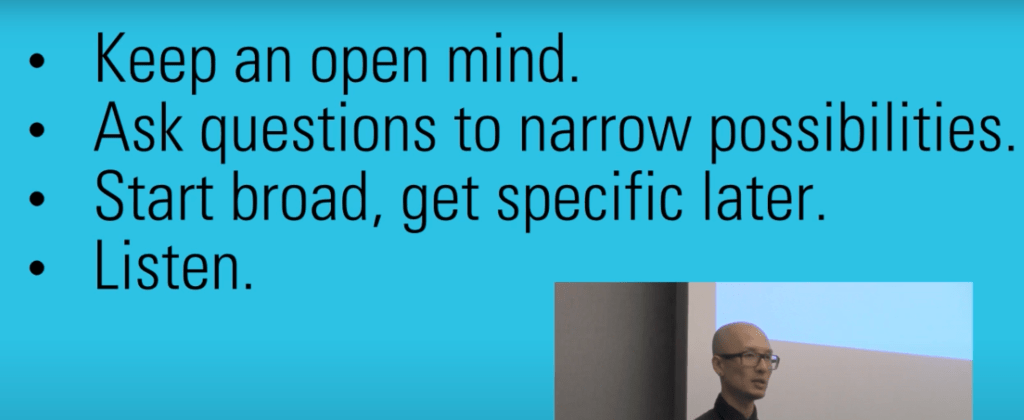
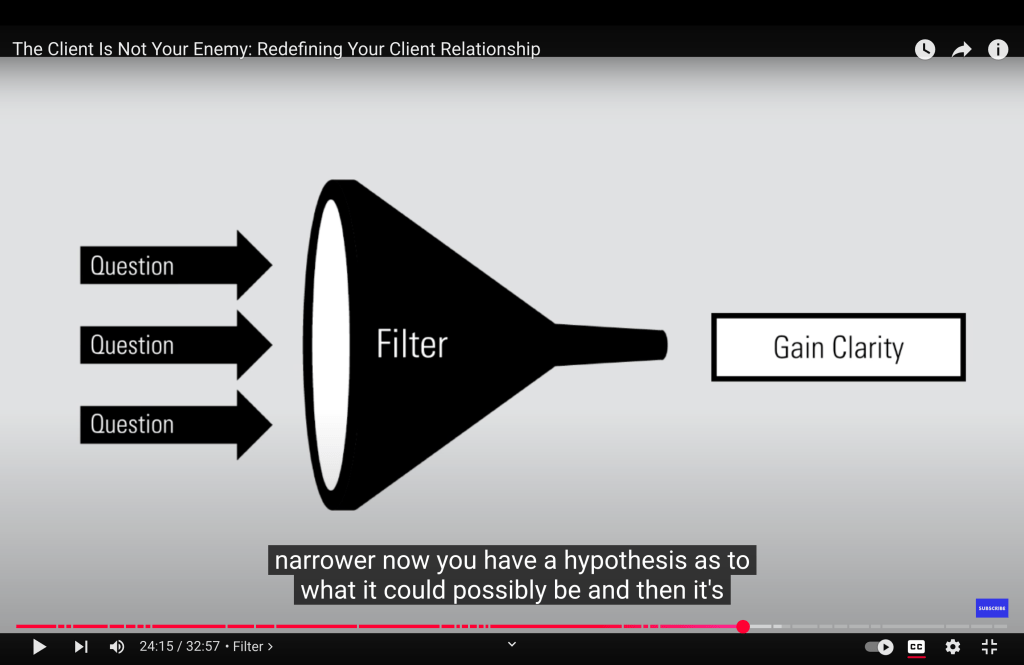
He stresses the importance of listening, communicating and understanding that the client is not your enemy.
He talks about the client relationship dynamic – is important to respect the clients and have good relationships with them because by making them happy, you will get more work in the future (not only from them but they will refer you to other clients).

Business strategy: a guide to effective decision-making
by Kourdi, Jeremy
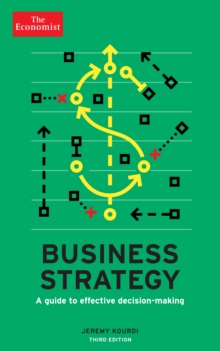
Most of the things that Chris talk about customers relationships, I see it here in Jeremy’s book:
“To make sure decisions benefit customers and improve long-term sales and profits:
- be competitive;
- deliver a consistent (ideally branded) experience each time a customer deals with your business;
- make a customer’s experience as simple and enjoyable as possible;
- be clear about the value proposition – what you are offering customers;
- provide incentives for new customers to return and reorder;
- reward loyalty from established customers;
- reassure customers with a reliable service and product offer;
- continuously improve the process, based on customer feedback;
- deliver reliability by working with partners and investing in resources.”
I learn that monitoring and managing well the information is very important – makes your business successful. In the examples with the Spanish bank and cement company, I saw that by providing clear directions of what can the system do, can change the whole structure and motivates the workers.
“New ideas are essential to improving an organization. They may come from flashes of creative brilliance, from other industries or from analysis of new information. Ideas are central to making the right decisions, solving problems and adding value for customers. This can be achieved by efficiently applying knowledge and information.
Organizational learning is a powerful technique for improving performance, especially in turbulent times.
It begins with observing what has occurred, reflecting on what has been observed and assessing the underlying structures that drive the behavior observed…
Stimulate the exchange of ideas by reducing bureaucracy and boundaries. In most organizations, structures, hierarchies and boundaries inhibit the flow of information, keeping individuals and groups isolated and reinforcing preconceptions. Emphasizing communication and opening up the organization lead to fresh flows of ideas, competing perspectives and insights. Jack Welch, former CEO of General Electric, says “boundarylessness” is one of the most potent forces for change…
Develop a positive attitude to budgeting. People need to understand, accept and use the budget, feeling a sense of ownership and responsibility for developing, monitoring and controlling it.”
Jeremy Kourdi said also that “as a result of the employee- customer – profit chain, managers at Sears are recruited, promoted and appraised on 12 criteria: customer service orientation; initiative and sense of urgency; business knowledge and literacy; problem solving; developing associates and valuing their ideas; teamworking skills; two-way communications skills; valuing diversity; empowerment skills; interpersonal skills; change leadership; and integrity.”
I am reading in the book a lot about Sears and the good management decisions taken years ago but something must happened later on because today this company is not so successful (I am saying it because when I go to the Mall this is one store that you don’t see many people any more).
Another important thing that I learn important sep is to build a good team. You have to choose the right people, outline a clear vision, explain the strategy of the company and encourage them to participate in the decision- making process.
It is interesting that Apple gets many of its ideas from outside the company and that iPod actually was born with the help of external consultant retired to manage the iTunes software. So, we always have to have open mind and think outside the box.
Here my Project 1 (is still work on progress)
I am still nor sure if I should eliminate some of the buttons on the landing page
 Vicky Kafkaki - Graphic Design MA Falmouth University